FOR IMMEDIATE RELEASE
Passionate, edgy, unapologetic… “RaceBrave: new and selected works” provides another glimpse into Karsonya Wise Whitehead’s work to document her experience raising two black boys in a post-racial America. On July 7, 2014, the day Eric Garner was murdered, Whitehead set out to write about what was happening across America to unarmed black people, in doing so she explores the feelings of hopelessness and helplessness that resonate with parents around the country-sometimes with humor, sometimes with sadness, but always with an ear that bends toward the truth.

Cover of “RaceBrave: new and selected works”
Whiteheads’s Amazon Author’s Page
In marking these moments, Whitehead also reached back into her childhood diaries to examine how life has changed for her, as a writer, a poet, and a mother over the years. “RaceBrave” is a masterwork that covers multiple topics and captures every mood: today, my heart stopped is both dolorous and heartbreaking as it examines what happens when black men demand the right to be seen and to be able to breathe, while the birth of your activism examines the days leading up the Baltimore Uprising as Whitehead’s sons chose to march for ten days straight for justice, for Freddie Grey, and ultimately in search of the world that they are hoping to co-create. Going back into her archives, comfedderate flag memories highlights Whitehead’s feelings about the confederate flag in both 1980 and in 2015 while speaking my truth, finally reveals a story that she has been trying to write about for twenty-five years. In the section, “Black Love is Black Wealth,” Whitehead celebrates the many aspects of love with we are gathered, a poem in memory of her favorite uncle; a regenerative descant, in celebration of the retirement of a Marine after thirty-years of service; and, soulmates and soulfood (kuro ai), five short playful tender poems about being brave enough to fall and remain in love. At once personal and political, poignant and apoplectic, these forty-five poems evoke a society where all voices are heard, all perspectives are respected, and everyone has the courage to be “RaceBrave.”
My Keynote Address “Hallowed Grounds”
March 7, 2016
Clip from my Keynote Address (02/20) presented at the Association for the Study of African American Life and History’s 90th Annual Black History Month Luncheon. It aired on C-Span on March 5.
C-Span3 Entire Keynote (18 minutes)
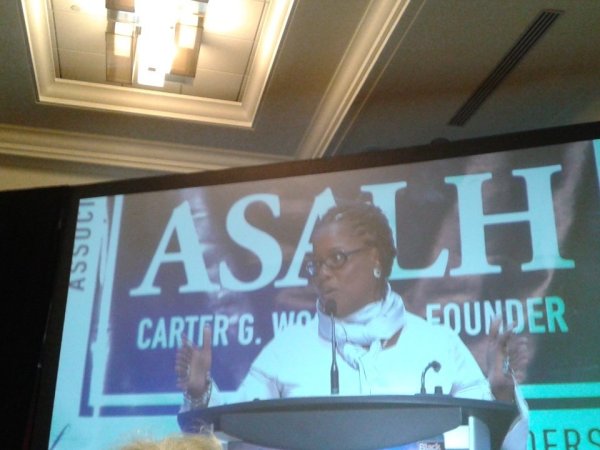
The full speech will air on Saturday, March 5 at 2p on C-Span3’s American History TV.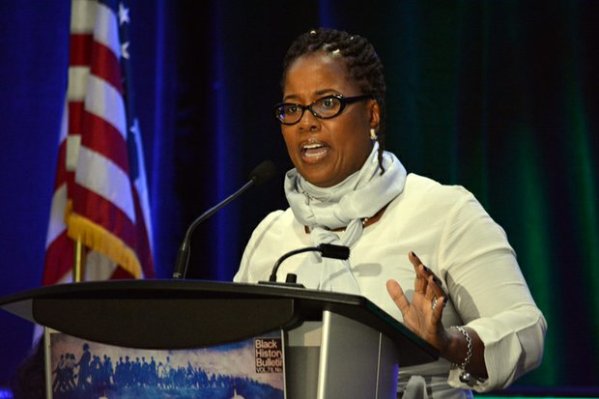
A Writer with Writers: Mothering as an Act of Revolutionary Love
February 25, 2016
Growing up, as an aspiring writer, I used to read and be inspired by the work of Khalil Gibran. I would challenge myself to find a way to make my work leap off of the page just like his work did. I memorized his words and held them close to my heart. When I realized that I was going to be a mother, that someone had chosen me, I decided that I was going to be a #blackmommyactivist and practice the art of revolutionary mothering. I wrote out the words to his poem, “On Children,” and hung them on my wall as a daily reminder of what it meant to try and practice revolutionary mothering:
Your children are not your children. They are the sons and the daughters of Life’s longing for itself. They come through you but not from you, And though they are with you yet they belong not to you.[1]

The Writer (Karsonya Wise Whitehead) with her two young budding writers!
And though I had no idea of what this looked like in practice, I just knew that in order to raise happy, healthy, and whole children, I needed to consciously speak love into their lives, to speak hope into their spirits, and to birth and nurture a sense of self and of belonging into their soul. Revolutionary mothering is hard. It is not for the faint of heart. Although there are some guideposts, set up by sister writers and scholars along the way, the path is one that each revolutionary mother must carve and scratch out daily. Dr. Gumbs takes on this challenge and studies and writes about what this has looked like in the lives of revolutionary mothers like June Jordan and Alice Walker, Audre Lorde and asha bandele. She artfully tackles this subject and then opens up the way for others to follow. I believe that revolutionary mothering is a daily practice of letting our children go. Gibran writes that as a parent, “You may strive to be like them, but seek not to make them like you.” So what does this mean when it is applied to the daily practice of mothering in a revolutionary way? This month, I explore this topic and more in my interview with Dr. Alexis Pauline Gumps about her forthcoming anthology, Revolutionary Mothering: Love on the Front Lines.
[1] http://agutie.homestead.com/files/children_1.htm
This month, I explore revolutionary mothering and more in my interview with Dr. Gumbs about her forthcoming anthology, Revolutionary Mothering: Love on the Front Lines.
KW: Why did you decide to write this book?
AG: The short answer is that we [Gumbs and co-editors Mai’a Williams and China Martens] believe that mothering is revolutionary. The people who aren’t supposed to have a chance to mother—like black/queer/poor people, people like us and the people who mothered us, are recreating the world every day in intimate, intergenerational, creative and collective ways—should be given a space to tell their stories. If we are ever going to have the society that we need (like one where humans get to keep living on this planet, for example) everyone needs to learn from the world-changing daily work that we call mothering.
KW: Which writers inspire you?
AG: There are so many people who have written amazing work about mothering. YOU [Karsonya Whitehead] for example, both on your Facebook page and in your book, Letters to My Black Sons: Raising Boys in a Post-Racial America. asha bandele is also a major inspiration (especially her novel, daughter, and her memoir, something like beautiful, all of her poems, her Facebook posts, her Essence magazine articles, her mama blog posts… basically everything by asha, ever). When I was teenager, asha told me that she woke up before dawn so that she could write before her daughter needed her. And so I started writing early in the morning and it changed everything.
Alice Walker’s writing about what she called “motherism,” building on her idea of “womanism,” and her classic book In Search of Our Mother’s Gardens (this was crucial reading for me). Audre Lorde’s essay, “Eye to Eye,” where she writes that, “We can learn to mother ourselves.” This idea of mothering ourselves along with the generous ways she writes about her practice of mothering in her essays and poems is a major inspiration. Of course, I include all of the writers in this anthology. Cheryl Boyce Taylor has a poem in this collection and she is a writer who writes a poem every single day. She is such an inspiration and I am SO glad that her poetry is in this book. And last (but not really last because there are SO many writers that inspire me) and also not least, JUNE JORDAN! Her unpublished essay where she explains her philosophy that “love is life-force” is the opening jewel of this book. Her vision and practice of how all writers can and must be accountable to children is…my religion.

Cover of “Revolutionary Mothering: Love on the Front Lines” –edited by Alexis Pauline Gumbs, China Martens, and Mai’a Williams
KW: You refer to yourself as a scholar/writer – can you explain what this means to you?
AG: I see my role as an ancestral connection. I love to research about the lives of black women who loved their people and changed the world. And in my work as a researcher I seek to connect us to that love. My own writing consists of structured opportunities for connecting to generations of love, bravery, and change.
KW: What writing advice do you have for other aspiring authors?
AG: Do what asha and Cheryl do. Write first. Write every day.
KW: What advice would you give to your younger self?
AG: You have nothing to prove. Ever.
KW: Tell us about the book’s cover and how it came about.
AG: The revolutionary artist Favianna Rodriguez made this beautiful image for the Mama’s Day series of cards, which is an amazing benefit for a coalition called Strong Families. This coalition is a major inspiration for us. Strong Families has brought people together to fight to change the oppressive laws that harm mother-led families, families of color, immigrant families, exactly the families at the center of Revolutionary Mothering. We just loved the artwork so much. I sent that mama’s day card to everyone I could think of when it first came out. We are so honored that Favianna allowed us to use it for the cover of the book!
About the Writer: Alexis Pauline Gumbs is a prayer poet priestess with a PhD in English, African and African American Studies and Women and Gender Studies from Duke University. Dr. Gumbs is the first scholar to research Audre Lorde’s archival papers at Spelman College and is the founder of the School of Our Lorde, a night school in Durham, NC focused on the work of Audre Lorde. She is published widely in scholarly journals and collections including Signs, Obsidian, The Encyclopedia of LGBTQ Literature and The Routledge Companion to Anglophone Caribbean Literature and has published chapters on Audre Lorde’s work in the collections Mothering in Hip Hop Culture and Laboring On: Mothers in the Academy. She is one of the editors of the forthcoming book, Revolutionary Mothering: Love on the Front Lines. Find her on Facebook or Twitter (@alexispauline) and read more on her blog.
About the Interviewer: Karsonya “Kaye” Wise Whitehead, Ph.D. is Assistant Professor, Department of Communication at Loyola University Maryland and the Founding Executive Director at The Emilie Frances Davis Center for Education, Research, and Culture. Her most recent work, Letters to My Black Sons: Raising Boys in a Post-Racial America, was published by Apprentice House in January 2015.
CFP: “meridians: feminism, race, transnationalism” Journal
January 20, 2016
#BlackActivism101 – exploring the ways in which we teach and write about herstory

Artist: Calvin Coleman https://www.facebook.com/Calvin-Coleman-International-Fine-Art-Artist-187876151271013/
In 2012, during the aftermath of the murder of Trayvon Martin, the #BlackLivesMatter movement was created and a new wave of organizers replete with strategies of resistance, power, and activism slowly began to push the civil rights movement in a different direction. It has now been three years and the movement has gained traction as it continues to work to dismantle and address issues as varied as white supremacy, state sanctioned poverty and powerlessness, nation supported terrorism against unarmed black citizens, mass incarceration, and the classroom-to-prison pipeline. Additionally, uprisings have taken place across the country from Ferguson to Baltimore. At the same time, there has been a conscious effort to include the voices and stories of women of color and to actively work to #SayHerName. It is in this spirit of solidarity, of a shared commitment to justice, and of calling and chanting the names of our sisters that Meridians: feminism, race, transnationalism journal invites you to join us in our exploration of the ways in which we teach, catalogue, remember, and research our herstory through the lens of #BlackActivism101.
This special pedagogical issue is particularly committed to understanding and highlighting the struggles of women of color; the work to dismantle and disarm the system of white supremacy; the oppression of trans- and queer people; and, to focusing on the transdisciplinary work that scholars and researchers, activists and artists, teachers and journalists do everyday working both holistically (in that their work crosses many disciplines giving us a fuller picture of what they learn from the information that they have) and organically (in that as they further investigate the complexity of our/their story continues to develop).
Organized around five main Subject Areas, topics of interest include (but are not limited to):
Section I. What Rosa Taught Me (education as a form of activism)
Section II: What Ida Taught Me (writing as a form of activism)
Section III: What Assata Taught Me (direct resistance as a form of activism)
Section IV: What Angela Taught Me (transnationalism as a form of activism)
Section V: What bell Taught Me (activism—starting at the place where you stand)
Suggested Topics:
Exploring the herstory of the #BlackLivesMatter Movement
The New Jane Crow: the mass incarceration of black and brown women
The body as landscape for protest (from taking off our shirts to climbing flagpoles)
Music as a form of activism
From the classroom to the streets: the increased dropout rates for black and brown girls
From Ferguson to Baltimore: the power of shared pain
The Revolution will be tweeted and more: the power of social media activism
From the Civil Rights Movement to #BlackLivesMatter
Policing the Police: the community responds
From Fannie to now: working for peace, fighting for justice, transforming the system
The submission deadline is January 20, 2016 (extensions granted by approval of the editor) with an expected publication of Summer 2016! Complete packages would consist of a 8-12 page essay grounding the topic and explaining it; a 7-10 page lesson plan with list of print and electronic resources; a one-page bibliography; and, a one-paragraph biography. The editors are very interested in contributors who find ways to work collaboratively using a transdisciplinary approach (which means, finding ways to both connect disciplines and transcend them).
For submission details, see the journal’s http://www.smith.edu/meridians/submit.htm .
Electronic submissions should be sent to:
Karsonya Wise Whitehead, Ph.D.
Guest Editor, meridians
(2015) Excerpts from the Diary of a #BlackMommyActivist
January 8, 2016
December 30: Last night, every time I fell asleep, I woke up crying and sweating,and absolutely terrified that something had happened to my sons. I spent the entire night running back and forth between their room and mine. Even when I stood at the door of their room, I didn’t calm down until I shook them, just a bit, to make sure that they were still breathing. The pattern kept repeating itself until I finally made a palette on the floor of their room and sat there reading and watching them all night. My heart breaks for the mother of #TamirRice #TyroneWest #MikeBrown #TrayvonMartin #JohnCrawford #EzellFord #DanteParker #TanishaAnderson #RumainBrisbon #AkaiGurley #JerameReid #TonyRobinson #PhillipWhite #EricHarris #RekiaBoyd #EricGardner #DontreHamilton #AiyanaJones #JordanDavis #WalterScott because my horrible nightmare is their reality. #BlackChildrenMatter
December 29: Musings…
Musings #1 Justice is not blind. It sees that we are black and then, as always, it rules against us. #TamirRice was 12 and grown folks are now debating and discussing and justifying why it was ok for him to be shot and killed while he was in a park, playing by himself. This is what racism looks like. This is why I fight and march and scream and pray. This is why I yell #BlackLivesMatter at the top of my lungs, working hard to drown out the #AllLivesMatter choir. This is why I pray my head off every time my teenage boys leave the house. This right here is one of my greatest fears for I am a black woman raising black boys in America. Rest in power #TamirRice – your name will not be forgotten.
Musing #2 I am sitting here Angry, about racism, about injustice, about oppression, and about the absolute cluelessness of folks who don’t seem to care or understand or recognize why we must keep saying that #BlackLivesMatter!; in Pain, because I am the mother of two black boys who walk around everyday with a target on the back; Frustrated, because how do we change a racist system that does not see us or respect or or protect us?; and, Crying so hard that I can barely breathe because #TamirRice was 12 years old. He went outside to play in the park and was brutally murdered by a racist cop wielding a gun, a badge, and a blanket of protection from the system.
Musing #3 I will and I must continue to fight against this system. I will continue to fight until the whole world sings and recognizes that #BlackLivesMatter. I will not live to see this world change but I will die knowing that I did my part to bring it about. #TamirRice will not forgotten and neither will like #MichaelBrown #JohnCrawford #EzellFord #DanteParker #TanishaAnderson #AkaiGurley #RumainBrisbon #JerameReid #TonyRobinson #PhillipWhite #EricHarris #RekiaBoyd #EricGardner #DontreHamilton #AiyanaJones #JordanDavis #WalterScott and countless others….
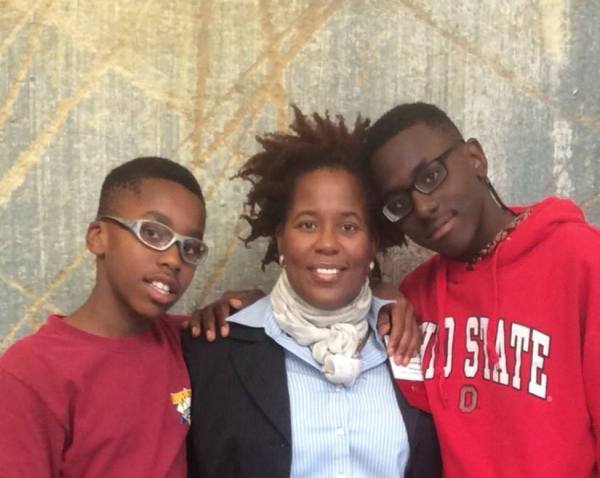
August 2: Three years ago, after #TrayvonMartin died my sons wanted to know “Mommy, what are we going to do?” They asked that question as they begin to record, on their bedroom wall, the names of every unarmed black person who was killed by rogue cops or would be vigilantes…like #MichaelBrown #JohnCrawford #EzellFord #DanteParker #TanishaAnderson #AkaiGurley #RumainBrisbon #JerameReid #TonyRobinson #PhillipWhite #EricHarris #RekiaBoyd #EricGardner #DontreHamilton #AiyanaJones (2010) #JordanDavis #TamirRice #WalterScott – The list kept growing and growing and they kept asking me. We would speak their names into the wind and they kept asking me. We would pray for their families and still, they kept asking me. When #FreddieGray was murdered, they stopped asking and begin to tell me what we could to do to be involved. I mark that as the moment that their activist spirit, the one I had been nurturing and feeding and cultivating from the time that they could read and write, was finally released. I spoke about this at a Conference yesterday and a graphic artist captured my thoughts/my ideas/my sentiments and with the picture of me holding my boys – my heart!

May 2: Screaming Out Against Injustice
Day #1 Spending the day, marching and protesting with my sons. I think they know what they are fighting for but they still have a long way to go. This is just the beginning of their activist spirit. There are some things that I thought I would never have to say to my black sons: 1. Pack a sandwich for the Protest March because I am not buying any snacks
2. No, that money is not for Starbucks, it’s cab money in case we get separated
3. If they use pepper spray, close your eyes, bow your heads, and use the milk I packed in your bag. No don’t drink it, pour it in your eyes.
4. If we get separated – ask one of the Bloods or Crips for help
5. If I get arrested – don’t come with me, call your father for help
6. The song is “No weapon formed against me shall prosper” Not “No weapon formed against me Is Proper”
7. No you can’t go march with the Black Israelites just because you like their purple shirts
8. No you can’t go take a selfie with the National Guard
9. Yes when they start praying you should keep your eyes open
10. No I don’t think you should get yourself arrested as a show of solidarity for the cause
Day #2 of the March and my list continues…
1. No I don’t think it’s counterrevolutionary if I stop for coffee on the way to the March.
2. Stop telling the lady that you want integrated hot chocolate.
3. An iPhone 6 will absolutely Not make you a better protestor.
4. Don’t you dare stage a walk out during your history class just because your teacher is not talking about Freddie Grey.
5. “Mom, how far are we going to march? “I don’t know” “How far are we going to March?” “I don’t know.” “How far–” “Until freedom comes!”
6. Yelling I’m the next Dr. King while doing The Whip so doesn’t go together.
7. Get out of mirror practicing how you are going to look for your mug shot. I said that wasn’t funny the first time you did it.
8. Yes I know that your #BaseballLifeMatters but you are missing practice for the March tonight.
9. What do you mean pretend that I’m not your Mom? I think that girl is 18 and you are 14.
10. You can say “you have nothing to lose but your chains” all day long but you are not catching a cab and meeting me at the end of the March.
My Groove Echo: 11.23.15
November 24, 2015
(for Jordan Davis, forever 17)
We are not invisible
simply because you refuse to see us.
We will not stop fighting
simply because you demand our obedience.
We will not stop dancing
simply because you refuse to hear our song.
We will not give up
simply because you want us to believe
that power/concedes without a struggle.
We are not going to forfeit our voices
simply because you are tired of hearing our words.
We will not stop shouting
simply because you try to cut out our tongues.
We will not stop coming
simply because you hold up your palm.
We will not continue to be your monsters,
the things that go bump in your night,
the reason you toss and turn in your sleep
simply because you refuse to recognize our humanity.
We will take our pain and turn it into sunshine.
We will continue to see the beauty of the world through our own eyes.
-karsonya wise whitehead “today 7.17.14: my heart stopped”
copyright 2015

SONGS IN A KEY CALLED BALTIMORE
November 9, 2015
(I am frustrated because right here in my adopted beloved city called #Baltimore –> we have hit 293 deaths thus far! #BlackLivesMatter they do/ they do/ they do and we need to Sing this Song Until the Whole World Hears and Believes! I explore this idea in my poem, “Songs In a Key Called Baltimore,” in the upcoming special edition of Urbanite magazzine)
 .
.
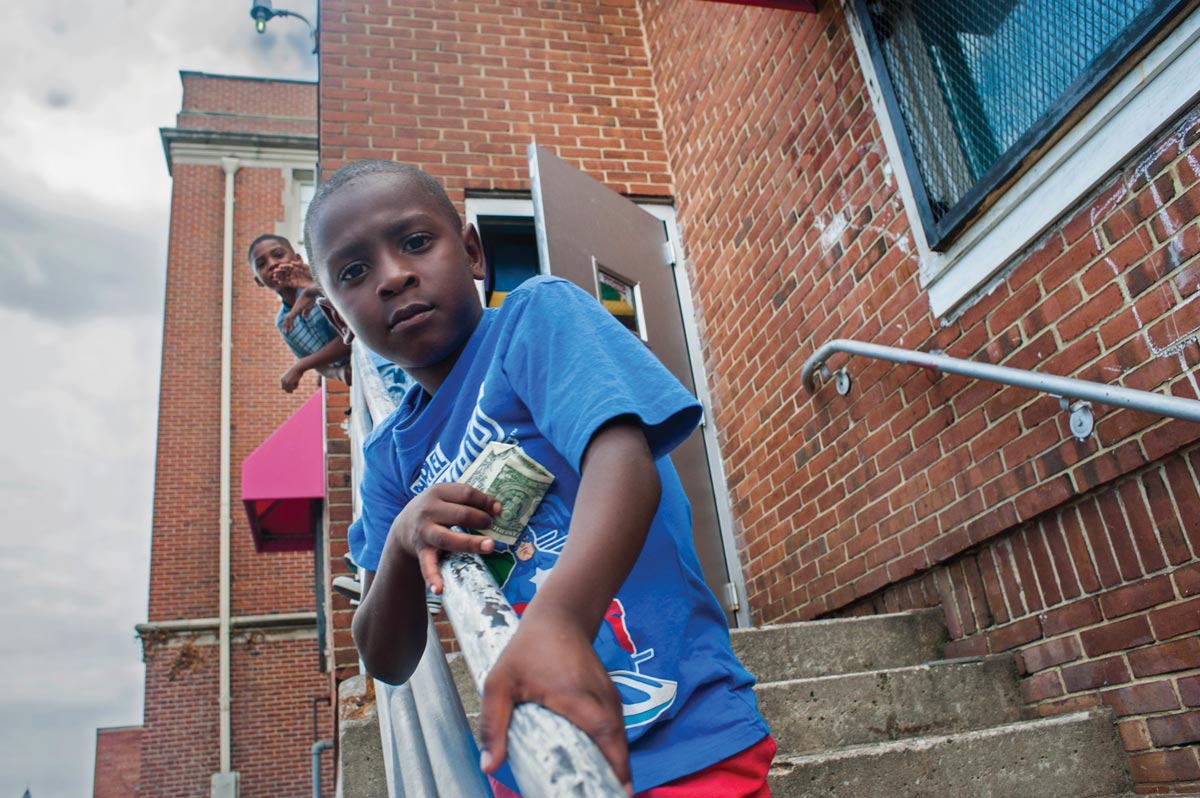
What’s it like to raise two young black sons in a city like this? As Karsonya Wise Whitehead says, it’s often infuriating, sometimes terrifying, and ultimately inspiring.
I would like to write a song about peace/about reconciliation/about a city coming back together and working for the common good.
I would like to proclaim that #BlackLivesMatter and then point to the ways in which this simple concept/screamed and shouted, cried over and prayed about/has transformed the city and altered our space.
I would like to teach my sons about peace even though I am raising them in a city where peace has never been the norm/where peace is not taught on the playground/nor practiced in the school/nor modeled on the street corner.
I try and hide my frustration because in the aftermath of the Uprising/a time when black and white people named their pain/life has settled back down to the familiar/to a time where black bodies are once again endangered, black life is once again criminalized, and black spaces exist, once again, only on the edges of both the city and our minds.
I am not old enough to remember life before Brown v Board, when black and white spaces were clearly marked.
I suspect (though) that it was not much different than it is now in places around Baltimore and places across America where the crime of breathing while black is still punishable by death.
My heart always skips a beat when a cop’s car is behind me while I am driving at night/ And though my sons are not old enough to drive, I am already frightened/concerned/angry/frustrated as I think about the day when they will be stopped for the crime of driving while black.
There are days when being black in America overwhelms me and makes me want to spend the day in bed/and times when being the black mother of black boys in Baltimore City makes me wish I had enough money to move them somewhere where I could keep them safe.
Safe from them—the ones who see their lives as expendable and unnecessary/and safe from us—those who look at them without realizing that they are mirrors that simply reflect all of who we are supposed to be.
I often think about slavery and how different life was when you could see the hand that held the chain that was attached to the ball that was tied to your ankle.
We come from a people who experienced this daily and still chose to survive.
Survival is our legacy.
And since we survived the Middle Passage as involuntary passages on a trip that sealed our fate/ And we survived slavery, whips and latches by learning how to give way and stay small/ And we survived the Civil War by claiming freedom at the hands of those who looked like our oppressors/ And we survived Jim Crow by teaching our children the unwritten rules that were marked by our blood/ And we survived black mayors who moved from our communities, took a piece of our spirit but left their humanity behind—we will survive this.
And though there are times when we are like strangers in a foreign land/We look around and wonder how we got here/We take stock and realize how little we actually have/We wonder how long we will continue to suffer and die at the hands of both the oppressor and of the oppressed—and despite all of this, we survive anyway.
There are days when I look at my sons and my heart swells with pride/ As I think about all that they used to be and all that they can become/ And then I stop and catch my breath/ I grab my chest and clutch my pearls/ I blink back tears and shake my head/because I am the mother of two black boys being raised in a post-racial world/where cries for justice for Freddie and for Tyrone West and for Rekia Boyd and for Sandra Bland and for Aiyanna Jones and for Tamir Rice still get swallowed up and suppressed.
There are nights when I stand in the doorway of their room—not to wake them up for the revolution but to simply remind myself that, just for a moment, they are still safe and they are still here.
All I want is what every other mother wants around this city—the simple comfort of knowing that my sons’ lives matter—to those who look like them and those who don’t/and that my work, to pour love, light, and truth into them, will not be in vain.
And with this very simple truth/as my songs of peace get lost in my never-ending cries for justice, I know we will survive. We will rebuild. We will move on. Survival is our legacy and surviving everyday—in this racist and unjust system—is our goal.
Karsonya Wise Whitehead is an associate professor at Loyola University Maryland and the author of Letters to My Black Sons: Raising Boys in a Post-Racial America.
– See more at: http://www.urbanitebaltimore.com/100/songs-in-a-key-called-baltimore/#sthash.AphHKcbq.dpuf
“On Being A #BlackMommyActivist” –>My Stoop Story
October 30, 2015
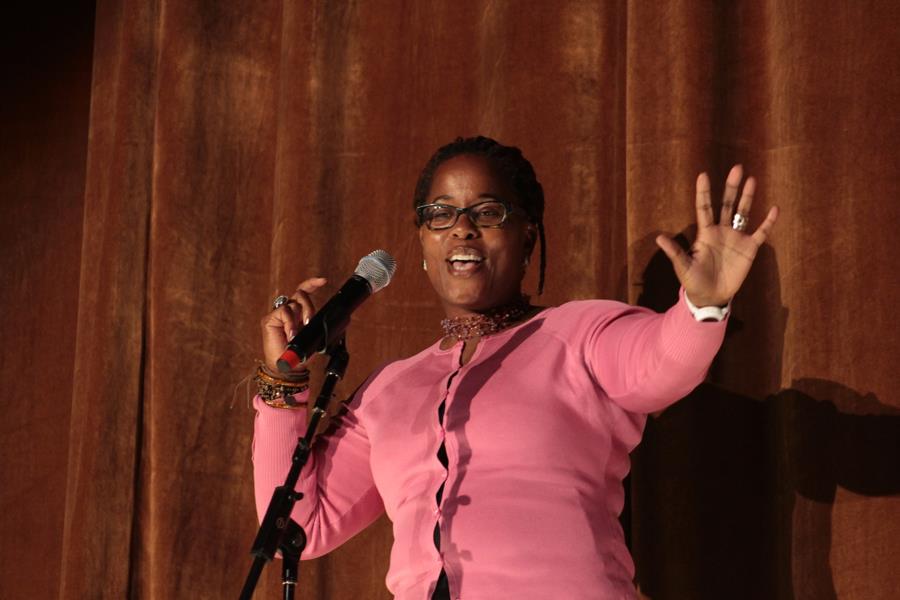
My Stoop Story <–Click Here
“On Being a #BlackMommyActivist” is HERE!!! Listen. Laugh. Enjoy. Share. Repeat. Over and Over Again.
“In the instance when I realized that I was pregnant, I decided that I was going to be a #BlackMommyActivist.” If I am going to have children, I am going to raise them as black warrior scholars. I had this idea of the perfect blend of the activism of Malcolm X and Assata Shakur blended with the wisdom of Dr. King and Mary McLeod Bethune. So when they were younger, we would have mock protest meetings in the basement and we would do Sit-In movements in the backyard.” –kww (10/17/2015)
 Karsonya (Kaye) Wise Whitehead #blackmommyactivist