A Pedagogy of Resistance in the Struggle Against White Supremacist State-Sanctioned Violence*
Tyson E.J. Marsh, Ph.D.
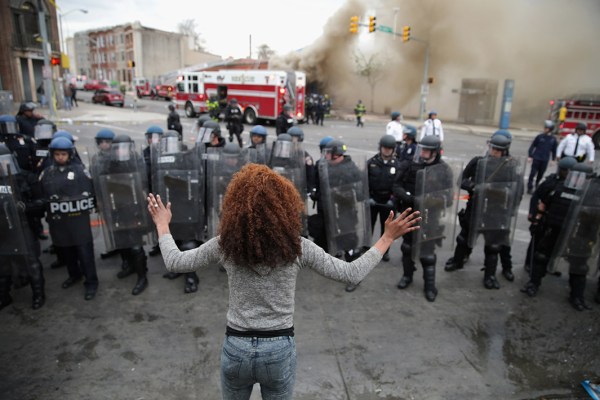
Photo by Brendan Smialowski/AFP/Getty Images
Intended Audience: Middle School and/or High School Students
Overview: By middle school and high school, Black and Brown youth are disproportionately likely to encounter police or experience punitive zero-tolerance policies. As schools that serve predominantly Black and Brown youth are increasingly militarized through the presence of surveillance cameras, metal detectors and armed police officers, in-turn, it is critical that we become aware of how Black and Brown youth internalize their militarized school and community surroundings. As educators, we must also develop an understanding of how these surroundings communicate deficit expectations to Black and Brown youth. In order to understand how Black and Brown youth make sense of and experience their surroundings, it is imperative that we co-create spaces with them, in and outside of schools, for them to develop their voices and communicate their experiences, particularly in a standardized reform environment in which such opportunities have been severely limited. Compounded by the election of Donald Trump to the highest office in the land, the very real possibility of known white supremacists serving on the White House staff and the potential appointment of right wing school choice advocate Betsy DeVos to the post of Secretary of Education, we cannot fail to seize the opportunity to co-create spaces and opportunities for youth of color to express their voices, and translate their words into action in the struggle against white sup
Scope and Sequence: Through analysis and engagement with primary sources and popular culture that speak to the historical and present-day struggle for racial and economic justice, youth will consider how politics, the arts, and religion/spirituality have served as critical locations in the struggle against racial and economic injustice. In addition, students will develop their voices and sense of agency by identifying how these locations, and others, might be revisioned and combined to address issues of injustice within their own schools, neighborhoods, and communities.
National Council for the Social Studies Standards
History
- Help learners to identify issues and problems in the past, recognize factors contributing to such problems, identify and analyze alternative courses of action, formulate a position or course of action, and evaluate the implementation of that decision.
Individuals, Groups, and Institutions
- Help learners understand the concepts of role, status, and social class and use them in describing the connections and interactions of individuals, groups, and institutions in society.
- Help learners analyze group and institutional influences on people, events, and elements of culture in both historical and contemporary settings.
- Assist learners as they explain and apply ideas and modes of inquiry drawn from behavioral science and social theory in the examination of persistent social issues and problems.
Culture and Cultural Diversity
- Have learners interpret patterns of behavior reflecting values and attitudes that contribute or pose obstacles to cross-cultural understanding;
- Guide learners as they construct reasoned judgments about specific cultural responses to persistent human issues;
- Have learners explain and apply ideas, theories, and modes of inquiry drawn from anthropology and sociology in the examination of persistent issues and social problems.
Civics and Government
- Assist learners in developing an understanding of citizenship, its rights and responsibilities, and in developing their abilities and dispositions to participate effectively in civic life.
Objectives:
- Students will develop critical insight and thinking skills regarding the relationship between race, racism and economic exploitation.
- Students will recognize the role that formal and informal institutions have played and continue to play in reproducing racial and economic inequality.
- Students will consider the historical and present day utility of political, artistic, and religious/spiritual counter-public spheres as physical and ideological spaces of resistance to various manifestations of white supremacist state-sanctioned violence.
-
Students will work to become more aware of the way in which their agency and voice can inform creative approaches to activism in the struggle for racial and economic justice
Lesson #1: Examining Racism and Economic Injustices
Overview
Initiating the lesson, the teacher should provide a broad description/synthesis of different types of racism (e.g. individual, institutional, colorblind racism, etc.) and economic injustice (See Teacher Resources below). Students should be asked to break up into groups of three to discuss how they have experienced and/or understand racism and economic injustice/inequality within their own community and schooling experience. Each group should be asked to provide at least one concise example of racist injustice and one example of economic injustice that they have experienced or observed, which should be recorded or written on the board.
Part B
The teacher should proceed by engaging the class in a structured dialogue about the way in which racial and economic injustices/inequalities might interact and intersect with one-another based on small group discussions and the description of racism/economic inequality provided by the teacher. At the conclusion of the discussion, the teacher should ask students to think about how, historically, and in the present day, racism and economic inequality has/is being addressed through politics, the arts, or religious/spiritual means.
For homework, the students should be provided with examples from one political figure, one artist, and one religious/spiritual leader (e.g. excerpt from a speech transcript, selected writing, artistic representation from leaders like Fred Hampton, Angela Davis, June Jordan, Amiri Baraka, bell hooks, David Walker, etc.), which will be discussed in the following class session. In addition, students should be asked to identify and bring to class the name of one politician, one artist (defined broadly), and one religious figure that has been/is influential in addressing both racism and economic inequality, whom they should also be prepared to discuss briefly with their group. NOTE: Students should be encouraged to think of figures beyond those who are typically discussed in the curriculum.
Lesson #2: An Historical Contextualization of Injustice
Overview
In beginning lesson two, the teacher should ask students to engage with their groups regarding how the assigned examples (political figure, artist, religious/spiritual leader) used their respective venue to discuss and act against racism and economic injustice.
After students have completed their brief discussion, the teacher should engage the class in a mini-lecture to contextualize, historically and in the present, the specific injustices that each of the key figures and their respective movements were seeking to address, using primary sources. For example, a comparison between David Walker’s Appeal, the Black Panther 10 Point Program, and the Guiding Principles of the #BlackLivesMatter Movement could provide critical insight into the way in which the struggle against white supremacist state-sanctioned violence has shifted and transformed over time. At the end of the mini-lecture, the teacher should pose the following questions:
- How have we made progress in relation to racism and economic inequality?
- How does racism and economic inequality persist at the societal level, particularly in relation to institutions (e.g., legal, politics, religion, education, etc.)? Is it different, or is it the same?
- How can we use politics, the arts, and religion/spirituality to address racism and economic inequality?
- How can we draw upon and strengthen the strategies proposed or employed by the political figure, artist, and religious/spiritual leader to address both present-day racism and economic inequality?
Conclusion
In concluding the discussion, and building on the final questions, students, in their groups of three, should be asked to work together to identify one specific example of how racism and economic inequality converge in their specific school and/or community. (As an example, some of my former students have made connections between the resources available to them in support of their academic success in contrast to those that are not available to them, but are available in neighboring, affluent, white communities [AP courses, college counseling, a stable and experienced teaching staff with high expectations, etc.]). Upon identifying a specific example of the convergence of racism and economic inequality, each group member should be assigned, individually, to speak to how the example can be addressed through political engagement, the arts, and religion/spirituality, respectively. In addition, students should be encouraged to think critically about how to build on and “reversion” the historical work of political figures, artists, and religious/spiritual leaders to address the context and community-specific issue. In addition, the following approach should be considered, though students should rely on their own voice and sense of agency to complete this assignment.
- Use the arts (music, photography, dance, drawing, counter-storytelling etc.) to articulate the issue, as well as educate peers and community members.
- Identify how the issue is framed through politics, personalize the issue, and envision new and unique opportunities for political engagement and activism to reframe and address the issue, as well as educate peers and community members.
- Use religion (multi-faith) and/or spirituality to articulate the moral and ethical imperative and obligation of addressing the issue, to appeal to a broad audience.
- Articulate a tangible plan of action with the intention of enacting change.
Lesson #3: Students as Teachers and Leaders
Overview
Lesson three situates the students as teachers, and teachers and community as students, working towards the end of educating their peers and community members. As such, and after a “rehearsal” and run- through where each group can be provided with critical peer and teacher feedback, students should be provided with the opportunity to present their work in a venue where they can engage a larger audience (state legislature, city council, school-board, school event, community event, political/artistic/religious or spiritual event). To maximize engagement with the audience, students might also work together to identify the venue where they might have the strongest impact. The format and timing of the presentation of group work will be dependent on the chosen venue, though students should gear their presentation to the respective venue and audience. In addition, one or two groups may be positioned to present collectively, if they have identified the same community and/or school issue.
Presentation Format
It is of the utmost importance that in undertaking this work, one must acknowledge the strength and vulnerability required for youth to speak up and speak out on issues of racial and economic injustice, which are largely a result of the differential and unequal power relationship between adults and youth. As such, the teacher must serve as a strong advocate for the students presenting their work. In addition, the teacher should briefly introduce the origins of the initial two lessons that contributed to student identification of contextually specific examples of the convergence of racism and economic injustice, which have ultimately informed the development of the presentations. This requires reminding adults and other participants that the issues that will be discussed were generated from the specific experiences of student presenters, as well as the setting of ground rules for a constructive dialogue following student presentations. Specifically, adult participants should be reminded that they should treat presenting students with the same respect that they would expect from them, or that they might have shown their teachers. In addition, students should be encouraged to believe in the strength behind their voices, experiential knowledge, and agency. Specifically, the teacher may want to engage the audience to establish the following guidelines:
- The audience should limit responses and feedback to youth presentations to an allotted, set time prime at the conclusion of presentations.
- Audience participants should be encouraged to provide constructive feedback to youth presenters, engaging them in dialogue that will assist the presenters in revisiting and strengthening their approach to addressing the issues they are presenting.
- Adult participants should encourage student presenters to advance their goals and plans, and offer resources that might assist in this process, if available.
- At the conclusion of presentations and the question and answer session, students and adults should have the opportunity to informally debrief, and have the opportunity to have meaningful discussions surrounding the issues discussed.
Assessment
In assessing student presentations, students should be evaluated on the following:
- Creativity and effectiveness in concisely identifying and communicating the convergence of racism and economic injustice in their community.
- Clear and concise explanation of the convergence of racism and economic injustice through the lens of politics, the arts, and religion/spirituality.
- Articulation of how the issue can be understood and addressed through building on, reversioning and extending historical and present day political, artistic, and religious/spiritual approaches to addressing the issue.
- Identification of a clear, concise, creative, and tangible plan of action to address the issue at the local community level.
Instructional Resources for Teaching and Learning
- Margaret Andersen and Patricia Hill Collins, Race, Class, and Gender: An Anthology, 9th edition (Kentucky: Cengage Learning, 2015). This anthology offers concise insight into race/racism, class/economic inequality, gender/sexism, and is an ideal source for teachers seeking to discuss these issues.
- Donn C. Worgs, “”Beward of the Frustrated…”: The Fantasy and Reality of African American Revolt,” Journal of Black Studies 37, no. 1 (2006): 20-45. This article considers political, artistic, and religious/spiritual figures and their role in influencing revolt and resistance to oppression.
- Gören Olson, director. Concerning Violence (Final Cut for Real, 2014), DVD, 78 minutes. This award-winning documentary focuses on African resistance to colonial rule in the struggle for African Liberation.
- Gören Olson, director. The Black Power Mixtape: 1967 – 1975 (Independent, 2011), DVD, 100 minutes. This award-winning documentary focuses on key figures in the Black Power Movement.
- Deb Ellis and Denis Mueller, directors. The FBI’s War on Black America (CreateSpace, 2007), DVD, 47 minutes. This documentary examines the FBI’s Counterintelligence Program and it’s role in compromising the Black Power Movement.
- Mike Gray, director. The Murder of Fred Hampton (Facets, 2007). DVD, 88 minutes. This documentary attempts to document the work of Black Panther Fred Hampton who, in the middle of the film shoot, is killed by Chicago police.
- Liz Garbus, director. What Happened, Miss Simone? (Netflix, 2015). Online Video, 101 Minutes. This documentary traces the life and activism of Nina Simone.
- Reggie Turner, director. Before They Die! (Mportant Films, 2008), DVD, 92 minutes. This documentary chronicles the stories and narrative of the survivors of the 1921 Tulsa Race Riots, articulating their quest for justice.
- Websites with Sample Primary Documents (#BlackLivesMatter, Black Panther Ten-Point Program, David Walker’s Appeal)
- Websites with Descriptions of Types and Forms of Racism and Economic Inequality:
http://nobullying.com/what-is-racism-definition/
http://www.tolerance.org/article/racism-and-white-privilege
http://www.tolerance.org/lesson/economic-injustice-affects-us-all-lesson-viva-la-cause
Additional Websites for Consideration:
http://www.rethinkingschools.org/archive/29_03/edit293.shtml
http://www.pbs.org/wgbh/aia/part4/4h2931t.html
https://www.poets.org/poetsorg/text/brief-guide-black-arts-movement
http://www.creativeresistance.org
http://www.npr.org/templates/story/story.php?storyId=89236116
http://radicalteacher.library.pitt.edu/ojs/index.php/radicalteacher/issue/view/2/showToc
https://www.youtube.com/watch?v=BfP_IFlL74A
http://www.pbs.org/wgbh/amex/eyesontheprize/about/pt_206.html
http://www.edchange.org/multicultural/speeches/malcolm_x_ballot.html
http://www.pbs.org/wgbh/pages/frontline/shows/race/interviews/davis.html
*This lesson plan was originally published in the Association for the Study of African American Life & History‘s Black History Bulletin, v79, (1) and is reprinted here by permission of the author. It has recently been upload and is available here.
Replacing Fear with Curiosity: Using Photographs and Poetry to Process Election 2016
Tracy Kent-Gload

“I’m Young, Black, and Male. I Live in Fear of a Trump Presidency.”
Intended Audience: Elementary School Students
Overview: This material is not designed not as a formal lesson plan, but simply to replace fear with curiosity. We have a long road ahead of us. What do students need from teachers after the election? One thing we do know, is that Trump MUST work with lawmakers and the Supreme Court. He does not have absolute power. The following activities are designed to open respectful dialogue, connect our history as a country to what is going on in our country right now.
Scope and Sequence: This lesson uses poetry and art to build a foundation for college and career readiness. It offers students an opportunity to explore their own conceptions of fear as curiosity. As well, it provides ample opportunities to engage in Part I, a variety of rich, structured conversations- as part of a whole class, in small groups, and with a partner. Being productive members of these conversations requires that students contribute accurate, relevant information; respond to and develop what others have said; make comparisons and contrasts; and analyze a multitude of ideas in various domains.
New technologies have broadened and expanded the role that speaking and listening play in acquiring and sharing knowledge, and have tightened their link to other forms of communication. Digital texts confront students with the potential for continually updated and dynamically changing combinations of words, graphics, images, hyperlinks, and embedded video and audio.
Common Core State Standards
SL.5.2 Summarize a text read aloud, or information presented in diverse media and formats, including visually, quantitatively, and orally.
SL5.3 Summarize the points a speaker makes and explain how each claim is supported by reasons and evidence.
Lesson 1: Walk into the Photograph
- Give each student a photograph… for older students, a cartoon may be appropriate as a follow up. Have them take notes on their personal feelings and record them on the Walk into the Photograph page.
- Create a postcard telling a family member or friend about what you are doing and seeing on your visit to the place.
- Gather in a group and discuss using the attached the Teachable Moments guide sheet.
Lesson 2: Poetry Connection
- Pass out poems by various Civil Rights Notables. Discuss in groups. As you facilitate analysis of metaphors and symbolism, take notes. Illustrate the way you visualize the symbols and metaphors.
- Pass out the current poem, Election 2016. Have students analyze the poem, and make their own connections with what they read in the older poems.
- The teacher will ask a question of those in the inner circle only. Those in the outer circle will observe the discussion and be prepared to summarize what they have heard.
- Take a few minutes to think about your answer. You can use the notes from the activity above if you would like.
- Go around the circle, letting each person answer the question.
- After everyone has had a chance to answer, you can respond to what has been said. If you disagree with someone’s answer, this is your chance to explain. You might want to connect to something in your own experience or raise a related question.
- The inner circle group should answer the first two questions and then ask the outer circle group to summarize what they heard.
- Then the groups should switch and the outer circle group should become the inner circle group and answer the third and fourth questions.
Essential Questions:
- How do I respond when faced with tough circumstances?
- How have my background and experiences contributed to the person I have become?
- What struggles and obstacles have I, and others who share my cultural background, had to overcome?
- How and why does society continue to put down certain groups?
- For what do I want my “voice” to be used?
Materials Needed:
- Various poems written by people active in the Civil Rights Movement, such as “I, Too” by Langston Hughes
- Poems from current events, such as “Election 2016”
Lesson 3: Word Work
Authors often use imagery to create comparisons between literal and figurative elements, add depth and understanding to a literary piece, and evoke a more meaningful experience for the reader. Examining use of imagery in poetry can help you understand and interpret the poem’s theme and message.
- Before reading the poem, define or review definitions for the following elements of imagery: personification, metaphor, simile, onomatopoeia and hyperbole.
- Read poems in small groups or partners.
- Use a highlighter to identify examples of imagery in the poem.
- Each group should select one of the poems to analyze and illustrate.
- Discuss examples of imagery in your stanza, the type of imagery used and what you believe the element of imagery represents in the poem’s theme. For example, the crystal stair in Langston Hughes’ poem—would be symbolic of slave owner’s mansions in the past, and now would symbolize white privilege.
- Once you have finished, present the analysis to the rest of the class. Encourage other groups to add to their interpretation.
- Once all groups have presented, combine with another group and draw conclusions about how the imagery in the poem contributes to the poem’s overall message. Connect to the present with what is going on in 2016.
Close and Critical Reading
Readers are free to develop their own interpretations. Interpretation may be dependent on students’ own cultural identity, experiences and knowledge, and it may be different than the interpretation of their classmates.
- Poems are often best interpreted by first reading them aloud. Pair up with a partner. Take turns reading the poem aloud while your partner listens. What emotions do you hear in your partner’s interpretation? Did you read the poem in a similar manner or differently?
- Annotate the poem with your partner using the following questions:
- Who do you think the speaker/narrator of the poem is? Is it a person? A cultural group? Identify words or phrases that help you identify the speaker/narrator.
- How does the speaker/narrator seem to feel about themselves? Draw a face that represents that emotion (e.g., a smiley face, sad face or angry face) next to a word phrase that exhibits it. Have you ever felt that way about yourself? If so, share with your partner what makes you feel that way.
- To whom do you think the poem is directed? Highlight words and phrases that support your answers and share them with your partner.
- What message is the writer trying to give to the person or group to which she is writing? Have you ever had to give a similar message to someone? If so, when?
- What do you believe the poem’s overall theme is? Examples include hopelessness, strength, resiliency, spirit and anger. Write the theme you have identified at the top of the poem. Then draw an arrow to a word or phrase from the poem that supports that theme.
- Do you see this poem in a historical context? If so, explain that context to your partner.
- Finally, consider and share with your partner how your own knowledge, experiences and cultural identify influence the way you have chosen to interpret the poem. Have you interpreted it differently than your partner?
Community Inquiry
After students have annotated the text, talk with others in the class about it. Divide into two groups. Set up the room with two concentric circles of chars—one large circle of chairs and a second, larger circle of chairs outside of it. One group will sit in the inner circle and one group will sit in the outer circle. Each student should bring a copy of the poem. Conduct like Socratic Seminar.
Follow this procedure for these four questions:
- In what way(s) do you personally connect with this poem?
Write to the Source
- From where does your voice come: your family, your culture, your beliefs, your friends, and/or your experiences?
- For what would you like to use your voice, now and in the future?
Do Something
Work with your school counselor and other stakeholders to champion and create a club or group at your school dedicated to helping students find their voices and overcome adversity if necessary. The club could simply be a place for students to find resources or it could be a more complex, peer-to-peer support network.
Extension Activity
Research the civil rights movement, and make connections. Are we in the midst of another one?
Resources
Teachable Moments (adapted from Terry Poisson)
Some of the most personally gratifying teaching moments have come when I wanted to avoid a potentially uncomfortable situation but dove in head first! The Social Studies classroom should be the safe place you can “process” and reflect about events happening around the world and even in your back yard. The past several days have held many of us captive in front of our televisions and/or devices watching Baltimore’s pain, anger and resilience, so discussing the issue of freedom (slavery) may be a sensitive topic.
These discussions work best when teachers are honest with their students: These conversations are hard. They don’t always feel good. I do not have all the answers. Elicit their support to help you understand the situation right along with them, all while reminding them that you honestly want to hear how they process this situation.
Before beginning controversial discussions, it’s essential to build in strategies for managing conflict. Do not just open the floor to wild debate about the topic. For many, this is not just a Social Studies history topic. Many of them know what its like to have their freedoms and their rights taken away. In addition, if it’s not about their families’ lives, activities, friends, school and/or property, it may be difficult to comprehend.
Agree to discussion ground rules:
Socratic Seminar Rules
Listen: start a sentence after the previous speaker has finished.
Share your opinion: support comments with personal experiences, connections, and/or text.
Build on the comments of others: when disagreeing, do it agreeably. Ask a question, rather than make a statement.
“Disagree with Grace” Statements:
Remember: Using “but” negates. Using “and” hears.
“You’re right and this is how I feel/think…”
“That’s okay and…”
“That’s true for you and what’s true for me is something else…”
“That’s a really good point and I feel/think differently…”
“I was curious what you thought when you said…”
“I was wondering what you thought/felt when you said…”
“Can you tell me more about what you meant when you said…”
Resources: Stepping Into a Painting
STEP 1: Imagine you are away visiting the place where this painting takes place. WALK INTO THE PAINTING: What do your SENSES tell you? What do you HEAR? What do you SMELL? What do you SEE? What do you TASTE? What do you FEEL against your skin? How do you FEEL inside?
STEP2: NOW, write a postcard home telling a family member or a friend about what you are doing and seeing on your vacation to this new place!
Resources: Poetry
Election 2016
Fading presence of a stranger,
People warn me of the danger,
Broken promises full of truth,
Debates held faults at the root.
One ballot in your favor,
One ballot I can savor,
Was mine counted I wonder,
Who will win I ponder.
Explosions and walls erected,
Some happy he was selected,
People crying and rejoicing,
Flags burning as they sing.
Will he keep his words?
Will his promises turn to birds?
Will this blindness fade?
Will I see past the shade?
One evil, one evil I shout out,
Only two choices I can count,
Together we are broken,
Sanity remains as a token.
Copyright © Kofoworola George-Taylor | Year Posted 2016
Other Resources
As I Grew Older poem by Langston Hughes
Still I Rise poem by Maya Angelou
Caged Bird poem by Maya Angelou
I Wish I Knew How It Felt to Be Free song by Nina Simone
A Change is Gonna Come song by Sam Cooke
Intimidation and Harassment in the Aftermath of the Trump Election: What Do We Do Now?
Sarah Militz-Frielink & Isabel Nunez, Ph.D.

Intended Audience: Middle and High School Students
Overview: This lesson explores 867 hate incidents that were reported, collected, and analyzed by the Southern Poverty Law Center (SPLC) just 10 days after the 2016 Trump election. The incidents documented in this report do not include the majority of hate incidents that have occurred since November 8, 2016. “The Bureau of Justice Statistics estimates that over two-thirds of hate-crimes go unreported to the police. In light of the Trump election, students may also be grappling with hate incidents at their schools and in their communities and may be struggling with their own roles during the incidents: as perpetrators, as bystanders, as targets/agents, or allies to the targets/agents. In this lesson, students will become familiar with incidents from the nation as well as in their own communities and schools. Additionally, they will examine the interpersonal conflicts between those who share their perspectives and those who have differing perspectives. They will also write a short social activist plan in response to those incidents. A goal is for students to understand the harmful effects of hate incidents and ones like it in their schools and communities, and how they play a role in each one of these incidents. An example of incidents that students will read about is as follows:
In the SPLC report, a Washington state teacher reported that at her school:
“Build a wall” was chanted in our cafeteria Wed [after the election] at lunch. “If you aren’t born here, pack your bags” was shouted in my own classroom. “Get out spic” was said in our halls.
A mother from Colorado offered this story:
My 12-year-old daughter is African American. A boy approached her and said, “Now that Trump is president, I’m going to shoot you and all the blacks I can find.”
Students will have opportunities to examine their own role in incidents, like the ones shared above, and to understand the symbiotic role we play in a complex society, whether willingly or unwittingly. For instance: students who come from white nationalist families, who take the stance of denial of these incidents or who act as perpetrators of these incidents need to understand their role as perpetrator or bystander. Perpetrator or bystander= injustice, and sometimes death. Conversely, students who operate as spectators bear the same responsibility.
Scope and Sequence: This lesson begins with students reading the entire report (a primary source) written by the Southern Poverty Law Center. The report is divided up into eight sections: anti-Immigrant incidents; anti-Black incidents; anti-Muslim incidents; anti-LGBT incidents; anti-Women incidents; anti-semitism incidents; White nationalism incidents; and anti-Trump incidents. It is important to note that of the 867 hate incidents, only 23 incidents were anti-Trump. Students will examine individuals, groups and institutions.
Historical Thinking Standards (National Standards for U.S. History)
Standard 3: Historical Analysis and Interpretation
Common Core State Standards
This lesson plan is designed to meet the Common Core State Standards in History/Social Studies for grades 6th-12th grades:
English Language Arts Standards » History/Social Studies » Grade 6-8
English Language Arts Standards » History/Social Studies » Grade 9-10
English Language Arts Standards » History/Social Studies » Grade 11-12
Objectives
Processes:
- be able to describe interactions between and among individuals, groups, and institutions. Learners will be able to identify and describe examples of tensions between and among individuals, groups and institutions.
- be able to show how groups and institutions work to meet individual needs and promote or fail to promote the common good.
- be able to gather information about groups in their school through such tools as surveys and interviews.
Products:
- demonstrate understanding by writing paragraphs that describe relationships between individuals, groups, and institutions.
Teacher Preparation and Background Knowledge:
Please review the strategies and content needed to effectively teach this lesson.
1) Students will identify and note details about the following “hate” incidents in the Southern Poverty Law Center Report (SPLC):
2) Students will review, research, and synthesize the major incidents that happened since Trump won the 2016 presidential election from the SPLC and their own school and community.
- Students should write a 2-page synthesis of the SPLC report.
- Students should research harassment and intimidation in their own school and community under their teachers’ supervision to local new sources, school paper, and/or primary sources that the teacher deems appropriate for this exercise.
- Students should write an updated synthesis adding on to the SPLC report including their own school and community.
3) Self-Reflection:
- Have students ask questions to lead to reflections on an action plan.
- Take out a copy of Linda Christiansen’s “Acting for Justice” Handout. Give student at least 2-3 copies of it.
- Go over one of the incidents in the SPLC report or, if available and emotionally safe for the students, a local school or community incident.
- Have students identify the targets and/or agents, allies, bystanders, and perpetrators or an incident.
- Then ask students to identify where they fall/fell into the categories during the incident or where they would fall into the categories during a similar incident.
| Target/Agent[1]
Ally
|
|
| Bystander
Perpetrator
|
4) Community Praxis:
- Have students work individually to come up with an activist plan to educate others about Harassment and Intimidation since the Trump election.
- Encourage students to discuss ways to educate the public through social media, peaceful protests, and youth teach-ins to increase public awareness and with the goal of strengthening relationships between individuals, groups, and institutions.
Essential Questions
- How have I been affected by harassment and intimidation in the wake of the Trump election? How has my school and community been affected by harassment and intimidation in the wake of the Trump election?
- What are effective ways to respond to hate incidents in the wake of the Trump election? What is my social activist plan?
Day One: Understanding Harassment and Intimidation in the Wake of the Election
Motivation
- Tell the students that they are going to spend the three days talking about harassment and intimidation in the wake of the 2016 Trump Election.
- Activate prior knowledge by asking the students to share what they know about hate crimes and harassment after the Trump election. Write their answers on the board and tell them the class will review the list after the readings to see what is confirmed by the report, noting that the report does not contain all incidents as 2/3 of hate crimes and incidents go unreported.
“Injustice anywhere is a threat to Justice Everywhere”. -Dr. Martin L. King
Shared Reading
- Explain to students that they are going to read a collection of real harassment, intimidation, and hate crimes that have happened in the United States since the Trump Election on November 8, 2016.
- Start by reading a few of the incidents that have occurred across the nation. Refer to a common incident in the local school or community that the students may or may not be familiar with so they know this is going to be a sensitive topic.
- Organize students in a large group (to prevent any potential bullying or mean comments that may happen in small groups about these incidents). Have them start in a round-robin fashion to read the sections aloud, taking turns.
Wrap-up
- Discuss what they learned from the report. Have student identify and take notes about the incidents—asking probing questions: What do you notice but did not expect? What do you notice that you can’t explain? Why do you think this is an important lesson? Why do you think this is happening?
DAY TWO: Review, Synthesize and Research
Motivation
- Building on the previous activity, this lesson allows students research hate crimes or incidents that may have happened in their own community or school using primary sources deemed by the teacher.
- Have students review what they read yesterday and write a 1-2 page synthesis of the SPLC’s report.
Research Groups
- Using primary local news sources such as the high school’s newspaper, local news stations, and any other sources deemed appropriate by the teacher, students will research harassment and intimidation incidents happening in their own community and school in research groups assigned by their teacher using the internet, google scholar, and library search engines. Students will write a paragraph or two building upon their synthesis of the SPLC’s report about their own community.
- Students discuss what they learned with the teacher about their local school and community. Questions such as: How has my school and community been affected by harassment and intimidation in the wake of the Trump election?
Homework
- For high school students, have the students watch “Social Justice SOS: What Happened, What’s Coming, and Why We Must Join Together Against Hate,” for homework.
DAY THREE: Self-Reflection
Large group
- Discuss the Social Justice SOS video and students’ reactions to the images and narratives and research presented to the audience.
Guiding Questions
- How did the video make you feel?
- What were some of the new vocabulary words you learned or have questions about from the video?
- What did you learn from watching the video about why we must join together against harassment, intimidation and hate?
- Tell students that today they are going to work as one large group with the teacher as facilitator to re-read a harassment or intimidation incident from their local community and/or the SPLC report.
- After the reading, give students Christensen’s “Acting for Justice,” Handouts.
- Define target/agent, perpetrator, bystander, and ally. Give students a chance to respond to their local incident(s) and one national incident from the SPLC report.
- Have students quietly (with a pencil) identify themselves (where they would have been) as targets and/or agents, allies, bystanders, or perpetrators during the national incident.
- Then ask students to identify where they fall/fell into the categories during the local incident and where they would fall into the categories today since the lesson.
Class discussion
Teacher asks students to respond to the questions, only if they feel safe enough to share:
- How have I been affected by harassment and intimidation in the wake of the Trump election?
- How have I been changed since we started these readings and discussions?
- What are effective ways to respond to hate incidents in the wake of the Trump election?
- What is my social activist plan?
DAY FOUR or WRAP-UP
- Ask students to write about one way that they can become social activists in their school and communities.
- Provide examples of how youth have done this through peaceful protests, social media blasts, and teach-ins around the nation.
- Pass-out notecards. Ask students to write down their social activist plan.
- Reiterate the following sentiment: When we become activists in our community and school, we are standing together against hate and injustice.
[1] One may be a target as a member of a marginalized group, but target may connote a victim mentality. So agent is a preferred term which encapsulates the life members of marginalized groups may experience as they navigate daily barriers to overcome racism, sexism, homophobia, classism, islamophobia, xenophobia, and antisemitism.
Using Photographs to Explore Differing Political Perspectives
Alicia L. Moore, Ph.D., Ph.D. and Angela Davis Johnson

Students with vote buttons in kindergarten class
Intended Audience: Upper Elementary (3rd-5th) School Students
Overview: Every four years, teachers are poised to conduct examples of classroom mock-elections that symbolize the US presidential election process and explore democracy. Accordingly, “classroom teachers integrate lessons into their curriculum that help students understand their privileges, responsibilities, and rights as good citizens” [Social Studies and the Young Learner September 2012] through seemingly pleasant discussions, writing assignments and other cooperative strategies. Yet, the most recent classroom election-related climate was decidedly different, and oft times contentious. The 2016 political season of presidential candidacies showcased a myriad of emotions, sentiments and, subsequently, actions – from those of resistance to racism, misogyny and bullying to those of intolerance and violence. Per the nearly 10,000 educators who responded to Teaching for Tolerance election surveys (one during and one after the election), “the campaign and its results: elicited fear and anxiety among children of color, immigrants and Muslims; emboldened students to mimic the words and tones of candidates and pundits; and disrupted opportunities to teach effectively about political campaigns and civic engagement.”[http://www.tolerance.org/voting-elections]
Scope and Sequence: The lesson uses photographs to explore and interpret the differing sentiments and perspectives conveyed (e.g., through political signs, t-shirts, etc.) during the 2016 presidential election. Students will examine a series of photos that capture the 2016 political context. With this context in mind, students will engage in activities that ask them to interpret the images with the intent of identifying the point of view of those in the photographs and their differing realities. The lesson is to be used as a precursor for lessons that ask students to think about nonviolent movements, as well as ways in which differing perspectives can be held, shared and respected within our schools and society without name-calling and/or violence.
National Standards for History:[i]
Topic 3, K-4: Standard 4B: Demonstrate understanding of ordinary people who have exemplified values and principles of American democracy.
- Identify ordinary people who have believed in the fundamental democratic values such as justice, truth, equality, the rights of the individual, and responsibility for the common good, and explain their significance.
Standard 2: Historical Thinking
- Utilize visual and mathematical data presented in graphs, including charts, tables, pie and bar graphs, flow charts, Venn diagrams, and other graphic organizers to clarify, illustrate, or elaborate upon information presented in the historical narrative.
- Draw upon the visual, literary, and musical sources including: (a) photographs, paintings, cartoons, and architectural drawings; (b) novels, poetry, and plays; and, (c) folk, popular and classical music, to clarify, illustrate, or elaborate upon information presented in the historical narrative.
Standard 3: Historical Analysis and Interpretation
- Compare and contrast differing sets of ideas, values, personalities, behaviors, and institutions by identifying likenesses and differences.
- Consider multiple perspectives of various peoples in the past by demonstrating their differing motives, beliefs, interests, hopes and fears.
- Hold interpretations of history as tentative, subject to changes as new information is uncovered, new voices heard, and new interpretations broached.
Common Core State Standards[ii]
English Language Arts Standards » Speaking & Listening » Grade 3
English Language Arts Standards » Speaking & Listening » Grade 4
English Language Arts Standards » Speaking & Listening » Grade 5
Objectives
The lesson objectives are to:
Annotate, analyze, and interpret the perspectives held in 8 photographs (see photo bank) in order to:
- Interpret what people are thinking and feeling
- understand why and how people share their political perspectives
- recognize how experiences are shaped by membership in groups defined by race, gender, socioeconomic status, culture, ethnicity, ability[iii]
- recognize how the historical moment and the social context shape experience[iv]
- develop empathy for people whose experiences differ from their own.[v]
Students should also be encouraged to “read” photographs by instructing them to[vi]:
- describe what they see in a photograph;
- understand that photographs are reflections of reality and convey many meanings;
- see that photographs have both denotative meanings (those that are literal) and connotative meanings (those that are constructed through individual and collective associations);
- understand the importance of the context in which a photograph was taken, and determine how specific photographs fit into the context in which they were taken;
- identify the mood of a photograph and determine what elements contribute to creating that mood;
- compare and contrast selected photographs based upon interpreted meaning and/or mood;
- identify a photograph’s point of view.
- realize that photographs interpretations of meaning are subjective.
Essential Questions
- How do photographs convey meaning? How does the viewer’s experience and identity contribute to constructing that meaning?
- How are photographs able to tell a story? How is this “seeing” this story different from hearing it?
- What role can photographs play in contributing to our emotions, and thus our actions?
- What are ways in which we can interpret meaning from photographs (or other beliefs, social media, etc.) based upon our differing perspectives, and still respectfully agree to disagree.
Lesson Preparation
Review these guidelines to prepare for the following activities:
Teacher preparation: Given the current political climate on many school campuses, teachers must be prepared to tackle teaching about sensitive topics. Though this lesson focuses on being able to hold, discuss and respect differing political perspectives, teachers must always be prepared for differing student perspectives. Please review the 10 Tips for Facilitating the following discussion.
Student Preparation: Classroom Learning Community (team) member roles, responsibilities and guidelines are an integral component to any classroom activities in which students will work together to discuss topics that may prove to be sensitive. [vii]
- Please assign the following roles and responsibilities (or use current classroom cooperative group roles) – some students may have more than one task (print out Group Task Descriptions and Role Cards):
- Group Leader
- Materials Manager
- Scribe/Data Collector
- Time Keeper
- Reporter
- Encourager
- Please set forth the following learning community working guidelines for the activity (or use current classroom group work guidelines):
- I will show each member the same respect I would like to receive.
- I will respectfully listen to and consider new ideas and suggestions.
- Even when I am the leader, I am also one of the learners in my learning community.
- I will explain any ideas I have to the team and have patience if there are questions.
- We, as a learning community, will find ways to work together to complete the assignment.
- If my learning community does not find ways to respect and value the input of each member, we have not efficiently completed the assignment.
Day 1
Learning Communities (small group of 3-4 students)
- Tell students that they are going to begin this activity by working in learning communities of 3 to 4 students to “read” several photographs using the Political Perspectives Note Page (HANDOUT 3). Use the following “thinking” guidelines (these thinking guidelines are listed in handout 3):
- Examine the photographs in the Photograph Bank (HANDOUT 1)
- Do you recognize anyone in photographs 1 and 2? If so, who and why? Discuss.
- Describe who you see in each of the photograph: 3-8. Use detailed descriptions.
- What are the people in photographs 3-8 doing?
- What is/are the mood(s) of the people in the photographs? Why do you think they are feeling the mood you described?
- Where were the photographs taken? What are your inferences?
- What is the “meaning” of each photograph based upon what you see?
- What do you think the people are thinking (photographs 1-8)? Make inferences.
- Tell the students that now that they have examined the photographs, as a group, using the Photograph Caption Sheet (HANDOUT 2), (1) decide on and (2) write a caption for each photo (2-8). The caption should take into consideration a consensus of what they discussed using their “thinking” guidelines.
Class discussion – Evaluating Inferences
- Once students are finished, have them briefly share their captions with the class and describe why they choose to describe the photographs in the ways they chose.
- Then, as a class ask each learning community to ask and discuss the answers to the following questions:
- What were our inferences?
- What “thinking” did we use to make our inferences?
- Were they different from other learning communities? If so, why?
- How good was our collective thinking? Did we have differing opinions initially?
- Do we need to change our thinking? Why or Why not?
- Discuss this fully with the learning community.
- Make changes to the Political Perspectives Note Page (HANDOUT 3).
- Share any decision for significant changes in thinking and why with the class.
Day 2 (Modified Think-Pair-Share Strategy)
- Ask the students to find a partner who was not in their learning community on Day 1.
- In their initial partner meeting, students will use the Photograph Caption Form (HANDOUT 2) and Political Perspective Note Page (HANDOUT 3) to share captions, inferences and notes taken on Day 1 with their Day 2 partners.
- THINK: Then, individually, allow time for individual students to use the Internet to find more information about the signs they see in each of the photographs (3-8), President-Elect Trump (1-2), and any other information they believe will inform their interpretations (use selected primary-source sites with leveled reading materials such as NEWSLEA[viii], etc.)
- PAIR: Next, tell students to work with their partners to share the information that has been gathered via the internet search.
TEACHER NOTE: Assign the same two (2) photographs, from the photograph bank (HANDOUT 1), to the partners for the next step. These two photos should be determined by the teacher to be images of people who have differing perspectives (based upon a preponderance of the evidence shared in the class discussion on Day 1). Ex. A possible pairing of photographs might be Photograph 7 and Photograph 8.
- For the next activity, have students circle which photographs they have been assigned on their photograph banks handout (Handout 1)
- Next, pass out a copy of the Venn diagram (Handout 4)
- Individually, students will compare and contrast two (2) Teacher-selected photographs representing differing perspectives (chosen from the photograph bank, photos 3-8) based upon previous interpreted meaning and/or moods from Day 1.
Tell students to:
- THINK: Label each side of the Venn diagram (Ex. Photograph 3).
- Using the Venn diagram, students will record their thinking about what is similar (compare) and different (contrast) in the two photographs based upon all of the information that has been gathered and discussed (write answers onto the diagram).
- Write the things that they find to be different under the photo headings on their diagram. Then, in the shared space on the diagram, write what they find to be similar.
- PAIR: Tell students to share their diagram with their partners.
Teacher: Use the following prompts to guide them:
- What information did you find to be different about the two photographs?
- What did you find to be the same about the two photos?
- Is there anything that you would change in your diagram?
Class discussion
- Once students have finished, they will have an opportunity to share their Venn diagram information and add or any information that they feel would further their thinking while listening to their classmates.
- Teacher: Share your thoughts about the two photograph and their respective points of view (students should begin to realize that photograph’s interpretations of meaning are subjective).
- – SHARE: Then, as a class discuss the following questions:
- Did you and your partner or learning community members share the same “thinking” about the photos initially?
- Did you find that throughout the two days that many classmates had differing perspectives?
- Were differing perspectives valued and respected?
- Was everyone able to share their thinking, opinions and ideas?
- What made this possible? (Guidelines and rules) How do we treat each other in our classroom?
- What are ways in which we could replicate this respect, related to differing perspectives, in our school, community, and world?
- Conclude the lesson by reading the following poem with a brief discuss of its meaning and ways to use it as a guide for respecting differences of opinions, including political leanings.:
What We See©
by Alicia L. Moore – 2016
You must see what I see,
It is as plain as the nose on your face
You say you don’t see what I see?
That surely cannot be the case!
It’s right there – a giraffe so tall
With his neck so long and slender
You must see it; don’t you see it,
Standing tall in all its splendor?
You say you see an octopus?
You have got to be kidding me!
You surely can’t be looking in the same place
The giraffe is there for all to see!
I guess your eyes are broken
And a little out of whack.
‘Cause what you see, must clearly be
an animal cracker from your backpack!
Can’t you see it in the air up so high?
Formed in the sky by a cloud.
Am I the only sane one who sees it,
Or just the one who said it out loud?
But, you seem to be sure of what YOU see
And make a compelling case.
And the belief in your freedom to see something different
Is written all over your face.
So, I shall rethink my pushiness shown,
In the beginning of this inflexible rhyme.
And give you respect for your differing views
And value them just as you have mine.
We may not see the same things,
And I see now that this not wrong.
It matters not that you see what I see,
What matters is that we get along!
[i] Nation Center for History in the Schools.
[ii] Common Core State Standards.
[iii] Using Photographs to Teach Social Justice.
[iv] Ibid.
[v] Ibid.
[vi] Using Photographs to Teach Social Justice.
[viii] Free leveled news, primary sources, and more, with standards-aligned formative assessments.
Lessons in Black Feminist Criminology: Disrupting State and Sexualized violence against Women and Girls #GrabTheEmpowerment
Nishaun T. Battle, Ph.D.
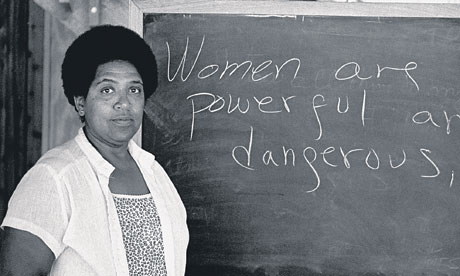
Audre Lorde
Intended Audience: High School Students
Overview: Black Feminist Criminology, a theoretical framework developed by Dr. Hillary A. Potter, a leading scholar in Criminology is used to contextualize this lesson plan. This theory in particular examines the intersection of Black Feminism, punishment, victimization, and crime. In particular, this lesson plan intends to identify ways to create safe spaces for groups targeted by the President-elect explicitly and implicitly verbalized in his speeches. Throughout the presidential election, the use of violent misogynistic language used against women was expressed and sanctioned by Donald Trump. A precarious hike of verbal and physical attacks after the announcement of the President-elect grounded in Trump’s racist, sexist, and classist views against the global majority of the world (comprised of people of color), in addition to people with disabilities, immigrants, LGBTQIA communities, Muslim communities, and the poor, has led to an increased fear for the safety of the lives of many. Donald Trump managed to offend practically every group in this country, except for white supremacists. This lesson plan will explore the ways in which women and girls of color have been victimized by both state sanctioned and micro intimate spaces. Drawing from bell hooks book, “Feminism is for Everybody”, this lesson plan is designed to address white male imperialist, capitalist, patriarchy, and how it is situated in social institutions to promote violence against women and girls. All genders have the responsibility to stand up for justice against insidious and unwarranted attacks in a society that prides itself on being a democratic state. Further, the objective of this lesson plan is to identify the ways that gender is defined and policed through socially constructed scripts and daily interactionism on a structural and individual basis that produces and reproduces oppression. In examining the ways women and girls are specifically victimized as a result of race, class, and gender, the aim is to identify how the classroom in particular, is used as a site and space for critical pedagogy for students to understand their place in reading the social world through Black feminism. Specifically, the readings grounded at the intersection of Black Feminist Thought and the criminal legal system is employed to explore how women and girls have historically and contemporarily navigated social inequalities by deepening their critical consciousness, to create a vision for a just and transformative society, while crafting specific ideas of disrupting racial, class, and gendered inequality through intentional justice related strategies to promote social and legal justice.
Scope and Sequence: This lesson plan will explore how Black feminist criminology is understood, analyzed, and enacted through lived experiences in the social world. Often studies grounded in feminism are not contextualized in high school studies. As a result, critical knowledge that should be embedded in each major academic subject, leaves a void in how text can be read, what questions can and should be asked, and what types of methodologies can be employed in the classroom for holistic learning. Students will explore feminist readings and specific criminological feminist readings exploring victimization. Main texts that will be used will include “Intersectionality and Criminology: Disrupting and Revolutionizing Studies of Crime: New Directions in Critical Criminology” (Hillary Potter), “Feminism is for Everybody: Passionate Politics” (hooks), “Words of Fire: An Anthology of African American Thought” (Beverly Guy-Sheftall), and “When and Where I Enter: The Impact of Black Women on Race and Sex in America ” (Paula Giddings). This lesson plan can be modified by time and days depending on the schedule of the class.
National Themes of Social Studies:
- Culture- Social studies programs should include experiences that provide for the study of culture and cultural diversity.
- Individual Development and Identity- Social studies programs should include experiences that provide for the study of individual development and identity.
- Individuals, Groups, and Institutions- Social studies programs should include experiences that provide for the study of interactions among individuals, groups, and institutions.
- Power, Authority, and Governance- Social studies programs should include experiences that provide for the study of how people create, interact with, and change structures of power, authority, and governance.
- Civic Ideals and Practices- Social studies programs should include experiences that provide for the study of the ideals, principles, and practices of citizenship in a democratic republic.
Objectives:
- Discuss how Donald Trump can be discussed through feminism.
- Create collaborations to create a visual illustration of a transformative society for all people to live in.
- To synthesize the texts read to understand how feminism intersects with the criminal legal system through criminality and victimization.
- To write reflective arguments on the role of feminism in helping to ground and raise critical consciousness related to social, political, and legal issues in society.
- To engage in readings, music, social media, and video clips to comprehend how individual/intimate violence is often a reflection of institutional violence.
- Preparation: Students should be experienced in creative and academic writing, working in small groups, and facilitating individual and group presentations. Students are expected to respectfully engage in dialogue with their peers, raise critical reflective questions of their own, and to interrogate the readings to find their positionality in the social world grounded in Black feminism. However, students are not expected to be fully integrated experts at feminism, but rather gaining a deeper insight into how society can be read, understood, and reimagined when applying feminism as a theoretical concept and methodology. Students will need an understanding of how race, class, and gender operate in reproducing structural and individual oppression in society.
Conclusions from Executive Summary to The Courage to Question, ed. Musil:
- How does women’s studies affect students as individuals?
- Does women’s studies foster social responsibility?
- Are students in women’s studies encouraged to think for themselves?
- Does women’s studies heighten an awareness of difference and diversity?
Essential Questions:
- How are students understanding their positionality in Black feminism studies?
- How do students define empowerment?
- What are strategies for creating more just communities?
- What ways are they both privileged and oppressed by white, male patriarchy in society and within their communities?
DAY ONE: Reading bell hooks
Overview
(15 minutes)
- Discuss the different definitions of feminism since its conceptual inception. Briefly explore the main ideas grounded in Black feminism and its relevance and importance for addressing social inequality and injustice. Discuss the weekly lesson plan for students and expectations of classroom interaction and submission of work. The teacher will review the main points in Feminism is for Everybody: Passionate Politics by bell hooks to ground the lesson plan.
- Students will write a brief summary of their thoughts about feminism and if they identify as a feminist.
Activity
(75 minutes)
- Students will take a privilege quiz based on race, class, and gender in order to promote diverse groups. This can be created by the teacher to gain a sense of cross-cultural experiences rooted in intersectionality. (5 minutes)
- Students will break into six groups compromised of 5-6 students and they will engage in independent reading on their assigned three chapters. Students will create discussion questions for their peers to have a large group discussion for the following day. Students will decide who will lead the discussion question for the following day and who will introduce and provide a brief synopsis of their selected YouTube video.
- Students will locate a video on YouTube that best illustrates the main points of assigned chapters. The video should be no longer than 3 minutes. (Will be assigned for homework if time does not permit to be completed in class)
DAY TWO: Applying bell hooks as a theoretical concept and methodology
Activity
(90 minutes)
- Teacher will briefly lead a discussion with the entire classroom, generating feelings, reflections, and concepts warranting further explanation from any student.
- Students will reconvene in their assigned groups and will lead an interactive dialogue based on their discussion questions for the larger classroom.
- Students will show their selected YouTube video to students and will briefly discuss their purpose of identified video.
DAY THREE: Understanding Intersectional Criminology through Photovoice
Activity
(90 minutes)
- Students will critically read and interrogate Ch. 5 “Revolutionizing criminology: the societal impact of intersectional criminology” in Hillary A. Potter’s book, “Intersectionality and Criminology: Disrupting and Revolutionizing Studies of Crime.” Explain to students that they are to engage the text as critical readers. In doing so, they are to examine main points that identify institutional oppression rooted in Black Feminism. They will convene in their small groups and engage in dialogue on main points they found most interesting. They are to consider what points are missing from the literature and to fill the gaps in that literature with their assigned homework task. (Described at the end of this day’s lesson plan). In practicing this approach, they should consider the following questions.
- How does the author define intersectional criminology?
- What examples are provided to describe the act of revolutionizing criminology?
- How does Black feminism intersect with legal injustice in the criminal legal system?
- Name the ways in which people are complicit in the reproduction of state and intimate violence and identify possible reasons of this reproduction.
- Students will watch the brief video by Dr. Lena Palacios, “Shadowboxing: A Chicana’s Journey from Vigilante Violence to Transformative Justice”
- Students will take independent notes on what may have resonated with them the most based on this short documentary.
- Students will identify the shift in consciousness by the visual author of this video in adopting a transformative approach to social justice.
- Homework assignment (Photovoice): Students will gather intergenerational photos from family members exploring various social movements during key political and social moments in the United States. They will make copies of photos, as to preserve their familial memories. Students will be intentional in gathering information across generations in their family, including parents, grandparents, and great-grandparents. Students are also able to gather this information through interviews and artistic expression if there are no pictures available. As such, students are also able to gather information from elders in their neighborhood and varying social institutions in their communities if they are unable for any reason to gather from biological family members. Students are to select a reading from the suggested reading list of Black feminist work to ground their visual interpreted work in. The main textbooks for this will be any selected reading from “When and Where I Enter” and “Words of Fire.”
- Students will create a short documentary, no longer than 10 minutes that includes this photovoice story that is grounded in the CVS model (Consciousness, Vision, and Strategy). This documentary will explore their understanding of Black feminism and their vision of what a transformative society would look like based upon their intergenerational investigation of resistance, self-determination, and activism.
- Students should consider how the intergenerational issue was addressed and reproduced in a familial and institutional context.
- Students should identify the ways in which self-care was incorporated into family lives, while navigating racism, sexism, and classism.
- Students should gather information that identifies the ways sustainable communities were created and maintained.
DAY FOUR: READING THE SOCIAL WORLD THROUGH BLACK FEMINISM: CREATING A TRANSFORMATIVE SOCIETY
Activity
(90 minutes)
- Students will present their documentary and lead a brief classroom discussion on the ways in which they understand how white supremacy as an ideology and action has operated through their familial generations and is reproduced in their lives.
- Homework Assignment: Students will write a 5-page double page reflective essay based on their understanding and raised critical consciousness of institutional oppression and their location, if any, in Black feminist criminology. They will explore the ways they plan to empower themselves as individuals and to disrupt institutional violence and oppressive regimes structurally. This paper should be grounded in the texts used throughout the week.
Resources
http://www.socialstudies.org/standards/strands
http://www.nwsa.org/files/WS_Integrative_Learning_Levine.pdf
http://www.foodforblackthought.com/blog/
Bibliography and Suggested Readings:
Barlow, Jameta. N. 2016. #WhenIFellInLoveWithMyself: Disrupting the Gaze and Loving Our Black Womanist Self As An Act of Political Warfare. Meridians: feminism, race, transnationalism 15 (1) 205-217.
Battle, Nishaun T. 2016. From Slavery to Jane Crow to Say Her Name: An Intersectional Examination of Black Women and Punishment. Meridians: feminism, race, transnationalism 15, (1) 109-136.
Giddings, Paula. 1984. When and Where I Enter: The Impact of Black Women on Race and Sex in America. New York, NY: HarperCollins Publishers.
Gist, Conra D. 2016. A Black Feminist Interpretation: Reading Life, Pedagogy, and Emilie. Meridians: feminism, race, transnationalism 15 (1) 245-268.
hooks, bell. 2000. Feminism is for Everybody: Passionate Politics. Brooklyn: NY: South End Press.
Potter, Hillary. 2006. “An Argument for Black Feminist Criminology: Understanding African American Women’s Experiences with Intimate Partner Abuse Using an Integrated Approach.” Feminist Criminology: 1 (2) 106-124.
Potter, Hillary. 2015. Intersectionality and Criminology: Disrupting and Revolutionizing Studies of Crime: New Directions in Critical Criminology. London and New York: Routledge.
Whitehead, Karsonya, Wise. 2016. Them Girls Sure Got History: Notes on Becoming a Forensic Herstorical Investigator. Meridians: feminism, race, transnationalism 15 (1) 269-289.
Sheftall, Beverly. 1995. Words of Fire: An Anthology of African-American Feminist Thought. New York: The New Press.
The African American Saga From Enslavement To Life in a Color Blind Society (Or Racism Without Race)*
Yolanda Abel, Ed.D. and LeRoy Johnson
Intended Audience: High School Students
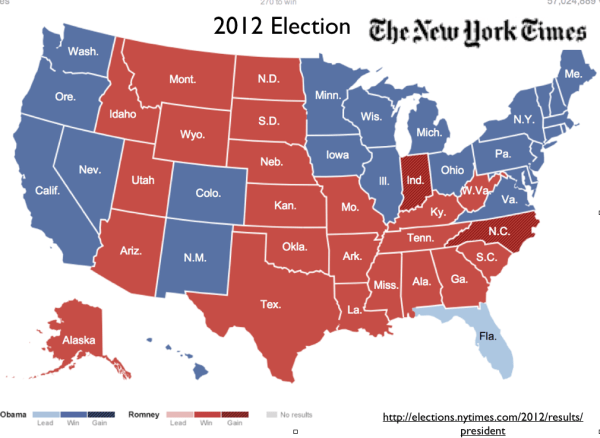
Overview: To examine primary and secondary documents (The Emancipation Proclamation, 13th, 14th, 15th Amendments, the Civil Rights Act of 1964, and the Voting Rights Act of 1965) to better understand the voting controversy and subsequent succession efforts surrounding the 2012 presidential election.
Objectives: Students will compare historical documents related to the development of rights of African-Americans and evaluate the impact of historical documents on contemporary American Society.
Connections to High School: High school teachers help students develop and refine dispositions and beliefs that form the bulwark for adult values and participation in civic life. For example, we have designed this lesson to highlight the need for continued diligence to the rights and advancements of African-Americans in the US. The more things change, the more they remain the same; especially if one has no understanding of history. Our students must understand the history of the Civil Rights Movement; if they do not, others who would deny the rights of full citizenship to African-Americans and other people of color in this society will willingly negate the continuing nefarious effects of racism in this society.
National Council of Social Studies Standards
- History: Guide learners in practicing skills of historical analysis and interpretation, such as compare and contrast, differentiate between historical facts and interpretations, consider multiple perspectives, analyze cause and effect relationships, compare competing historical narratives, recognize the tentative nature of historical interpretations, and hypothesize the influence of the past.
- Civics and Government: Assist learners in developing an understanding of citizenship, its rights and responsibilities, and in developing the abilities and dispositions to participate effectively in civic life.
Lesson Plan
Warm Up (Anticipatory Set)
- Brainstorming: Ask students what they remember about the 2012 presidential election. Accept all answers. Record responses. Highlight the responses that refer to states’ attempts to institute voter requirements and/or the secession efforts after President Obama was re-elected. If no one generates related responses direct the class to prompts: (As Election Day nears, voter ID laws still worry some, election nears; Voter ID lawsuits could delay election results again; Is secession bid more than a cry of rage?; Obama’s Re-Election Inspires Secessionists)
Activity (Instruction Input)
- Jigsaw: Create 4 groups: a) The Emancipation Proclamation , b) 13th, 14th, 15th Amendments, c) the Civil Rights Act of 1964 , and d) the Voting Rights Act of 1965.
- Give each expert group copies of their identified topic. Have them read their respective documents and identify key points. Students can use a WWWWWH Organizer (Who, What, When Where, Why, How) or any other graphic organizer you use to help students identify main ideas and supporting information.
- After the groups have established their expertise. Create new groups; one expert from each group will form new working groups. Two groups will focus on news items related to voter requirements and two groups will focus on secession related news items. You may begin the groups with the news item from the brainstorming activity.
- Depending on classroom resources the groups can use in-school computers or personal PDAs to retrieve the information directly or the teacher will need to compile a variety of sources (newspaper, magazine, election copies of articles, etc.) for the students to use.
- Two working groups will generate a rationale for why states attempted to institute voter requirements, which states and why, and how, if at all, it aligns back to the original documents. Explain the level of effectiveness and potential impact for the 2016 election.
- The other two groups will examine the role of secession during the Civil War and compare and contrast conditions then and at the time of the 2012 election. What made secession less possible in 2012 than during Civil War times? The group will make recommendations to promote a unified and equal opportunity climate in the United States and then compare and contrast their document with the Voting Rights Act and the Civil Rights Acts.
- This lesson is designed to be at least two class periods. If your scheduling allows you can have all four groups do both activities (8e and 8f) to allow for more in-depth engagement with the materials and contact.
- Have the groups share their information and evaluate the quality of the arguments presented in their work. Use your existing rubric criteria for oral presentations and/or content.
Assessment
- Design a poster, Power Point or other display option that contains four of the following items:
- A list of states that attempted or implemented voter requirements for the 2012 presidential election.
- The state’s rationale for the voter requirements.
- At least ten points that align back to the Emancipation Proclamation, the 13th, 14th, and 15th amendments, the Voting Rights Act, and the Civil Rights Act.
- A short explanation of the effectiveness of the states’ efforts at instituting voter requirements and at least two potential items of impact for the 2016 presidential election.
- A diagram that compares and contrast at least five of the conditions present at the time of the Civil War and the 2012 presidential election. At least 5 conditions for each time period.
- A list of recommendations (at least 5) to promote a unified and equal climate in the U.S.
- A diagram that compares and contrasts your list of recommendations with the Voting Rights Act and the Civil Rights Act.
Background Information
In early 21st century America, discussions about past, present, and future race relations- especially those between Black and White Americans, but increasingly those between White and Latinos(as) in our society- are charged with passion, lack of historical analysis, and, of course, are loaded with fears about the results of the evolving demographic makeup of this society. In order to understand the increasingly complex and mutable nature of our society’s racial landscape, we must examine and analyze the genesis and evolution of the African-American protracted struggle to obtain full citizenship rights in the United States1.
The Civil Rights Movement for the purpose of this paper has been divided into two parts: (1) the first phase of the Civil Rights Movement or the period of Reconstruction from 1865 to 1877 and (2) the second phase of the Movement or the period of Brown vs. the Board of Education from 1954 to 19652. Secondly, this short review is designed to be a practical guide for those who would like to teach about the Civil Rights Movement. Placing the development of African-Americans’ quest for equal rights in its historical context is the only way to make rhyme and reason of this historic movement. If one attempts to teach such a topic without placing it in its proper historical context, one presents a facile rendition of one of the most important socio-political, legal, and economic developments in our history. In addition, and perhaps of most import, our primary pupils and secondary students will have little chance of grasping the monumental progress- though we still live in a very racially pernicious society-which had taken place from the Civil War (1861-1865) to the 1970s, when the reactionary forces opposing the Civil Rights Movement gathered enough political momentum to organize a formidable political and legal challenge to this movement. Moreover, and of capital importance, our students- and even their teachers- will view this movement as simply a bygone period in our history, whereas, it is still part and parcel of the American socio-political, economic, and legal landscape.
Both the opposition to Affirmative Action and the treacherous concept of a color blind society are nothing more than racism without mentioning the color and history of the victims of centuries’ old racial oppression. In short, without a historical analysis of the civil rights saga of African-Americans, our young people will relax their political and intellectual guard, thus becoming unable- and also unwilling- to understand dialectical connections between past and contemporary racism in our society. Our students- and teachers, too- must understand the history of the Civil Rights Movement; if not, others who would like to deny the rights of full citizenship to African-Americans and other people of color in this society will willingly negate the continuing nefarious effects of racism in this society.
During this first period (Reconstruction from 1865 to 1877) a number of important changes made to the Constitution of the United States improved the political, if not the social and economic, situation of African Americans. Already, and prior to the beginning of Reconstruction, President Lincoln had decreed the Emancipation Proclamation (1863), an act that freed slaves in the rebellious states. It is true that the act left slavery intact in the states loyal to the Union and in the localities of southern states in which the authorities remained loyal to the Federal Government, i.e., the forty-eight counties of Virginia which eventually became West Virginia, seven counties in eastern Virginia, including the cities of Portsmouth and Norfolk, and thirteen parishes in Louisiana of which the city of New Orleans was included3. Nonetheless, the Emancipation Proclamation, intended more to cripple the economy of the South, freed all but eight hundred thousand of the four million slaves in the United States (1860 census).
However, it was during Reconstruction, (the historical term used to describe the process undertaken by the Federal Government in order to literally reconstruct the political and socio-economic institutions of the states that rebelled against the Federal Government) that laws were passed to protect the humanity of African Americans4. Congress passed the 13th Amendment (January 1865), while the Civil War was nearing its end, outlawing slavery and involuntary servitude (except for punishment for the conviction of crimes) in the United States. The passage of said Amendment was an important victory for the Republic, yet we should not overlook the fact that the Amendment passed by a vote of 119 to 56 in the House of Representatives- it had been defeated in an earlier vote in the same chamber by 93 to 655. This fact is important because it attests to the protracted struggle of the Civil Rights Movement from its very genesis.
In spite of the naysayers against the Civil Rights Movement, it continued. In 1868, the 14th Amendment granted citizenship to all those born in the United States (except Native Americans, who were not granted citizenship until the passage of the Indian Citizenship Act of 19246. Furthermore, in seven states of the Union, Native Americans were denied the right to vote until 1947. And it was not until 1948, when the Euro-American populations of Arizona and New Mexico finally granted voting rights to the first Americans!) The 14th Amendment reversed the Supreme Court ruling in the Dred Scott vs. Sanford case (1857) that held that African-Americans were not and could not become citizens of the United States. And with the enactment of the 15th Amendment, state governments were prohibited from denying citizenship to people base on race, color, or previous condition of servitude (slavery).
These three Amendments, 13th, 14th, and 15th, commonly referred to as the Reconstruction Amendments laid the groundwork for the Civil Rights Movement. The enactment of laws, as we have learned, does not in itself ensure the rights of citizens. To illustrate this point, one only has to recall the passing of the Black Codes after the end of the Civil War in the defeated southern states. Attempting to make an end run around the federal edicts, every southern state passed laws to force African Americans back into servitude, deny them the right to vote, and to curtail their socio-economic opportunities7. After 1877, when Rutherford B. Hayes, the 19th President of the United States, agreed to withdraw Federal troops from the still occupied southern states and to allow southern democratic governments to establish their control in the South in order to resolve the dispute in the Electoral College surrounding his election, southern politicians set about to reestablish legal racial inequality. We witness this attempt in the rapid proliferation of the Black Codes. Then in 1896, the Plessy vs. Ferguson case argued before the Supreme Court, rendered segregation in public and private places and institutions the law of the land. This Supreme Court decision was a tremendous blow to the march of Civil Rights. In fact, it took over half a century before the Supreme Court struck down the laws of segregation in the United States. However, the Court finally did and a second phase of the Civil Rights Movement began.
In Brown vs. the Board of Education (May 17, 1954), Thurgood Marshall, the brilliant and relentless soldier in the contemporary Civil Rights Movement, the great-grandson of slaves, and later the first African-American Supreme Court Justice, argued and won the National Association for the Advancement of Colored People’s (NAACP) case questioning the constitutionality of segregated schools8. The NAACP’s legal victory in the nation’s highest court would open the flood gates to the cleansing waters of racial justice in the nation’s public schools. A little over a decade later, beginning in the summer of 1964, when the Civil Rights Act of 1964 was enacted, there were three critical events that positioned the nation to once again take legislative action to protect the right to vote for African Americans9. The first was the murder of three civil rights workers i who had attempted to convince African-Americans to register to vote in Mississppi10. The second was the White supremacist led violence against participants in the Selma to Montgomery on March 7, 1965. Last, but not least, was when White segregationists again attacked the marchers again on March 21, killing the Rev. James Reeb, a twenty-four year old White Bostonian Unitarian minister. At the same time, President Johnson was working on persuading Congress to pass the Voting Rights Act of 196511. It was the second legislation action promulgated to protect the right to vote for African Americans in the 20th century. Included in this mosaic of laws enacted by the Federal Government to bridge the centuries old race divide, the actions taken by President Nixon in the late 1960’s and early 1970’s, as well as the affirmative action policies adopted by the federal and various state governments, along with colleges, universities, industry, and professional organizations. For the purpose of this brief survey, Affirmative Action is defined as the “positive” steps taken by public and private institutions, including the military, federal, state, and local governments to increase the representation of African Americans, other people of color, and White women in areas of employment, education, and business from which they have been legally and traditionally excluded12. In order to increase the numbers of African Americans, other minorities, and White women in these areas, a form of “preferential” selection was encouraged to ensure that qualified applicants were given an opportunity to apply and interview for positions that were historically unavailable to them.
Nonetheless, there has been a massive rejection of Affirmative Action policies in American society. Cries of reverse discrimination and a call for color blind policies to determine the access to colleges, universities, and professional promotions in industry, the military and all other public sectors (police and fire departments), are constantly heard over the airwaves, on the nightly television shows, and printed in newspapers and journals13. Clearly, there is a concerted challenge to undo the changes and advantages of the Civil Rights struggle. For this reason, teachers and students are asked to carefully study the stages, and historical details of this movement to learn about the past in an effort to understand the present civil rights fight, and prepare them to continue the Civil Rights Movement into the future. As we continue to make progress in the Civil Rights Movement, it is imperative to remember that it is complex, demands a sound knowledge of American history, and requires commitment to continuing analytic and passionate discussions in classrooms today.
Teacher Resources
The Role of Gay Men and Lesbians in the Civil Rights Movement
Little Rock Revisited: A Classroom Activity
Unsung Heroes of the Civil Rights Movement
Voices of Experience: Civil Rights through Oral History
Best of History Web Sites (an EdTech Teacher Resource)
Brown vs. Board of Education (National Park Service)
Civil Rights Movement in the US
Books
Bell, Derrick. 1992. Faces at the Bottom of the Well: The Permanence of Racism. New York: Basic Books.
Branch, Taylor. 1989. Parting the Waters: America in the King Years 1954-63.New York: Simon & Schuster Paperbacks.
Kozol, Jonathan. 2012. Fire in the Ashes: Twenty-Five Years among the Poorest Children in America. New York: Crown Publishing Group.
Murray, Alana and Menkart, Deborah. 2004. Putting the Movement Back into Civil Rights Teaching. Washington, DC: Teaching for Change.
Patterson, J.T. 2002. Brown v. Board of Education: A Civil Rights Milestone and Its Troubled Legacy (Pivotal Moments in American History). Oxford: Oxford University Press.
Weatherford, C. B. 2009. The Beatitudes: From Slavery to Civil Rights. Grand Rapids: Eerdmans for Young Readers.
Notes
- The authors’ premise about why this is an important topic and that the way it is taught impacts a person’s dispositions and actions related to the issue of how and/or why African Americans are perceived in their historical and current role in the United States.
- In order to present the material in a useful manner, a diachronic approach was used.
- The Confederate states depended on slave labor. The Emancipation Proclamation disrupted and reduced slave labor in many southern states because a sizable number of enslaved African-American left their place of abode and attempted to reach the advancing Union forces. Thus, the South was deprived of a substantial part of its servile labor force. John Hope Franklin and Evelyn Brooks Higginbotham, From Slavery to Freedom (New York: McGraw Hill, 2000), 99, 214-15, 228-29.
- Prior to the War of Secession, although legislation had been promulgated to curtail the spread of chattel slavery in some of the western territories, none had been passed to end slavery or endow African-Americans with citizenship rights. A brief reading the Constitution of the United States reveals the lack of federal legislation promoting full citizenship for African-Americans before the Civil War. The 13th, 14th, and 15th Amendments were the first Federal legislation addressing citizenship for Black people in the United States. Nonetheless, one should point out that before the Civil War the law making bodies in various states enacted legislation to end slavery within their boundaries. John Hope Franklin and Evelyn Brooks Higginbotham, From Slavery to Freedom (New York: McGraw Hill, 2000), 214, 242-43.
- The fact that there have been no easy victories accounts for the constant vigilance of African American civil rights activists who rightfully are concerned about the attempts of those who reminisce about the “good old days” of White privileges and Black oppression to reverse the historical saga of civil rights in our society. Ibid, 213-14.
- “Native American Citizenship 1924.” Nebraska Studies.Org. Accessed January 25.
- John Hope Franklin and Evelyn Brooks Higginbotham, From Slavery to Freedom (New York: McGraw Hill, 2000), 258-73.
- “Thurgood Marshall,” In New World Encyclopedia
- “Recess Reading” An Occasional Feature from the Judiciary Committee: The Civil Rights Act of 1964, United States Senate Committee on the Judiciary.
- Civil Rights Martyrs. Southern Poverty Law Center
- John Hope Franklin and Evelyn Brooks Higginbotham, From Slavery to Freedom (New York: McGraw Hill, 2000), 545.
- “Affirmative Action” Stanford Encyclopedia of Philosophy. Accessed January 25.
- The experiences of the authors, persons in their professional and personal circles, as well as academic sources support this assertion.
*This lesson plan was originally published in the Association for the Study of African American Life & History‘s Black History Bulletin, v76, (2) and is reprinted here by permission of the authors.
Steps To Combating Anti-Muslim Bullying In Schools
Mariam Durrani, Ph.D.
*This list is excerpted from Leah Shafer’s “Dismantling Islamophobia” article. It is reprinted here with permission from both the author and from Usable Knowledge.
1. Design a specific anti-bullying policy that is comprehensive of all vulnerable students. Rather than adopt a general “zero tolerance” bullying policy, schools should clearly state that they won’t tolerate harassment based on race, religion, sexual orientation, gender, or immigration status. This explicit announcement can help teachers and students alike remain aware of what behavior is uniformly unacceptable.
2. Understand bullying as an act that’s tied to larger social issues — not just an interpersonal problem. Targeting Muslim students is different from bullying that’s based on personal characteristics, such as a peer’s weight, clothes, or academic standing. Kids who harass their Muslim peers are likely influenced by a pervasive stereotype that Muslims are terrorists or that Islam is a violent religion. Educators need to teach students to consume media with a critical eye, and to understand how the news might color their opinions.
3. Use academic coursework to fight bullying. Teachers can incorporate lessons on the importance of being an “upstander” in the face of mistreatment. Students should understand the historical consequences when people, just like them, have blindly followed stereotypes or haven’t stood up for those who are targeted and vulnerable.
4. Focus curriculum interventions on human rights and inclusivity. To work against stereotypes and a widespread lack of knowledge about Islam, schools should educate students about Islamic history, traditions, and current affairs. But teachers should keep the curricular focus people-centric, not faith-centric, and don’t single out Islam or Muslim students. For example, younger students can learn about Islamic dietary customs within broader lessons about culinary traditions around the world, nutritional needs, food allergies, and other faith-based dietary rules. Older students can learn about Islamophobia within larger conversations about how power is distributed in America.
5. Ensure that faculty and staff are aware of their own implicit bias. In all interactions with students, educators should continually double-check to ensure that their words are inclusive and do not conform to stereotypes. I suggest that teachers think about “radical hospitality” — overtly welcoming all students, faiths, and cultures into their classrooms.
6. Involve parents and communities, inviting everyone to get to know each other. School leaders can use PTO/PTA meetings for families to learn about cultural and religious differences in their communities, inviting Muslim families to participate. School leaders can also use these meetings to highlight why they think it’s important to use curriculum to prepare students to live in heterogeneous, egalitarian communities.
For More Information:
http://www.mychamplainvalley.com/news/muslim-bullying-fears-on-the-rise-hotline-says
http://www.soundvision.com/article/10-ways-to-conquer-anti-muslim-bullying
https://www.tes.com/us/news/breaking-views/six-ways-combat-anti-muslim-bullying-schools
https://www.stopbullying.gov/blog/2016/02/09/protecting-our-muslim-youth
Oya for President (to be read OutLoud)
Alexis Pauline Gumbs
Wandering Woman (Oya)
i want a storm for president
sweeping into every city
with the wild warning of clouds
shaped like Shirley Chisolm’s hair
i want a storm for president
i want a storm for president
i want a cleansing
i vote for the anger of black women
with chicken on their hands
with factory processing parts in the crooks of their elbows
i know all that rage is somewhere waiting
the already platform for everything ever
wash it out
i want the TV to tell me
how the earth is taking herself back
how no relations are foreign
unless we are ready to leave the planet
and that no pipelines are acceptable
not for fracking or stacking our children in prison like trash
earth will heave from her gut and break open
tell me something about executive power
tell me something about a state of emergency
tell me something in the language of rain and wind
so I can understand
ask the national hurricane center
they know
how hurricane Ida named herself
in advance solidarity with Joaquin
fill the capital with the high winds of black self-defense
pushing forward justice at the border
i am donating my laughter and my love
name her every time she emerges
with a name A to Z
from Audre to Zora
give me Oya for president
give me messy and unafraid
let her emerge off the coast of Africa
with a skirt of gorgeous bones
and be met by reporters when she comes home
no debate
just 24 hour coverage
reporters say her raging name
stand outside at the shoreline
so she can slap them in the face
vote for wind
which is already primary
vote for goddess
moving on the face of the deep
let her knock down
the towers of toupéd slumlords
and the smilers who spit when they speak
let my candidate be a movement
out of the gutters into the streets
let my vice president be a prophet
who just stands there and weeps
i want so much water
that the creek and the meek overflow
so the inkstain washes out of every piece of paper money
and runs rainbow ratchet over asphalt
blending back into black
give me thunder for the legislative branch
the resounding of sound
and let lighting strike it strike it in two
until it falls to the ground
i want a priestess for president
who wakes up all our dead
and lets the children out of school
to listen to what they said
i want a whirlwind so terrifying
i want a wracking so real
that the electoral college
doesn’t know how to feel
i want Oya for president
i want a thorough surprise
and the second you see her…
all rise.
Ten Tips for Facilitating Classroom Discussions on Sensitive Topics
Alicia L. Moore,Ph.D. and Molly Deshaies

All teachers will inevitably teach about sensitive topics. These topics may range from racism, forced labor or slavery to bullying, sexual orientation, and gender biases — and may be completely unexpected. Any topic of a sensitive nature may make even the best of teachers uncomfortable when exploring the topic with students. Our natural reaction is often to shy away from difficult or controversial topics, or to approach them from a superficial, strained or halfhearted standpoint. But many times these topics are crucially important to students’ awareness of the world and its social, moral, political and civic underpinnings. Students deserve to be taught about these topics in authentic, engaging and purposeful ways.
To provide teachers with a framework for tackling sensitive topics, we have compiled a tip sheet to use when facilitating discussions or teaching about sensitive topics in the classroom. These techniques will provide a foundation of confidence for the facilitator and can be used in elementary, secondary or postsecondary settings.
- Set the stage. In order for students to express their opinions and participate in classroom discussions about sensitive subjects, they need to feel safe and not fear retaliation for comments they make during the discussion. It is best to establish a supportive classroom atmosphere with ground rules for discussions early in the semester, but be sure to at least do so before beginning a class discussion about a sensitive issue. The University of Michigan Center for Research on Learning and Teaching offers these six rules to establish in order to foster a more productive discussion:
- “Listen respectfully, without interrupting.
- Respect one another’s views.
- Criticize ideas, not individuals.
- Commit to learning, not debating.
- Avoid blame and speculation.
- Avoid inflammatory language.” 1
You also need to set the stage in terms of the students’ readiness to discuss the issue(s) at hand. Students should be intellectually and emotionally prepared. In “How Parents and Teachers Should Teach Children about Slavery,” the author explains, “One aspect to consider involves presenting prerequisite concepts, knowledge, and skills within the Social Studies that prepare students for the information. This entails a careful examination of what is developmentally and age appropriate … and involves an understanding of how to be responsive to, and sensitive of, all children within the classroom community.”2
- Know yourself. Before facilitating a discussion about possibly sensitive topics, it is important that you consider your own biases or confusion surrounding the issue.3 How have you come to know what you know or think what you think? Why have you valued some information or sources over others? When seeking to help students understand others or study historically sensitive topics, it is important to discuss the concepts of empathy and perspective. We are all products of our society and culture, and attitudes and values change. Discussing a moment when your own ideas changed may help model the open-mindedness and conscientious self-reflection that you hope to inspire.4
- Recognize the diversity of your students. It is important to remember that each of the students in your classroom comes from a unique background (regardless of race) and has had different experiences. See this diversity as an asset. Authentic opportunities for learning happen when students are exposed to many different perspectives. Give students the opportunity to express their views and make it your goal to understand, value and respect the backgrounds and experiences that formed them.5 Teach your students to do the same.
- Set a framework and objective for the discussion. To get the most out of your discussion, when possible state an objective for the discussion that connects to the curriculum or standards. Also establish a framework for the discussion with a specific focus. This will keep the students on task and ensure that your goals for the discussion are met.6 Also keep in mind that a static objective for these discussions should be based upon providing students with opportunities to “engage in experiences that develop fair-mindedness, and encourage recognition and serious consideration of opposing points of view, respect for well-supported positions, sensitivity to cultural similarities and differences, and a commitment to individual and social responsibility.”7
- Provide a common base for understanding. The Center for Research on Learning and Teaching at the University of Michigan suggests assigning readings or showing a video clip about a particular conflict or topic to prompt discussion. Using materials that provide a context for examining diverse perspectives allow students to gain an awareness of others’ views, and offer students a framework in which to expand their knowledge about conflicting positions they might otherwise disregard. Like having a set objective and framework, these complementary materials will help focus the discussion.8
- Be an active facilitator. As the teacher you should neither dominate the discussion nor passively observe. Your role as the teacher should include intervening in the discussion to:
- Provide reminders about respecting the right of others to have differing opinions,
- re-word questions posed by students,
- correct misinformation,
- ask for clarification,
- review the main points, and
- make reference to relevant reading materials or course content.9
- Foster civility. There is a good chance that discussions about sensitive topics may become heated. The main goal of fostering civility is to protect your students from feeling personally attacked. Make sure students understand that it is okay to disagree, but keep comments focused on the ideas and not the people who share their ideas.10
- Be prepared to deal with tense or emotional moments. When discussing sensitive issues or difficult topics, it is very possible that some students will get angry or upset. If this happens, remain calm and try to turn it into a learning experience. Don’t avoid the issue, but do defer it until you make a plan for dealing with it if necessary.11
- Summarize. At the end of the discussion, summarize the main points. You can also ask students for quick written feedback about the discussion, which you can discuss during the next class.12 Allowing students to summarize provides opportunities for student to recall, review and reflect upon the content of the discussion.
- Reflect. Reflecting plays a key role in two ways. First, encourage students to actively reflect on the comments made by other students, especially those they may disagree with. Second, leave time after the discussion for students to record their reflections in writing. This time will allow quieter students an opportunity to respond privately to the instructor, and allow everyone a chance to unwind and think calmly about his or her views on the issue.13 Ask students to think about whether there are new ideas, opinions or opportunities for further discussions, awareness and reflection. Use their responses to develop extension activities that will build community and support differing viewpoints.
S.E.N.S.I.T.I.V.E ACROSTIC
Every teacher will inevitably face a moment in the classroom when a sensitive topic, situation or event arises. You can never be sure of when these topics will come up, but you can prepare yourself. Use the following tips to guide the way you facilitate discussions surrounding sensitive topics.
[S]et the stage for difficult conversations by assessing student readiness based on realistic, non-biased expectations. Set the stage by creating a supportive environment based on respect. Provide a framework that sets objectives connected to the curriculum when possible.
[E]nable and facilitate the discussion of ideas, not people. The teacher must support students and enhance their opportunities to grow in the discussion. The facilitator provides guidelines for safe, productive and respectful discussions and for interventions such as dispelling myths, helping students make curricular connections and clarifying students’ contributions to the conversation. Taking this role seriously can be the difference between a successful or unsuccessful conversation.
[N]ever allow your personal biases and opinions to influence the facts or get in the way of opportunities for students to examine diverse perspectives. Know your biases and be aware of their impact on your thoughts, attitudes and behaviors related to teaching.
[S]eek out age- and grade-level appropriate digital media, readings and other materials that allow students to begin with baseline knowledge and that will be the basis of discussions. Identify materials that show students to “see both sides”: illustrate diverse perspectives and provide students with opportunities to analyze, synthesize and evaluate content discussed.
[I]nterpersonal classroom activities that involve discussing sensitive or controversial issues should be complemented with intrapersonal activities like self-reflection and personal awareness. Allowing the students to have time to reflect on their feelings, conscious and unconscious thoughts, and any new learning provides enhanced opportunities for growth. Seek feedback from students to inform your instructional decisions about upcoming lessons.
[T]he act of summarizing conversations, either orally or in writing, provides students with a chance to recall new or interesting information, and review what was said and how it fits or conflicts with personally held thoughts and opinions. Summarization serves as a foundation for possible subsequent actions such as making personal changes, examining new perspectives, or learning to respect and value the diverse perspectives of others.
[I]nvite disagreement. Encourage students to speak up with different opinions — while still maintaining decorum. It is up to you to foster and maintain civility in your classroom and to help students understand the guidelines for discussing difficult ideas. One way to view civility is through the lens of the Golden Rule: Do unto others as you would have them do unto you. Remind students that we all have the right to agree or disagree with others’ perspectives on sensitive topics.
[V]alue the diversity of your students as an asset. Teach your students to do the same. Your actions affect the culture and climate of your classroom. In a classroom that truly values the contributions and differences of all students, authentic opportunities for teaching and learning are nurtured and embraced by all stakeholders.
[E]motional and tense moments may arise during discussions about sensitive issues. Be prepared to help students work through them. Acknowledge that there may be times when they feel uncomfortable talking about the issue. Speak to this discomfort and share your personal thoughts and feelings about discomfort you may feel.
Notes:
- Center for Research on Learning and Teaching, University of Michigan (2011). Guidelines for discussion of racial conflict and the language of hate, bias, and discrimination. (accessed October 19, 2011)
- Pearson, K. (2011, April 19). How parents and teachers should teach children about slavery. (accessed October 19, 2011)
- National Council for the Social Studies, 2008. A Vision of Powerful Teaching and Learning in the Social Studies: Building Social Understanding and Civic Efficacy. (accessed October 17, 2011)
- The Center for Teaching and Faculty Development, San Francisco State University (n.d.). Top ten tips for addressing sensitive topics and maintaining civility in the classroom. (accessed October 17, 2011)
- Ibid.
- Center for Research on Learning and Teaching, University of Michigan. (2011). Guidelines for discussion of racial conflict and the language of hate, bias, and discrimination. (accessed October 19, 2011)
- National Council for the Social Studies, 2008. A Vision of Powerful Teaching and Learning.
- Center for Research on Learning and Teaching, University of Michigan, Guidelines for discussion.
- Ibid.
- The Center for Teaching and Faculty Development, San Francisco State University, Top ten tips.
- Warren, L., & Bok Center, D. (2000). Managing hot moments in the classroom. (accessed October 17, 2011)
- Center for Research on Learning and Teaching, University of Michigan. (2011). Guidelines for discussion of racial conflict and the language of hate, bias, and discrimination. (accessed October 19, 2011)
- The Center for Teaching and Faculty Development, San Francisco State University (n.d.). Top ten tips for addressing sensitive topics and maintaining civility in the classroom. (accessed October 17, 2011)
Resources:
- Neal, L. I., Moore, A. L. (2003). When bad things happen to good people: Human rights at the core. Social Studies and the Young Learner, 15(3), 1-4.
- It’s not so black and white: Discussing racial issues can make students and teachers uncomfortable, Beverly Daniel Tatum.
- Teaching Young Children About Slavery Using Literature, Judith Y. Singer.
- Slavery and the Making of America
- Association for the Study of African American Life and History Black History Bulletin: African Americans and the Civil War; Volume 73, No. 2.
- Tackling Tough Topics
- Difficult Situations, Vanderbilt University’s Center for Teaching (CFT) site.
© 2012 Twin Cities Public Television, Inc.
Trump Syllabus K12: Lesson Plans for Teaching During the New Age of Resistance (#TrumpSyllabusK12)
created & compiled by Karsonya Wise Whitehead, Ph.D.
with Alicia Moore, Ph.D. & Regina Lewis, Ph.D.
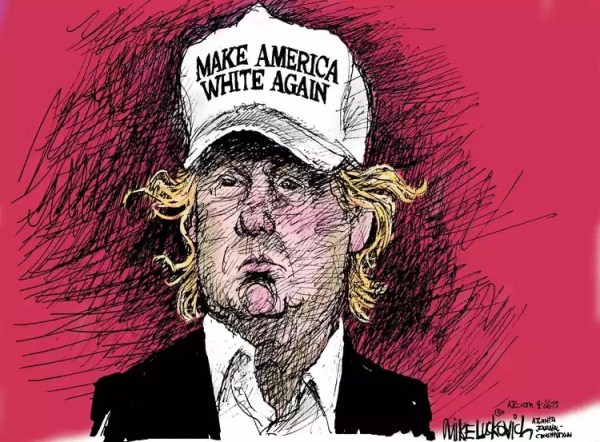
Lesson Plans for Teaching During this New Age of Resistance (#TrumpSyllabusK12)
#TrumpSyllabusK12 is a compilation of lesson plans written by and for K-12th grade teachers (and college educators) for teaching about the 2016 presidential campaign; about resistance and revolution; about white privilege and white supremacy; about state-sanctioned violence and sanctuary classrooms; about fake news and Facebook; and, about freedom and justice. It is designed to transform our classrooms into liberated nonsexist nonmisogynistic anti-racist anti-classist spaces without any boundaries or borders. It is meant to liberate and free our students by providing them with lesson plans to challenge them to become global critical thinkers. We invite you to join with us as we actively work to push back against the establishment of this New World Order and we draw our line in the sand and work to liberate and change the world, one student at a time.
Each lesson plan is presented in its entirety and includes Warm Up and Group Activities, Essential Questions and Objectives, Resources, an Essay or an Overview, and they connect directly to the Common Core Standards for Math, History, or Language Arts; and, to the National Council of Social Studies Standards.
Please note that lesson plans are still being accepted at griotonthego@gmail.com and are being added daily.
(ES=Elementary School; MS=Middle School; HS=High School)
######
TABLE OF CONTENTS
1. Opinion Editorial: America is a Divided Nation
-Karsonya Wise Whitehead, Ph.D.
2. Tips for Facilitating Classroom Discussions on Sensitive Topics
-Alicia Moore, Ph.D., and Molly Deshaies
SECTION ONE: EXAMINING CAMPAIGN 2016
3. The Electoral College vs The Popular Vote: Who Should Choose OUR President? (HS)
-Jocelyn Thomas
4. Exploring the (New) Political Climate (MS)
-Nadiera Young
5. Exploring the Reasons Why Trump Won (MS/HS)
-Gloria Ladson-Billings, Ph.D.
6. Exploring the Fake News Cycle (MS)
-Baba Ayinde Olumiji
7. Using Photographs to Explore Differing Political Perspectives (ES)
-Alicia Moore, Ph.D., and Angela Davis Johnson
8. Trump and Gender Bias, By the Numbers (HS)
-Kelly Cross Ph.D.
ADDITIONAL RESOURCES (POETRY):
9. Oya for President (to be read OutLoud)
-Alexis Pauline Gumbs
10. Mourning in America: A Black Woman’s Blues Song
-Karsonya Wise Whitehead, Ph.D.
SECTION TWO: POLITICS IN THE “POST-TRUMP” NARRATIVE
11. Harassment and Intimidation in the Aftermath of the Trump Election: What Do We Do Now? (MS/HS)
-Sarah Militz-Frielink and Isabel Nunez, Ph.D.
12. From “I Have A Dream” to “I Dream of a World”: Steps to Creating a Sanctuary Classroom (All Grades)
-Karsonya Wise Whitehead, Ph.D.
13. Hope, Action, & Freedom in the Times of Uncertainty (HS)
-Conra D. Gist,Ph.D., Angela Davis Johnson, & Tyson E.J. Marsh, Ph.D.
14. Writing White Privilege, Race, and Citizenship: Reading Angela Davis, Toni Morrison, Claudia Rankine, and Walt Whitman (HS)
-Ileana Jiménez
15. A Pedagogy of Resistance in the Struggle Against White Supremacist State-Sanctioned Violence* (MS/HS)
-Tyson E.J. Marsh, Ph.D.
16. Lessons in Black Feminist Criminology: Disrupting State and Sexualized Violence Against Women and Girls #GrabtheEmpowerment (HS)
-Nishaun T. Battle, Ph.D.
17. Giving Voice & Making Space: Dismantling the Education Industrial Complex in an Effort to Free Our Black Girls* (MS/HS)
-Aja Reynolds & Stephanie Hicks
18. Exploring the “Crisis” in Black Education from a Post-White Orientation* (MS/HS)
-Marcus Croom
19. The African American Saga: From Enslavement to Life in a Color-Blind Society (Or Racism Without Race)*(HS)
-Yolanda Abel, Ed.D., and LeRoy Johnson
20. #Evolution or Revolution: Exploring Social Media through Revelations of Familiarity* (HS)
-Kimberly Edwards-Underwood, Ph.D.
21. Replace Fear with Curiosity: Using Photographs and Poetry to Process Election 2016 (ES)
-Tracy Kent-Gload
22. #WeGotNext: Black Youth Activism and the Rise of #BlackLivesMatter* (HS/MS) **NEW**
-Sekou Franklin
ADDITIONAL RESOURCES:
23. Steps to Combating Anti-Muslim Bullying in Schools
-Mariam Durani, Ph.D.
24. #ClintonSyllabus 1.0
-Karsonya Wise Whitehead, Ph.D., Alicia Moore, Ph.D., Regina Lewis, Ph.D.
25. Book: Black Lives Matter (Special Reports)
–
*The following lesson plans were originally published in the Association for the Study of African American Life & History’s Black History Bulletin and are reprinted here by permission of the authors.
 Karsonya (Kaye) Wise Whitehead #blackmommyactivist
