#WeGotNext: Black Youth Activism and the Rise of #BlackLivesMatter*
Sekou Franklin
Intended Audience: Middle School And/Or High School
Overview: Through collaborative exercises, students will learn about the origins and activities of student/youth-based formations during the twentieth and early twenty-first centuries. Students will specifically learn how young people propelled racial and economic justice movements in the 1930s, the civil rights and black power movements in the 1960s and 1970s, the anti-apartheid in the 1980s, anti-poverty and anti-violence initiatives in the 1990s, and the Movement for Black Lives Matter in the twenty-first century.
Students will also understand the important role of movement bridge-builders in youth-based movements, as well as investigate how the make-up of movement infrastructures (the type of organizations, resources of activists, intergenerational relations, collaborations between activist networks) shape the direction of black youth activism. Students will learn how black youth have developed creative organizing strategies to elevate the political status of youth in social movement campaigns. In addition, students will assess the political context or environmental conditions that shaped black youth activism during different time periods. Students will also learn about the various organizations that coordinated black youth participation.
National Council for Social Studies/College, Career, & Civic Life C3 Framework for Social Studies State Standards[1]
- Enable learners to develop the capacity to know, analyze, and explain how young people can effect change
- Prepare students with critical thinking, problem solving, and collaborative skills needed for social change
- Help students learn to work individually and together as citizens
Dimension 2, Participation and Deliberation
D2.Civ.8.9-12—Evaluate social and political systems in different contexts, times, and places that promotes civic virtues and enact democratic principles.
D2.Civ.9.9-12—Use appropriate deliberative processes in multiple settings.
D2.Civ.10.9-12—Analyze the impact and the appropriate roles of personal interests on the application of civic virtues, democratic principles, constitutional rights, and human rights.
TEACHING RESOURCES
Teachers are encouraged to review the following resources in preparation for teaching the lesson plan.
Internet Sources
Burke, Lauren Victoria Burke. “March2Justice Brings Fight Against Police Brutality to US Capitol.”
Day, Elizabeth. “#BlackLivesMatter: The Birth of a New Civil Rights Movement,” The Guardian.
Gruzen, Tara. “Unions Get New Breed of Activists: College Students Seeking to Boost Labor Movement.”
Juanita Jackson Mitchell, Archives of Maryland (Biographical Series)
The King Center, “Six Steps of Nonviolent Social Change.”
North Carolina A & T University Student Newspaper Collection
Pierre-Louis, Kendra. “The Women Behind Black Lives Matter.”
Southern Negro Youth Congress (1937-1949)
Student Nonviolent Coordinating Committee Legacy Project
Videos
Black Youth Project 100, “Building a Movement #WeReadyWeComing.”
Dream Defenders, “Dream Defenders Take Over Florida For Trayvon Martin”
Esther Cooper Jackson at 96, The Laura Flanders Show.
Freedom Rides, “The Student Leader” Excerpt, PBS.
Rainbow/Push “Solutions to Urban Violence” Conference, C-SPAN.
SNCC’s Legacy: A Civil Right’s History, CNN.
LESSON PLAN
Goals of Lesson Plan: This lesson plan aims to guide students through the different forms of black youth activism, both chronologically from the 1930s to the twenty-first century, and, organizationally as students will evaluate the importance that grassroots organizations and infrastructures play in coordinating youth-based activities. The lesson plan is designed to take up to three class periods but can be shortened.
Warm-Up Activity (40 Minutes):
Have the class discuss the reading about black youth activism. The discussion should focus on the factors that shaped the social and political consciousness of black youth from the 1930s to the twenty-first century.
- Describe the political context or setting that shaped the consciousness or attitudes of the organizations.
- Describe the key figures (e.g. Mary McLeod Bethune, Ella Baker, the Black Lives Matter activists) or movement bridge-builders who cultivated young activists during their respective time periods.
- Explain why the type of organizations or networks—what is referred to as movement infrastructures—are important to expanding opportunities for young people to participate in grassroots activism
Activity #1 (1 hour and 40 Minutes):
After the warm-up activity, divide the class into four groups designated by a specific time period: 1930s-1940s, 1950s-1970s, 1980s-1990s, and the 2000s. Each group is advised to review the supplemental materials (see below) that expand upon the required reading about black youth activism. The materials provide concrete details of the strategies, tactics, motives, demands, and the socio-economic and political conditions of each time period. The groups will be given 40 minutes to review the materials, answer the guided questions and complete the graphic organizer for the time period. After the activity, each group will have 15 minutes (a total of one hour) to present their findings to the entire class.
Group I: 1930s-1940s
Supplemental Materials
- Juanita Jackson Mitchell, the most prominent youth activist in the NAACP
- Southern Negro Youth Congress
- Watch an excerpt of an interview with Esther Cooper Jackson of the Southern Negro Youth Congress (watch 2:00-5:00 mark).
Guided Questions
- Why did Juanita Jackson Mitchell get involved with the NAACP?
- Why did Esther Cooper Jackson join the Southern Negro Youth Congress?
- What initiatives were carried out by both the NAACP Youth Council and the Southern Negro Youth Congress?
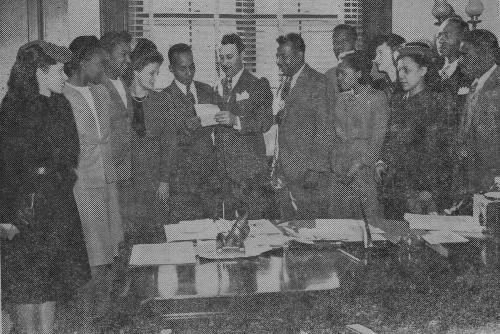
FIGURE ONE: Southern Negro Youth Congress (SNYC)
Group II: 1960s-1970s
Supplemental Materials
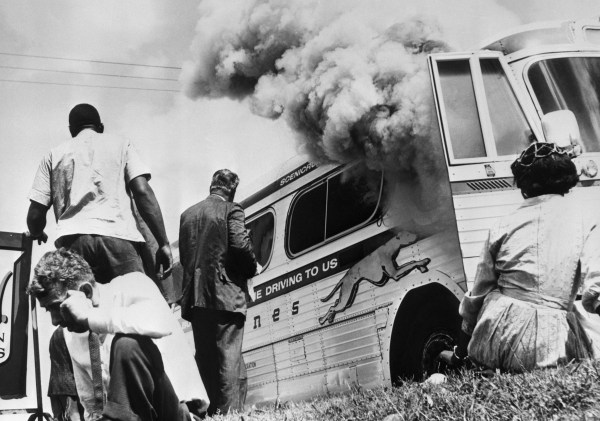
- Watch an excerpt of the students involved in the Nashville students and the 1961 Freedom Rides (4:37 minutes).
- Watch videos: Student Nonviolent Coordinating Committee, Student Organization for Black Unity: The A & T Register newspaper
Supplemental Materials
- What were some of the challenges facing the students who joined the Freedom Rides of 1961?
- What were the goals and objectives of the Student Nonviolent Coordinating Committee and the Student Organization for Black Unity?
- Who were some of the key leaders or movement bridge-builders that helped to coordinate the Freedom Rides as well as the Student Nonviolent Coordinating Committee and the Student Organization for Black Unity?
FIGURE TWO: Freedom Riders, 1961
Group III: 1980s-1990s
Supplemental Materials
- Free South Africa Movement/Student Divestment Movement: Associated Press. AFL-CIO’s “Union Summer” labor initiative
- Watch excerpt of Errol James of the Black Student Leadership Network at the Rainbow/Push “Solutions to Urban Violence” conference (2:15:58-2:21:25 mark).
Guided Questions
- What were the main concerns of students involved in the Free South Africa Movement/Student Divestment Movement?
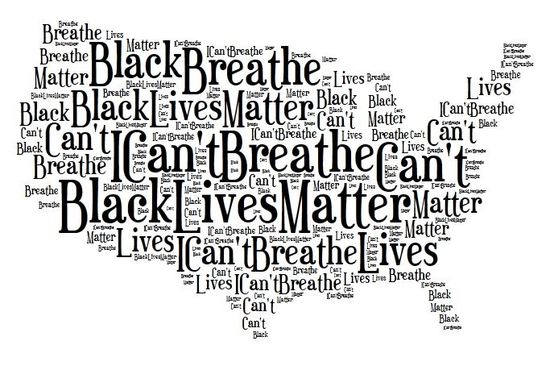
FIGURE THREE: Scenes from #BlackLivesMatter
Group IV: 2000s (Movement for Black Lives Matter)
Supplemental Materials
- Black Lives Matter, The Guardian.
- Women in the Movement for Black Lives Matter, In These Times.
- Watch Black Youth Project 100, “Building a Movement #WeReadyWeComing“
- Watch Dream Defenders, “Dream Defenders Take Over Florida For Trayvon Martin”
Guided Questions
- What are the goals and objectives of the Black Lives Matter organization and the broader Movement for Black Lives Matter?
- How has the Movement for Black Lives Matter given youth, women, and lesbian, gay, bisexual, and transgendered people opportunities to participate in social movements?
- What have been some of the initiatives carried out by organizations such as the Black Youth Project 100 and Dream Defenders, which are groups that affiliate with the broader Movement for Black Lives Matter?
- Based on the excerpt of the Black Student Leadership Network (see required reading) and the video of the “Solutions to Urban Violence,” what were the organization’s goals, strategies and tactics?
- What are the similarities and differences between the Black Student Leadership Network (see required reading) and the AFL-CIO’s Union Summer program?
FIGURE FOUR: Scenes from #BlackLivesMatter
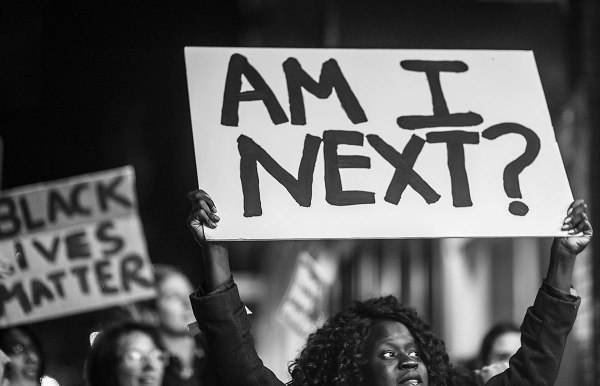
Conclusion
This lesson plan has two objectives. First, it informs students and community leaders of the importance and diversity of youth-based (students, youth, young adult) initiatives that challenged injustices and inequalities. The participants will learn that youth activism is central to black politics, both historically and contemporary, and is constitutive of American politics. Secondly, the participants will understand how to build democratically-oriented social movements. They will discover that movement-building initiatives is a co-learning process between activists and the communities or constituents they are trying to organize for social change. Thus, this lesson plan allows the participants to learn about youth-based movements and to develop their own capacity as social justice leaders.
[1]. National Council for the Social Studies, The College, Career, and Civic Life (C3) Framework for Social Studies State Standards: Guidance for Enhancing the Rigor of K-12 Civics, Economics, Geography, and History, Accessed on November 15, 2015.
Background Information
BLACK YOUTH AT THE FOREFRONT OF SOCIAL MOVEMENT ACTIVISM
Since the early twentieth century, young people have been instrumental in shaping American political culture and the social and political life of African Americans.[i] From the NAACP Youth Council and the Southern Negro Youth Congress in the 1930s and 1940s to the Student Nonviolent Coordinating Committee and Student Organization for Black Unity in the 1960s and 1970s, young people were the frontline activists during the two major protest waves of the twentieth century. Young blacks then helped to propel the Pan-African and black feminist movements of the 1970s, as well as the Free South Africa Movement/Student Divestment Movement of the 1980s. The Black Student Leadership Network was another group that set up dozens of freedom schools in low-income communities during the first half of the 1990s. In the second decade of the twenty-first century, young people affiliated with the Movement for Black Lives Matter protested racialized violence and police killings of African Americans.
This essay provides an overview of black youth activism from the 1930s to the twenty-first century. It gives special attention to four periods of black youth activism: black youth radicalism from the 1930s-1940s; the modern civil rights and black power movements between the 1950s-1970s; the anti-apartheid movement of the 1980s, followed by Black Student Leadership Network and other youth-oriented movements; and grassroots youth activism in the twenty-first century such as the Movement for Black Lives Matter.
Black Youth Activism in the 1930s-1940s
The Great Depression politicized black youth and their adult allies in the 1930s. Mary McLeod Bethune, the director of the Negro Division of the National Youth Administration, drew attention to the Great Depression’s impact on black youth. In 1937, she sent a letter to President Franklin D. Roosevelt stating that while the United States “opens the door of opportunity to the youth of the world,” it slams it shut in the faces of its Negro citizenry.”[ii] In the late 1930s, she organized the National Conference on Problems of the Negro and Negro Youth and the National Conference of Negro Youth. The American Council on Education’s American Youth Commission also sponsored series of studies on black youth in the Depression Era. The studies found that poverty and racism of the period deepened the alienation of young blacks.[iii]
Thus, the 1930s experienced an upsurge of black youth militancy as demonstrated with the establishment of the NAACP Youth Council and the Southern Negro Youth Congress. Even before the creation of the NAACP Youth Council in 1936, black students in the 1920s revolted against the conservative leadership of historically black colleges and universities (HBCUs).[iv] In the early 1930s, young activists volunteered in local campaigns coordinated by the NAACP and other groups. In New York, civil rights activist Ella Baker teamed with George Schuyler[v] to form a youth economic cooperative called the Young Negro Cooperative League in response to the economic crises of the Great Depression. Also, black and white youth organizations in New York, assisted by the NAACP, formed the United Youth Committee in order to rally support for the National Labor Relations Act and an anti-lynching bill in Congress.
Juanita Jackson, the first national youth director of the NAACP Youth Council, was one of the most influential young activists of the 1930s. Historian Thomas Bynum writes that as director, “She believed that black youth, in particular, should be at the forefront of [the civil rights] struggle and have its voice heard in improving its own plight.”[vi] Prior to the appointment, she was involved in the City-Wide Young People’s Forum (CWYPF) in Baltimore, Maryland. The group assisted NAACP activist, Clarence Mitchell, with racial desegregation campaigns, and mobilized Baltimore’s black youth around a “Buy Where You Can Work” campaign that targeted local department stores.[vii]
The Southern Negro Youth Congress (SNYC) was the most radical youth organization of the 1930s and 1940s. In 1937, the SNYC assisted 5,000 black tobacco workers in Richmond, Virginia who went on strike and formed the Tobacco Stemmers and Laborers Industrial Union. It then organized labor youth clubs, labor and citizenship schools in cities such as Nashville, Tennessee, New Orleans, Louisiana, Birmingham and Fairfield, Alabama.
In addition, SNYC activists advocated for voting rights such as the Right to Vote Campaign in 1940, as well as issued reports that publicized racial violence. SNYC affiliates set up committees to pay the poll taxes levied against southern blacks and organized the Abolish the Poll Tax Week in 1941.[viii] Another SNYC initiative was the development of youth legislatures in Alabama and South Carolina that outlined positions on labor policy, foreign affairs, and voting rights.
The SNYC eventually collapsed because of organizational fatigue and after it was targeted for political repression during the early years of the Cold War. By the end of World War II, the Federal Bureau of Investigation (FBI) initiated a secret surveillance campaign of SNYC affiliates in a dozen cities.[ix] Additionally, the SNYC had to answer repeated claims by the House Un-American Activities (HUAC) in Congress if it was a Communist-front organization.[x]
Black Youth Activism after World War II
The post-World War II generation grew up under different circumstances than those young people of the 1930s. The social and political consciousness of the activist generation were shaped by the Brown v. Board of Education case in 1954; Emmett Till’s murder by Mississippi segregationists in 1955; the Montgomery Bus Boycott in 1955/1956; the Youth Marches for Integrated Schools; and the Little Rock desegregation campaign in 1957. Cold War politics further altered the landscape as political elites became increasingly concerned about the negative portrayal of race and American democracy within the larger international arena.[xi]
The Student Nonviolent Coordinating Committee (SNCC) is considered the most important student/youth-based formation of the post-World War II era. It emerged in the aftermath of the 1960 student sit-in movement that encapsulated the South. Ella Baker, who was then on the staff of the Southern Christian Leadership Conference, urged the organization and other allies to sponsor the Southwide Leadership Conference. Out of this conference, student leaders organized a temporary organization that was later called SNCC.
During its first five years, SNCC concentrated much of its activities on eliminating racial desegregation and voter disenfranchisement. In addition to its participation in the freedom rides, the youth group set up freedom schools and initiated community-organizing campaigns in the rural South beset by racial terrorism. In fact, it was common for SNCC members to immerse themselves in a community for a couple of years and organize, while simultaneously, urging local residents to shape the programs that were relevant to that particular community. SNCC’s philosophy, as Baker noted, was “through the long route, almost, of actually organizing people in small groups and parlaying those into larger groups.”[xii] According to Bob Moses and Charlie Cobb, both former SNCC activists, SNCC’s organizing approach “meant that an organizer had to utilize everyday issues of the community and frame them for the maximum benefit of the community.”[xiii] This strategy allowed SNCC to expand its membership beyond the ranks of student and youth members. It created a pathway for incorporating older and poorer constituents into the organization. In the late 1960s, SNCC also attempted to build alliances with the Black Panther Party and the National Black Liberators. Though these efforts failed, they represented the types of creative organizing strategies that SNCC experimented with during its years of operation.
The Student Organization for Black Unity (SOBU) was a youth-based formation that was founded in 1969 in Greensboro, North Carolina. The group had close ties to local networks and institutions such as the Greensboro Association of Poor People (GAPP), Malcolm X Liberation University, Foundation for Community Development, and youth activists from North Carolina A & T University. SOBU’s signature initiative occurred in 1969 when it assisted the protest efforts of students from Greensboro’s Dudley High School.
SOBU’s energies were dedicated to organizing high school and college students; building alliances with prisoners; working on black political parties such as the Black Peoples’ Union Party of North Carolina; implementing survival programs in impoverished communities; and establishing clothing centers, food-buying clubs, and community service centers. These activities were amplified in SOBU’s bi-monthly newspaper, The African World, which had a circulation of 10,000 people.
The most important years for SOBU occurred between 1971 and 1972 when it sponsored several regional conferences with the purpose of building a national Pan-African student and youth movement. It started local affiliates in New Haven, Connecticut; Houston, Texas; Kansas City, Kansas; Omaha, Nebraska; Denver, Colorado; and in a dozen other cities. After merging with the Youth Organization for Black Unity (YOBU), the group launched a campaign to save black colleges and universities from being “reorganized” and eliminated.
Despite the emergence of black power and groups such as SOBU, youth activism waned in the 1970s. SOBU collapsed in 1975 and the Black Panther Party’s influenced declined by the late 1970s. Young activists were the targets of political repression, most notably surveillance and infiltration by the FBI and COINTELPRO. The elections of Richard Nixon in 1968 and 1972 signaled a conservative resurgence that culminated with the ascendancy of Ronald Reagan as president in the 1980s.
Furthermore, the decline of black youth militancy was partially due to the victories of the civil rights movement such as the 1964 Civil Rights Act and the Voting Rights Act of 1965. These victories expanded opportunities for members of the post-civil rights generation to articulate their grievances in the voting booth in ways not experienced by previous generations of African Americans. They also led to the development of a new black political class as indicative of the growth of black elected officials by 640 percent between 1970 and 2000. Yet as political scientist Robert C. Smith asserted in his acclaimed work We Have No Leaders: African Americans in the Post-Civil Rights Era, the resources and energy of black politics shifted away from popular mobilization initiatives that were central to black youth activism to institutionalized politics and other forms of elite mobilization.[xiv]
The post-civil rights generation became increasing fragmented along socioeconomic lines. While a thriving black middle-class was situated at one end of the spectrum, a significant portion of African Americans lived in America’s ghettos and was most harshly affected by public health epidemics.[xv] Indicative of these epidemics were the proliferation of crack cocaine, the spread of AIDS, gun violence, and high incarceration rates. For example, 20 percent of blacks born from 1965-1969 – the years immediately following the passage of the Voting Rights Act of 1965 – were likely to have served time in prison by their early thirties. This trend far outpaced black men who came of age during the civil rights movement, as 10.6 percent born from 1945-1949 were likely to have been incarcerated by their early thirties. Overall, the black male incarceration rate was six times higher than white men born during the early stage of the post-civil rights era.[xvi]
Youth Activism and the Post-Civil Rights Generation
Even though popular mobilization declined after the mid-1970s, the post-civil rights generation spawned new youth-based movements and organizations that targeted racial, economic and social injustices. In the mid-1980s, students of color and progressive whites organized protests on college campuses against apartheid regime in South Africa. Students set up campus-based shantytowns or makeshift “shacks” that symbolically represented the “living conditions of many black South Africans.”[xvii] The protests pressured universities to relinquish their business ties to corporations that had financial investments in South Africa. Some divestment initiatives were coordinated by multiracial coalitions, while others were predominantly black. For example, the Progressive Black Student Alliance organized against South African apartheid and other foreign policies such as the U.S. interventions in Grenada and Nicaragua.
Other young activists of the post-civil rights cut their teeth in local organizing initiatives in cities such as the New Haven, Connecticut in the mid-late 1980s. The youth movement, or “Kiddie Korner” as it was called, was fostered by a coalition involving the Greater New Haven NAACP Youth Council, the African American Youth Congress (initially called the Black Youth Political Coalition), Elm City Nation, Dixwell Community House, and the Alliance of African Men. The coalition organized anti-gang violence initiatives, electoral organizing campaigns that eventually elected the city’s first black mayor, and mobilized youth around equitable education policies.
One important organization that emerged in the post-civil rights era was the Black Student Leadership Network (BSLN). The formation of the BSLN began in 1990 when Lisa Y. Sullivan, a community and political activist in New Haven, urged prominent civil rights activists such as Marian Wright Edelman, founder and president of the Children’s Defense Fund (CDF), to assist black student and youth activists in the development of a mass-based, black student and youth activist organization. In 1991, Sullivan and others organized a black student leadership summit at Howard University that recruited student and youth activists from around the country. After much deliberation, the summit attendees officially founded the BSLN. The BSLN’s parent organization was the Black Community Crusade for Children (BCCC), which operated as an arm of the CDF. For the next six years until its collapse in 1996, the BSLN linked a national advocacy campaign with local political and community initiatives in an effort to combat child poverty, political apathy, and public health epidemics.
Through its Ella Baker Child Policy Training Institute and Advanced Service and Advocacy Workshops, the BSLN trained over 600 hundred black students and youth in direct action organizing, voter education, child advocacy, and teaching methodology. The organization developed freedom schools in dozens of urban and rural cities and teamed with child advocacy groups to spearhead anti-childhood hunger initiatives. Beginning on April 4, 1994, the BSLN and local community activists launched its National Day of Action Against Violence (NDAAV) in concurrence with the observance of Dr. Martin Luther King, Jr.’s assassination. The NDAAV activities, occurring in forty cities in 1994 and dozens more in 1995 and 1996, highlighted community-based strategies for reducing gun violence and police misconduct.
Among the more interesting set of youth and intergenerational initiatives emerging in the late 1990s and early 2000s was the Juvenile Justice Reform Movement (JJRM). JJRM campaigns in Louisiana, Maryland, California, and New York set out to reverse the zero-tolerance measures, shut down youth prisons that were known for human rights abuses, and end the disproportionate confinement of black and Latino youth in the juvenile justice system. These initiatives were coordinated by youth and adult-led advocacy organizations such as Project South, Youth Force of the South Bronx, New York’s Justice 4 Youth Coalition and Prison Moratorium Project, Baltimore’s Reclaiming Our Children and Community Projects, Inc. organization, Correctional Association of New York, Critical Resistance, the Juvenile Justice Project of Louisiana, Families and Friends of Louisiana’s Incarcerated Children, and the Maryland Juvenile Justice Coalition.
Similar to the BSLN, JJRM activists made an extensive effort to develop community-based responses to youth violence and crime. They developed what scholar-activist Sean Ginwright calls a “radical healing” approach that integrates community organizing, self-development, and consciousness-raising activities into a holistic approach to social justice.[xviii] In most cities where youth spearheaded campaigns to challenge mass incarcerations, the same youth groups were also at the forefront of rites of passage and violence reduction programs.
Moreover, the American Federation of Labor and Congress of Industrial Organizations (AFL-CIO) made a concerted attempt to mobilize young people, especially black students, from 1989-2005. It created Union Summer in 1996 that placed young people as frontline organizers for locally based campaigns, including nearly a thousand interns in its first year. Modeled after SNCC’s Freedom Summer of 1964, the Union Summer field staff intentionally recruited black students through its HBCU plan that was first established a decade earlier as part of the AFL-CIO’s Organizing Institute. Blacks made up the majority of non-whites during the program’s latter years and students/youth of color (blacks, Latinos, Asians) comprised the majority of Union Summer organizers.
Black Youth in the Age of Black Lives Matter
The most recent wave of black youth and young adult activism has focused attention on criminal and juvenile justice reform. In 2007, young activists joined prominent civil rights leaders in mobilizing support for six black youth in Jena, Louisiana who were incarcerated as a result of a violent dispute between black and white teenagers. The black youth faced the prospect of a 100-year collective sentence, yet a similar punishment was not proposed for their white counterparts. As such, thousands of activists gathered in Jena on September 20, 2007 to protest the decision.
Six years after the Jena 6 case, young activists coalescing under the umbrella of the Movement for Black Lives Matter protested Stand Your Ground laws, as well as racialized and police violence targeting blacks. The movement started as the twitter hashtag, #BlackLivesMatter, by Alicia Garza, Patrisse Cullors, and Opal Tometi in response to the killing of Trayvon Martin and the Florida court’s exoneration of his killer, George Zimmerman. The movement blossomed after the killing of Michael Brown in Ferguson, Missouri and Eric Garner in Staten Island, New York as protests broke out across the country. Though young blacks made up a large number of the protesters, the movement has also galvanized non-black protestors.
The Movement for Black Lives Matter is composed of dozens of groups and activists. These include the official organization of Black Lives Matter and other well-known youth and young adult groups such as the Dream Defenders of Florida, Million Hoodies Movement for Justice in New York, Organization for Black Struggle in St. Louis, Gathering for Justice/Justice League NYC, and Black Youth Project 100 in Chicago. From July 24-26, 2015, these groups along with hundreds of young activists, convened in Cleveland, Ohio at the National Convening of the Movement for Black Lives.
The Movement for Black Lives Matter has attempted to reshape the dialogue around race, class, and the criminal justice system. It has further challenged the respectability narrative that deems the black poor and youth as pathological and denies them community recognition. This narrative reflects what political scientist Cathy Cohen calls the “secondary marginalization” of the black poor who are routinely the targets of social stigma by the black middle class.[xix] Accordingly, the Movement for Black Lives Matter situates marginal youth, including women and LGBT youth, at the forefront of social activism.
By all accounts, activists and groups at the forefront of the Movement for Black Lives Matter have a policy window or political opportunity to advance serious reforms of a broken criminal justice system. There is already evidence that the resistance has made a difference. State and local legislative bodies sponsored racial profiling measures in 2015. Congress approved the Death in Custody Reporting Act, and the U.S. Justice Department announced new rules to reduce racial profiling by federal law enforcement officials.
In August 2015, activists and researchers affiliated with the Movement for Black Lives Matter released a national platform called Campaign Zero that outlined ten policy recommendations for reforming police departments. These activists then garnered commitments from three presidential candidates in the Democratic Party (former Secretary of State Hillary Clinton, Vermont Senator Bernie Sanders, and former Maryland Governor Martin O’Malley) to develop comprehensive restorative justice measures if elected president.
Furthermore, the Movement for Black Lives Matter has fueled racial justice protests on college campuses. Taking a cue from the street protests of 2014, young activists from the University of Missouri at Columbia led a semester-long campaign in the fall 2015 protesting racial incidents at the college. After a hunger strike by a graduate student activist and a threatened boycott by the university’s football team, the University of Missouri president and chancellor resigned for not effectively responding to racial incidents on campus. Afterwards, a wave of college-based protests blossomed across the country.
Black Youth Activism: Lessons Learned From the 1930s to the 2000s
This overview of black youth activism from the 1930s to the 2000s underscores important lessons about how young people participate in grassroots mobilization initiatives, and the central role that black youth have in American politics. The first lesson is that movement bridge-builders or the leaders of movement infrastructures play an instrumental role in fueling black youth activism. They can generate opportunities for young activists to participate in movement campaigns through the use of creative organizing, or strategies that are intentionally designed to elevate the social and political status of black youth such that they become vehicles for popular mobilization.
As highlighted in Figure 1, movement bridge-builders use several strategies to position youth activists at the forefront social movements and politically salient initiatives. Some bridge-builders use framing to develop narratives that explain a particular problem that has relevance to marginalize groups. For the purposes of mobilizing youth, these narratives identify a problem, assign blame to it, and then propose solutions to resolving the problem.[xx] For example, the Black Lives Matter frame has been useful in fueling youth protests against racialized killings by law enforcement officials. It has even been an agenda-setting instrument in the 2016 presidential campaigns as Democratic Party candidates Hillary Clinton, Bernie Sanders, and Martin O’Malley aligned their criminal justice platforms with Black Lives Matter.
Movement bridge-builders will also intentionally position black youth at the forefront of a particular policy debate, as did Mary McLeod Bethune to pressure the federal government to adopt economic justice measures for African Americans during the Great Depression. This is accomplished by using a strategy called “positionality” that intentionally alerts grassroots organizations and allies about political decisions or regressive policies that affect young people. The objective is to dramatize the impact of these decisions and policies on young people and create opportunities for intergenerational collaborative initiatives. This then positions young activists as the group that is best positioned to resolve these challenges. For example, the local campaigns to reform juvenile justice systems used positionality to garner support for young activists among street workers, educators, child advocates and other activists who were unfamiliar with the dimensions of juvenile justice policies. These campaigns alerted local groups and leaders about abuses in youth prisons and the harmful impact of zero tolerance policies.
Movement bridge-builders will further link the interests and collective identities of local activists and adult-led groups – or what are referred to as indigenous networks – with the goals of young activists. The intent is to create opportunities for young people to unite their interests with indigenous networks, as well as activate or appropriate these networks such that they can support youth-based movements. As an example, the AFL-CIO leveraged (or appropriated) local labor unions in order to garner their support for the Union Summer program.
In general, the central role of movement bridge-builders is essential to understanding how youth-based movements are sustained. Bridge-builders sow the seeds of black youth activism by identifying strategies and tactics that allow youth to become vehicles for popular mobilization initiatives. They help youth acquire the resources to sustain activism and connect young activists to indigenous groups and seasoned activists. They also help to develop the leadership capacity of young people.
The significant role of movement infrastructures in cultivating black youth activism is another important lesson of this overview. These included youth-led organizations such as the Southern Negro Youth Congress, Student Nonviolent Coordinating Committee, Student Organization for Black Unity, and those affiliated with the Movement for Black Lives Matter. Others joined adult-led or network-affiliated youth organizations such as those that led the juvenile justice initiatives in the 1990s and 2000s as well as the Union Summer campaign. Still, some activists belonged to multi-generational/intergenerational infrastructures such as the Black Student Leadership Network.
Movement infrastructures (youth-led, multi-generational, network-affiliated) facilitate youth involvement in social justice initiatives. Youth-based initiatives require resources, linkages with indigenous organizations, and political education, all of which are coordinated by movement infrastructures. Movement infrastructures also establish norms and standards for democratic deliberation among young activists. Thus, movement infrastructures that are cohesive and democratic are more likely to minimize internal conflict and mediate philosophical divisions between competing activists.
The third lesson of this overview underscores how black youth are shaped by the political, social, and economic conditions of their respective time periods. The Great Depression of the 1930s politicized black youth during this period to embrace more militant economic justice initiatives and to support labor unions; Cold War politics impacted young activists in the 1950s and 1960s by allowing them to make a direct connection between the struggles for racial democracy in the United States and the promotion of democracy in the international arena; and the conservative movement’s resurgence between the 1960s and the 1980s heightened the racial or oppositional consciousness of young blacks during this period.
The social, political, and economic conditions are equally important for understanding youth activism in the age of the Black Lives Matter movement. Black youth and young adults in the twenty-first century have been the disproportionate targets of state violence, racial profiling practices such as the “Stop-and-Frisk” policing approach in New York City, and “Stand-Your-Ground” measures including Florida’s law that lead to the killing of Trayvon Martin. These policing practices have converged with a broader mandate by municipal officials to remake cities into attractive destinations for middle-class residents. Large cities are increasingly displacing blacks and gentrifying moderate-income residents. They are also downsizing public sector programs and institutions (housing, schools, jobs, utilities), which is adversely affecting poor blacks and black youth. Policing practices are thus reinforcing a displacement ethos that is increasingly carried at the expense of moderate-income and young blacks. These conditions have amplified the concerns of young activists affiliated with the Movement for Black Lives Matter.
Overall, black youth activism has been an important vehicle for addressing racial, economic and social injustices. Young activists have raised awareness about black poverty during the Great Depression and laid the groundwork for the repeal of state and local poll taxes in the 1940s. Black youth participation in marches, sit-ins, freedom rides, and local organizing initiatives from the 1950s-1970s challenged racial terrorism in the South. Black youth-based formations are also credited with the passage of seminal civil rights laws in the 1960s including the 1964 Civil Rights Act and the Voting Rights Act of 1965. By the 1980s, blacks and multi-racial networks organized protests at 100 universities in order to end racial apartheid in South Africa. A decade later, the Black Student Leadership Network and the AFL-CIO’s Union Summer program set up dozens of freedom schools, organized labor initiatives, and called the nation’s attention to systemic poverty. The Movement for Black Lives Matter has also been instrumental in advancing anti-racial profiling platforms and addressing state violence against blacks.
In addition, academicians (social scientists and education specialists) have an important role to play in supporting black youth activism. If youth-based movements are going to be viable responses to inequality in the twenty-first century, then black social scientists must be integral to this struggle. There are multiple roles that they can play including assisting young activists with press releases, op-eds, strategies, fundraising initiatives and research.
During the protest waves of the 1930s-1940s and the 1950s-1970s, there was a partnership between resistance movements and hybrid academicians (or scholars who had one foot in movements and the other one in the academy). Ira De Reid, E. Franklin Frazier, and Charles Johnson belonged to a cadre of black scholars commissioned by the American Council on Education in the 1940s to study the challenges facing black youth. Their pioneering studies provided a broader context for shaping radical youth organizations such as the Southern Negro Youth Congress.
The National Conference of Black Political Scientists was also established in 1969 as an outgrowth of the civil rights and black power movements. More recently, black political scientists have been on the frontlines of the Movement for Black Lives Matter. Political scientist Cathy Cohen at the University of Chicago assisted youth with the formation of the Black Youth Project 100, one of the leading organizations in the movement. As the co-founder of the Black Lives Matter affiliate in Los Angeles, Professor Melina Abdullah has organized protests against the Los Angeles Police Department, which has one of the highest rates of killing unarmed blacks in the nation.
[i]. I use the terms African American and black interchangeably.
[ii]. Audrey Thomas McCluskey and Elaine M. Smith, Mary McLeod Bethune: Building a Better World: Essays and Selected Documents (Bloomington, Indiana: Indiana University Press, 1999), 229-230.
[iii]. E. Franklin Frazier, Negro Youth at the Crossways: Their Personality Development in the Middle States (New York, New York: Schocken Books, 1940); Charles S. Johnson, Growing Up in the Black Belt: Negro Youth in the Rural South (New York, New York: Schocken Books, 1941); Jesse Atwood, Thus Be Their Destiny: The Personality Development of Negro Youth in Their Communities (Washington, DC: American Council on Education, 1941); Ira De Reid, In a Minor Key: Negro Youth In Story and Fact (Westport, Connecticut: Greenwood Press, 1971 [1940]); Allison Davis and John Dollard, Children of Bondage: The Personality Development of Negro Youth in the Urban South (Washington, DC: American Council on Education, 1946).
[iv] Raymond Wolters, The New Negro On Campus: Black College Rebellions of the 1920s (Princeton, NJ: Princeton University Press, 1975); St. Claire Drake, Interview by Robert E. Martin, June 19, 1968, 46-47, Ralph J. Bunche Oral History Collection, Civil Rights Documentation Project, Moorland-Spingarn Research Center, Washington, D.C., 1969.
[v] George Schuyler became one of the leading black conservatives in the country by the 1950s. Yet, he was a prominent activist and cultural critic allied with civil rights organizations in the 1920s-1940s.
[vi] Thomas Bynum, NAACP Youth and the Fight for Black Freedom, 1936–1965 (University of Tennessee Press, 2013), pp. 6-7.
[vii]. Ibid., 59-74.
[viii]. Sekou M. Franklin, After the Rebellion: Black Youth, Social Movement Activism, and the Post-Civil Rights Generation (New York: NYU Press, 2014), 59.
[ix]. Federal Bureau of Investigation, Southern Negro Youth Congress, #100-HQ-6548, Part I, “Undeveloped Leads,” 28-30.
[x]. Johnetta Richards, “The Southern Negro Youth Congress: A History,” Doctoral Dissertation, University of Cincinnati, 1987, 48.
[xi] Mary L. Dudziak, Cold War Civil Rights: Race and the Image of American Democracy (Princeton, N.J.: Princeton University Press, 2011).
[xii] Ella Baker, Interview by John Britton, June 19, 1968, Ralph J. Bunche Oral History Collection, Civil Rights Documentation Project, Moorland-Spingarn Research Center, Washington, D.C.
[xiii]. Robert P. Moses and Charlie Cobb, Jr., “Organizing Algebra: The Need to Voice a Demand,” Social Policy 31, no. 4 (Summer 2001): 8.
[xiv]. Robert C. Smith, We Have No Leaders: African Americans in the Post-Civil Rights Era (Albany, NY: State University of New York Press, 1996).
[xv]. See Clarence Lang, “Political/Economic Restructuring and the Tasks of Radical Black Youth,” The Black Scholar vol. 28, no. 3/4 (Fall/Winter 1998): 32-33; Also see Luke Tripp, “The Political Views of Black Students During the Reagan Era,” The Black Scholar vol. 22, no. 3 (Summer 1992): 45-51.
[xvi]. Becky Pettit and Bruce Western, “Mass Imprisonment and the Life Course: Race and Class Inequality in U.S. Incarceration,” American Sociological Review 24 (2009): 156-165.
[xvii]. Sarah A. Soule, “The Student Divestment Movement in the United States and Tactical Diffusion: The Shantytown Protest,” Social Forces vol. 75, no. 3 (March 1997): 857-858.
[xviii] Sean Ginwright, Black Youth Rising: Activism and Radical Healing in Urban America (New York: Teachers College Press, 2009).
[xix]. Cathy Cohen, Democracy Remixed: Black Youth and the Future of American Politics (Oxford: Oxford University Press, 2010), 28.
[xx]. David A. Snow and Robert D. Benford, “Master Frames and Cycles of Protest,” in Frontiers in Social Movement Theory, ed. Aldon Morris and C. McClurg Mueller (New Haven, CT: Yale University Press, 1992), 137.
*This lesson plan was originally published in the Association for the Study of African American Life & History’s Black History Bulletin and is reprinted here by permission of the author and is available here.
Trump Syllabus K12: Lesson Plans for Teaching During this New Age of Resistance (#TrumpSyllabusK12)
created & compiled by Karsonya Wise Whitehead, Ph.D.
with Alicia Moore, Ph.D. & Regina Lewis, Ph.D.
Lesson Plans for Teaching During this New Age of Resistance (#TrumpSyllabusK12)
#TrumpSyllabusK12 is a compilation of lesson plans and resources written by and for K-12th grade teachers (and college educators) for teaching about the 2016 presidential campaign; about resistance and revolution; about white privilege and white supremacy; about state-sanctioned violence and sanctuary classrooms; about fake news and Facebook; and, about freedom and justice. It is designed to transform our classrooms into liberated nonsexist nonmisogynistic anti-racist anti-classist spaces without any boundaries or borders. It is meant to liberate and free our students by providing them with lesson plans to challenge them to become global critical thinkers. We invite you to join with us as we actively work to push back against the establishment of this New World Order and we draw our line in the sand and work to liberate and change the world, one student at a time.
The syllabus is divided into four sections: the opening section provides resources and tools to ground the classroom discussion; Section One: Examining Campaign 2016, includes lesson plans and resources that examine the presidential campaign of Donald J. Trump and Hillary Rodham Clinton (see Clinton Syllabus 1.0 for more information); Section Two: Politics in the “Post-Trump” Narrative, which includes lesson plans and resources that explore the ways that we can transform our classes into safe liberated spaces designed to openly discuss and address white privilege, race, and citizenship; and, Section Three: From Dr. King to President Trump: Examining History, Now & Then, which consists of lesson plans and resources provided by the National Visionary Leadership Project that explore and connect the work from the Civil Rights Movement to Black Lives Matter to the current activist work against the Trump Administration.
Each lesson plan is presented in its entirety and includes Warm Up and Group Activities, Essential Questions and Objectives, Resources, an Essay or an Overview, and they connect directly to the Common Core Standards for Math, History, or Language Arts; and, to the National Council of Social Studies Standards.
Please note that lesson plans are still being accepted at griotonthego@gmail.com and are being added daily.
(ES=Elementary School; MS=Middle School; HS=High School)
######
TABLE OF CONTENTS
RESOURCES & TOOLS TO GROUND THE DISCUSSION
1. America is a Divided Nation: Singing the Post-Trump Blues **NEW**
-Karsonya Wise Whitehead, Ph.D.
2. Teaching After the Election of Trump **NEW**
-The Zinn Education Project
3. Opinion Editorial: “These Are Our First 100 Days, Too” **NEW**
-Karsonya Wise Whitehead, Ph.D.
4. Resistance 101: A Lesson for Inauguration Day Teach-Ins and Beyond **NEW**
-Teaching for Change
5. 40 Acres, A Mule, & $50 Dollars: Making the Case for Reparations **NEW**
-Conra Gist, Ph.D., and Karsonya Wise Whitehead, Ph.D.
6. Tips for Facilitating Classroom Discussions on Sensitive Topics
-Alicia Moore, Ph.D., and Molly Deshaies
SECTION ONE: EXAMINING CAMPAIGN 2016
7. The Electoral College vs The Popular Vote: Who Should Choose OUR President? (HS)
-Jocelyn Thomas
8. Exploring the (New) Political Climate (MS)
-Nadiera Young
9. Exploring the Reasons Why Trump Won (MS/HS)
-Gloria Ladson-Billings, Ph.D.
10. Exploring the Fake News Cycle (MS)
-Baba Ayinde Olumiji
11. Using Photographs to Explore Differing Political Perspectives (ES)
-Alicia Moore, Ph.D., and Angela Davis Johnson
12. Trump and Gender Bias, By the Numbers (HS)
-Kelly Cross Ph.D.
ADDITIONAL RESOURCES (POETRY):
13. Oya for President (to be read OutLoud)
-Alexis Pauline Gumbs
14. Mourning in America: A Black Woman’s Blues Song
-Karsonya Wise Whitehead, Ph.D.
15. Songs in a Key Called Baltimore
-Karsonya Wise Whitehead, Ph.D.
SECTION TWO: POLITICS IN THE “POST-TRUMP” NARRATIVE
16. Harassment and Intimidation in the Aftermath of the Trump Election: What Do We Do Now? (MS/HS)
-Sarah Militz-Frielink and Isabel Nunez, Ph.D.
17. From “I Have A Dream” to “I Dream of a World”: Steps to Creating a Sanctuary Classroom (All Grades)
-Karsonya Wise Whitehead, Ph.D.
18. Hope, Action, & Freedom in the Times of Uncertainty (HS)
-Conra D. Gist,Ph.D., Angela Davis Johnson, & Tyson E.J. Marsh, Ph.D.
19. Writing White Privilege, Race, and Citizenship: Reading Angela Davis, Toni Morrison, Claudia Rankine, and Walt Whitman (HS)
-Ileana Jiménez
20. A Pedagogy of Resistance in the Struggle Against White Supremacist State-Sanctioned Violence* (MS/HS)
-Tyson E.J. Marsh, Ph.D.
21. Lessons in Black Feminist Criminology: Disrupting State and Sexualized Violence Against Women and Girls #GrabtheEmpowerment (HS)
-Nishaun T. Battle, Ph.D.
22. Giving Voice & Making Space: Dismantling the Education Industrial Complex in an Effort to Free Our Black Girls* (MS/HS)
-Aja Reynolds & Stephanie Hicks
23. Exploring the “Crisis” in Black Education from a Post-White Orientation* (MS/HS)
-Marcus Croom
24. The African American Saga: From Enslavement to Life in a Color-Blind Society (Or Racism Without Race)*(HS)
-Yolanda Abel, Ed.D., and LeRoy Johnson
25. #Evolution or Revolution: Exploring Social Media through Revelations of Familiarity* (HS)
-Kimberly Edwards-Underwood, Ph.D.
26. Replace Fear with Curiosity: Using Photographs and Poetry to Process Election 2016 (ES)
-Tracy Kent-Gload
27. #WeGotNext: Black Youth Activism and the Rise of #BlackLivesMatter* (HS/MS) **NEW**
-Sekou Franklin
ADDITIONAL RESOURCES:
28. Steps to Combating Anti-Muslim Bullying in Schools
-Mariam Durani, Ph.D.
29. #ClintonSyllabus 1.0
-Karsonya Wise Whitehead, Ph.D., Alicia Moore, Ph.D., Regina Lewis, Ph.D.
30. Book: Black Lives Matter (Special Reports)
–
31. Book: Shock Exchange: How Inner-City Kids from Brooklyn Predicted the Great Recession and the Pain Ahead **NEW**
–
*The marked lesson plans above were originally published in the Association for the Study of African American Life & History’s Black History Bulletin and are reprinted here by permission of the authors.
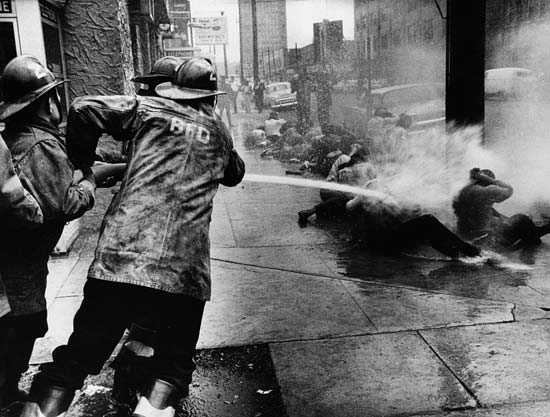
SECTION THREE: FROM DR. KING TO PRESIDENT TRUMP: EXAMINING HISTORY, NOW & THEN
The following lesson plans and historiographies were originally published on the National Visionary Leadership Project’s website. They were written by Karsonya Wise Whitehead and are reprinted here with her permission.
32. From Plessy to Brown: Examining the Ways We Worked to Overcome (ES/MS)
33. Examining the Modern Civil Rights Movement & the Birth of Our Activist Spirit (MS/HS)
34. From Brown (v Board) to Black (Power): Examining the Roots of the Civil Rights Movement **NEW**
35. Nevertheless They Persisted: Black Women & The Fire Within Them (Essay) **NEW**
36. Nevertheless They Persisted: Black Women & The Fire Within Them (Lesson Plan) (MS/HS) **NEW**
Exploring the “Crisis” in Black Education from a Post-White Orientation*
Marcus Croom
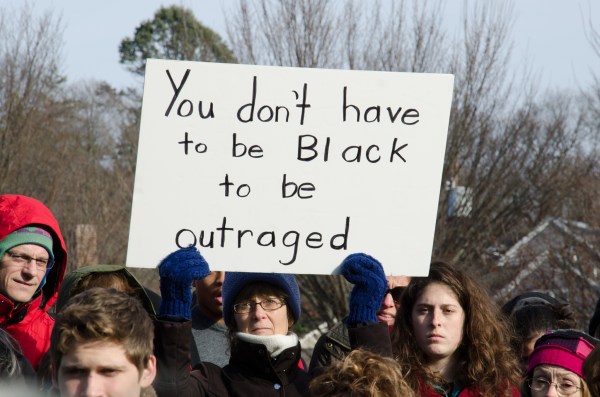
Intended Audience: Middle School And/Or High School
Overview: Children are socialized into the thought and practice of race as common sense by the time they enter Kindergarten (Apfelbaum, Norton, & Sommers, 2012). By middle school and high school, children have had very sophisticated experiences with race, but typically have not been adequately supported as they navigate both normative human development and race production in their lives. This double task can be especially challenging for children raced as Black in American society and in American schooling (Murrell, 2009). Our aim is simply to begin, with middle and high school students and teachers, by defining what race is and then offering students and teachers an opportunity to (re)define themselves in light of their own better understanding of race. Teachers will prepare to facilitate this beginning by first engaging in this activity and assessing their own work.
National Council for Social Studies (NCSS) Standards:
Teachers are charged with providing opportunities that will:
History
- enable learners to develop historical understanding through the avenues of social, political, economic, and cultural history and the history of science and technology.
Individuals, Groups, and Institutions
- help learners analyze group and institutional influences on people, events, and elements of culture in both historical and contemporary settings;
- assist learners in identifying and analyzing examples of tensions between expressions of individuality and efforts used to promote social conformity by groups and institutions;
- enable learners to describe and examine belief systems basic to specific traditions and laws in contemporary and historical movements;
- assist learners as they explain and apply ideas and modes of inquiry drawn from behavioral science and social theory in the examination of persistent social issues and problems.
Culture and Cultural Diversity
- assist learners to apply an understanding of culture as an integrated whole that explains the functions and interactions of language, literature, the arts, traditions, beliefs and values, and behavior patterns;
- have learners interpret patterns of behavior reflecting values and attitudes that contribute or pose obstacles to cross-cultural understanding.
Goals of Lesson Plan
Teachers and students will understand race as a consequential social practice, how it contrasts with a common sense understanding of race, and use dialogues and writing to (re)define themselves in light of a richer understanding of race.
Lesson Plan
Objectives
- Teachers and students will create a safe setting for demystifying race as a human cultural practice.
- Teachers and students will read and discuss the definition of race provided (Race is a consequential social practice).
- Teachers and students will read, discuss, and debate a point of view about an article.
- Students will free-write a shared or unshared Race Reflection.
Warm up (5-10 min)
Teacher will pose this question and discuss:
“Who are your people and what makes each of you members of the same group?”
Although directed to the whole class, this question is really an individual query. The whole class is not assumed to be members of the same group. Individual students should have an opportunity to respond to and dialogue about the question. Teacher should engage in the discussion, revealing their own personal view, but silently note instances when students (or when teachers themselves) offer common sense notions of race to identify themselves or the group with which they identify.
Activity (Instruction Input) (25-30 min)
Teacher will post a T-chart to facilitate a whole class comparison of the common sense perspective of race and the consequentially social practice perspective of race. Define the “Race is Common Sense View” as the perspective wherein race is a human feature that is self-evident and identifiable. Define the “Race is Consequential Social Practice View” as the perspective wherein humans create and consume race for human ends. Students will provide examples of how race is commonly understood as “self-evident and identifiable” on the left side of the T-chart (e.g. skin, bone, blood, hair, name, language, culture, etc.). On the right side of the T-chart, students will provide examples of how humans “create and consume” race (labeling, ranking, storying, symbolizing, social-classing, boundary-making, etc.).
Teacher will launch instruction by saying (something like):
“Today, we are going to distinguish between two ways of understanding race. The first way is nothing new. In fact, we’ll call it the common sense view of race. The second way is one you’ll quickly catch on to. We do it all the time, but you probably haven’t thought about race this way; we’ll call the second way the social practice view of race.”
Applying the article below to instruction, the teacher will discuss and complete the T-chart as described above.
- Once the T-chart is completed, the teacher will provide students with a copy of the article about Rachel Dolezal. Choose Option 1 or Option 2 to complete the reading of the article.
Option 1: Students will form groups of three or four and “jigsaw” read the entire article:
- Each member will select a portion to read and report back to the entire group.
Option 2: Teacher will select an excerpt from the article, student groups will read excerpt, and discuss excerpt (e.g., From: “Rachel and her college friends describe Belhaven as predominantly white.” To: “Finally, she says, she could live an authentic life.”).
- Student groups will prepare to orally argue whether the “Common Sense View” or the “Consequential Social Practice View” of race best explains the racial identity of Rachel Dolezal.
- Students will respond to the following: “Does Rachel Dolezal have racial identity? If so, which one(s) and why (i.e. according to “Common Sense” or “Consequential Social Practice”)? If not, why not (i.e. according to “Common Sense” or “Consequential Social Practice”)?”
- Teacher will engage with the arguments offered by each group without suggesting which argument is “right or wrong.” The point is for the teacher to invite a well-reasoned oral argument from all groups (teachers may provide and model a common oral argument structure to support the development of a well-reasoned oral argument; this kind of model may also be provided and modeled in the following written assessment).
Assessment (15-20 min)
Students will free write a Race Reflection using the following prompt:
“Do you have racial identity? If so, who are your racial people and what makes each of you members of the same group? If not, why not?”
- Teachers may invite a few willing students to share their Racial Reflection with the whole class, if teachers feel comfortable with managing, with credibility and sensitivity, the possibility of unexpected or unpopular viewpoints.
- Teachers will collect and review each Race Reflection to determine if the student has a well-reasoned reflection. Race Reflections that derogate self or others should be appropriately discussed with the individual student. Because this is a free write, teachers will not assess student writing for use of conventions.
- Beyond sound reasoning, teachers are looking for evidence that students understand the difference between the “Common Sense View” and the “Consequential Social Practice View” of race. Students are not required to adopt one view of race or the other; they may be inconclusive. Again, this entire lesson is only a beginning effort to develop a richer understanding of race as a human cultural practice.
This writing assignment can be extended by providing a model publishable text, offering opportunities for student-lead research, and offering teacher-lead writing support to students (across multiple drafts) that results in a publishable text, including appropriate use of conventions.
Background Information
Reading “The Crisis in Black Education” from a Post-White Orientation
As a literacy scholar, I have spent a great deal of time theorizing race in pursuit of practical ends–advancing the literacy practices of Black children in U.S. schools. This themed volume focused on the “Crisis in Black Education” caused me to reflect on this question: What makes “Black Education,” Black? Black as a category of race needs to be explained rather than assumed. In this essay, I will argue that race can be theorized either as common sense or as consequential social practice. I will also offer contrasting views of what “crisis” may mean according to each theory. I conclude by suggesting that this moment of “crisis” is thrusting upon us an opportunity to read the word and the world from a post-White orientation. By post-White orientation, I mean a racial understanding and practice characterized by a) unequivocal regard for “non-White” humanity, especially “Black” humanity; b) demotion of “White” standing (i.e., position, status); c) rejection of post-racial notions; d) non-hierarchical racialization; and e) anticipation of a post-White sociopolitical norm. Figure 1 is an illustration depicting post-White orientation as it differs from White superordinate racialization on one hand and postracialism on the other.
Figure 1

Racing on a Different Track
According to O’Connor, Lewis, and Mueller (2007), race is “undertheorized in research on the educational experiences and outcomes of Blacks” (p. 541). They find that race has been understood through two dominant perspectives: race as variable and race as culture. These understandings of race ignore or minimize heterogeneity, intersectionality, and the institutional production of race and racial discrimination where Black persons are concerned. Alternatively, O’Connor et al. (2007) argue that race is produced as a social category and urge that future research take an orientation of race aligned with the following:
(a) theoretical attention to how race-related resources shape educational outcomes, (b) attention to the way race is a product of educational settings as much as it is something that students bring with them, (c) a focus on how everyday interactions and practices in schools affect educational outcomes, and (d) examination of how students make sense of their racialized social locations in light of their schooling experiences. (p. 546)
Such studies will continue to uncover how schools produce race as a social category. Research focused on race production, then, will have implications for talking and writing about race and how race impacts views on education. The following framework conceptualizes race as common sense and race as consequential social practice[1].
Race as Common Sense: The Wrong Train
Sociologist Celine-Marie Pascale (2008) finds that race is widely understood as “common sense,” which she defines as “a saturation of cultural knowledge that we cannot fail to recognize and which, through its very obviousness, passes without notice” (p. 725). In other words, these are
assumptions that we make about life and the things we accept as natural. Common sense leads people to believe that we simply see what is there to be seen. For example, common sense leads us to believe that we simply ‘see’ different races. (p. 725)
She concluded that common sense knowledge of race was discussed in four ways: “as a matter of color, nationality, culture, or blood” (p. 726). What all of these ways have in common is that race is understood uncritically; that is, in a manner that does not question serious incoherencies and contradictions. A deeper, more important point about race as common sense is how it assumes White superiority (Mills, 1997; Puzzo, 1964). The racially White superordinate assumption included in common sense notions of race is morally bankrupt and indefensible.
Race as Consequential Social Practice: All Aboard!
Race as consequential social practice is defined as the individual, collective, institutional, or global production of race, through meaningful ways of being, languaging, and symbolizing, and the effects of such race production (big “D” Discourse and little “d” discourse; see Gee, 1990). I trace the beginning of this understanding of race to W. E. B. Du Bois’ book, The Souls of Black Folk. Du Bois’ “study of black identity marks a turning point away from biology and towards discursive interaction” (Wilson, 1999, p. 194). As such, Du Bois must be counted among foundational theorists when we historicize the understanding that race is a D/discursive, socially constructed, consequential human practice.
The antecedents/roots of defining race as consequential social practice can be found in the vindicationist tradition, a tradition coined by W.E.B. Du Bois according to anthropologist Kevin Michael Foster. Foster (1997) explains further,
According to Drake, vindicationism reflects the work of scholars to ‘set straight the oft-distorted record of the Black experience and to fill in the lacunae resulting from the conscious or unconscious omission of significant facts about Black people’ (Drake 1987, vol. 1: xviii). Today, even where vindicationism is not the explicit goal of Black scholars, the influence of this tradition is often apparent. Vindicationism may not be the defining characteristic for the work of African-descended scholars, but it is a recurrent feature (Baker 1994, Franklin 1989). (p. 2)
The vindicationist tradition advances and sustains us as persons raced as Black. As such, the vindicationist tradition and Du Bois’ work are critically important today as they were at their origins because “race emerged in language, and it survives in language” (Happe, 2013, p. 135). Further, race is also produced in ways that have grave consequences for human beings. For example, Happe (2013) uncovers that genes are made into artifacts of race and, in fact, do not corroborate race as the biological, common sense view of race alleges. Race, then, should be interrogated and denaturalized as a self-evident feature of the human body, even at the subcellular level, in contradiction to those who, whether unlettered or lettered, promote genes, skin, or other claims about the human body as corroboration of race as common sense (Herrnstein & Murray, 1996, p. 563). Again, race is consequential social practice. Whenever race occurs, it does not occur naturally; rather, race occurs because humans create and consume race for human ends. Each of these ways of understanding race–as common sense or as consequential social practice–may influence how race and “Black education” are viewed.
Race and “Black Education”
When we understand race as common sense, “Black education” may mean the realm of education that is a subset of, or is even apart from, “White education.” Said another way, “Black education” is education from Black people’s perspective, on Black people’s terms, and in Black people’s experience. From this orientation, “Black education” is a self-explanatory label that marks the largely homogenous “Black” experience of education in the U.S. according to those who are themselves actually “Black.”
The “crisis” in “Black education,” when race is understood as common sense, is a crisis in at least two ways. First, Black education is assumed to be subordinate to White education. Second, Black education primarily or exclusively involves Black persons and places—Black persons and places assumed to be subordinate to White persons and places. Accordingly, the question becomes what can be done about those inferior “Black children” and their inferior “Black education”? To be clear, this is not my own view; rather I am articulating the common sense view of race where education and crisis are concerned. As such, within the “Black” boundary there is catastrophe, and beyond the “Black” boundary, all is well or is at least better.
When we understand race as consequential social practice, “Black education” may mean the social partitioning of access to some aspect(s) of accumulated human knowledge, according to the racial hierarchy of “White” over “Black.” In other words, education itself is not racialized unless persons socially produce education as such through, for example, talk, text, or some other practice. Importantly, I hasten to add, education can be racialized for both ethical and unethical reasons. I cannot overstress this point. A “crisis” in “Black education,” when race is understood as consequential social practice, is a crisis in terms of thought, practice, systems, and institutions, whether local or global. As such, the question becomes what patterns and barriers are hostile to the humanity of persons raced as “Black”? I believe that this question begins to approach the essence of the vindicationist tradition (Drake, 1987) that Carter G. Woodson (1933) lived, worked, and struggled according to, along with many others like Du Bois. From the consequential social practice understanding of race, we who are raced as “Black” are always already fully human, and thus legitimate inheritors of all accumulated human knowledge, but our legitimacy as inheritors of all human knowledge and our intersectional, heterogeneous humanity are not always adequately honored and regarded. Such dishonor and disregard toward our human inheritance and plentitude is evidenced by historic and current thought and practice, including the processes of education (whether in school or out-of-school).
With this second perspective of “Black Education crisis” in mind, it becomes obvious why, yet again, we are faced with the need to exclaim, “Black lives matter.” It should comes as no surprise that the organization of schools and classrooms, the instructional practices therein, and the resources and materials apportioned to places raced as “Black” would produce pipelines to prison and poverty (Ladson-Billings, 2006). Given the innumerable artifacts, institutions, and ideologies derived from Western Europeans’ invention of race, we who are raced as “Black” fully expect to fight philosophically, epistemologically, theologically, theoretically, hermeneutically, linguistically, and with our own colored, clenched hands to protect our humanity, the humanity of our children, our loved ones, and our communities. For many persons raced as “Black” in the U.S., this is the American way.
Our present times have shown us again that we have a choice to make: will we choose to orient ourselves to race as common sense, reading the word and the world only according to Western European design? Or, will we choose the post-White orientation, wherein we are critically aware of the consequential social practice that metaphorically, and quite literally, writes the codes of the racialized matrix in which we live?
I have not argued that there is no such thing as race or racism. Neither have I argued that people who are raced as Black, should not call themselves “Black.” Further, I reject post-racialism in all its forms. I have argued that race and racism are produced by human thought and practice for human ends. Most of these human ends for race production are patently White superordinate (obviously including racism), but thankfully some human ends for race production are post-White oriented and human nurturing for persons categorized as “Black” (i.e., vindicationist). The issue is not the label “Black” per se, the issue is whether one is “Black” on racially subordinate terms or on human-peer terms (Woodson, 1933, pp. 199-202). As this suggests, post-racialism fails to hit the point. The point is race production and whether the race production in question is ethical or unethical. Rather than post-racialism, we should pursue the development of racial literacies–the acquired, critical, cultural toolkit that supports human well-being amid the social thought and practice of race (http://racialliteracies.org).
Whatever the current raced as Black education crisis may be, we should face it on human terms, rather than on normatively White superordinate terms. Perhaps the “Crisis in Black Education” is the recurring, practical repercussions of not yet realizing, together, what it means for persons, raced as Black, to be human (Wynter, 2006).
Teacher Resources
- The Mis-Education of the Negro by Carter G. Woodson (1933); especially chapter four “Education Under Outside Control.”
- Everyday Antiracism: Getting Real about Race in School edited by Mica Pollock (2008); especially section A “Race Categories: We Are All the Same, But Our Lives Are Different” and section B “How Opportunities Are Provided and Denied Inside Schools.”
- “In Rachel Dolezal’s Skin” by Mitchell Sunderland (2015).
- Tips for Facilitating Classroom Discussions on Sensitive Topics. by Alicia Moore, Ph.D., and Molly Deshaies.
- Developing a Positive White Identity by Racial Equity Tools.
- “The Crisis in Black Education” Executive Summary. Association for the Study of African American Life and History.
Notes
[1] In previous work, instead of “social practice” I used the big “D” and little “d” distinction offered by Gee (1990) to refer to “Discourses” as meaningful ways of being in the world and “discourses” as meaningful ways of using language or symbols in the world. For example, talk or texts are “discourses” employed in the “Discourses” of race, Black, White, Latino, Asian, Native American, etc. Both “D/discourse” and “social practice” are intended to convey the same meaning within the practice of race theory (PRT).
*This lesson plan was originally published in the Association for the Study of African American Life & History’s Black History Bulletin, v79, (2) and is reprinted here by permission of the author.
Jocelyn Thomas
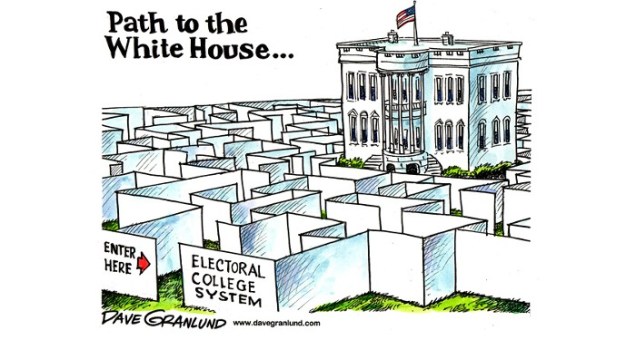
Intended Audience: High School Students
Objectives: Students will be able to define the electoral college; describe how the Electoral College works; explain the impact that the Electoral College has had on major political issues (i.e., slavery); discuss the current concerns about the Electoral College system in regards to Election 2016; and, argue whether the Electoral College is an effective and/or necessary part of electing a president.
Overview: “The founding fathers established The Electoral College in the Constitution as a compromise between election of the President by a vote in Congress and election of the President by a popular vote of qualified citizens.” [i] “While the election of the president and vice-president was provided for in Article II, Section 1, Clauses 2, 3, and 4 of the U.S. Constitution, the process today has moved substantially away from the framers’ original intent. Over the years, a combination of several factors has influenced the Electoral College and the electoral process.”[ii] Nevertheless, even after all of these years, as subsequent tweaks to the process, the process has been determined to be confusing, with many intricacies that make it difficult for most Americans to understand. This lesson will give students the opportunity to understand these intricacies while thinking critically about the merit, or lack thereof, of this historically, and sometimes, indecisive[iii] process.
Scope and Sequence: This lesson asks students to explore what the framers of the United States Constitution considered to be the best way to elect the president and vice-president of the United States – the Electoral College. As well, the lesson provides opportunities for students to analyze, synthesize, evaluate, and discuss the election of the president through the electoral college versus the popular vote and assess the impact of the Electoral College process.
Lesson Plan
Part 1: Who determines who becomes the President of the United States?
Hook: The electoral college is something that we hear a lot about these days. Some people believe that the electoral college is a broken system.
Key Vocabulary
- Popular Vote—results of a presidential election based on how individual citizens vote.
- Electoral College Vote—results of presidential election based on how representative electors vote.
- Popular Sovereignty—the idea that the government (at all levels) is controlled, ultimately, by the will of the people
[i] What is the Electoral College? https://www.archives.gov/federal-register/electoral-college/about.html
[ii] National Archives: Tally of the 1824 Electoral College Vote. https://www.archives.gov/education/lessons/electoral-tally
[iii] Electoral College & Indecisive Elections. http://history.house.gov/Institution/Origins-Development/Electoral-College/
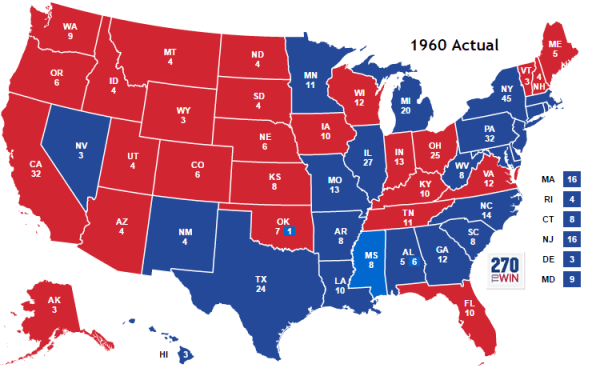
Analysis Questions: 1960 Presidential Election Interactive Map
- What are your first impressions of this map?
- How many electors voted in the election of 1960?
- How many were needed to win?
- How did your home state vote?
- What does it tell you about the election of 1960?
The Constitution: Article II
Section 1. The executive Power shall be vested in a President of the United States of America. He shall hold his Office during the Term of four Years, and, together with the Vice President, chosen for the same Term, be elected, as follows:
- Each State shall appoint, in such Manner as the Legislature thereof may direct, a Number of Electors, equal to the whole Number of Senators and Representatives to which the State may be entitled in the Congress: but no Senator or Representative, or Person holding an Office of Trust or Profit under the United States, shall be appointed an Elector.
- The Congress may determine the Time of choosing the Electors, and the Day on which they shall give their Votes; which Day shall be the same throughout the United States.
Analysis Questions: The Constitution: Article II
- How long is the presidential term?
- How do we determine the number of electors each state has?
- What is the job of the electors?
- How do electors vote?
Stop and Talk
- According to this system, who determines who is President of the United States?
- Do you think that system is fair? Why or why not?
- Can you think of any problems that might come up because of this system?
Part 2: The Impact of the Electoral College
Analysis Question: Determination of the Number of Electors
How do you determine the number of electors for an individual state? Study the Electoral College chart and add the number of electors per state.
State #of Electors
Connecticut
Delaware
Georgia
Maryland
Massachusetts
New Hampshire
New York
North Carolina
Pennsylvania
Rhode Island
South Carolina
New Jersey
Vermont
Kentucky
Tennessee
Virginia
The first major election that the United States experienced under the Electoral College system was the Election of 1800.
Background Information on Election of 1800
Helpful Vocabulary and Key Figures
- Democratic-Republican Party— supported strong state governments, often pro-slavery, considered the farmer/plantation class, did not like the electoral college.
- Federalist Party—supported a strong national government, often anti-slavery, considered elitists, wanted the electoral college.
- Alexander Hamilton—federalist, helped promote signing the Constitution, supported the electoral college.
- Thomas Jefferson—anti-federalist, slave owner, critic of the electoral college, created the Declaration of Independence
- States’ rights—the idea that state governments should have more control over deciding debated policy issues, like slavery.
Most observers agree that the electoral college did not work as planned in 1800, largely because of the development of the Democratic-Republican Party and the Federalist Party. With the development of such parties, which caucused in Congress to select party nominees, electors generally understood that they should vote for two individuals from the same party rather than, as was originally planned, for the two individuals considered most capable of assuming the presidency.
Indeed, Alexander Hamilton plotted behind the scenes to use the electoral college to elect Federalist, Charles Cotesworth Pinckney, of South Carolina, over Federalist John Adams. As a consequence, all 73 electors who cast votes for Democratic-Republican Thomas Jefferson over Adams also voted for Aaron Burr, whom they expected to serve as vice president. When Jefferson and Burr tied, the election went to the House of Representatives, where it took 36 ballots and Hamilton’s eventual support of Jefferson to break the tie. Consequently, the Twelfth Amendment was adopted in 1804 specifying that electors would cast separate votes for presidential and vice presidential nominees rather than a single, nondistinguishing vote for each of two candidates.
Jefferson believed that his election had brought about a “revolution” in law and politics. He would put greater emphasis on states’ rights than had the two Federalist presidents; he repudiated the Alien and Sedition Acts; and he attempted to bring the chief executive into greater touch with the people.
NOTE: In the next section you are going to analyze some data about the election of 1800 so that you can see the impact that the electoral college system has had on not only the presidential elections but one of the most important questions of the time: slavery.
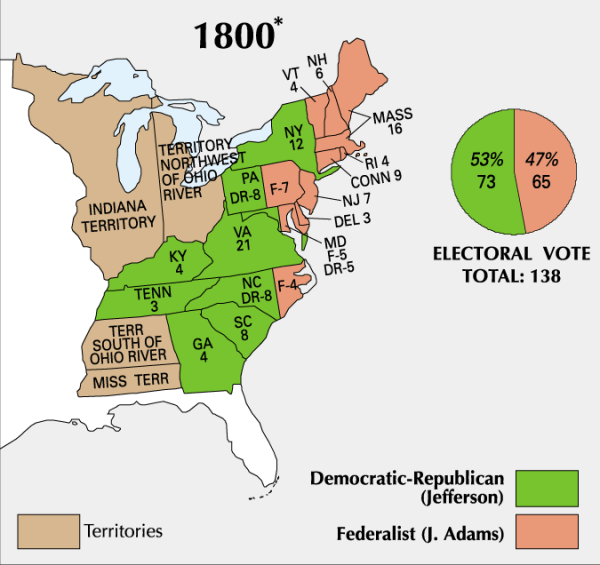
Analysis Questions: The Impact of the Electoral College
- Which states did Jefferson win?
- Which states did Adams win?
- Why does NY have 12 electoral votes and Virginia have 21?
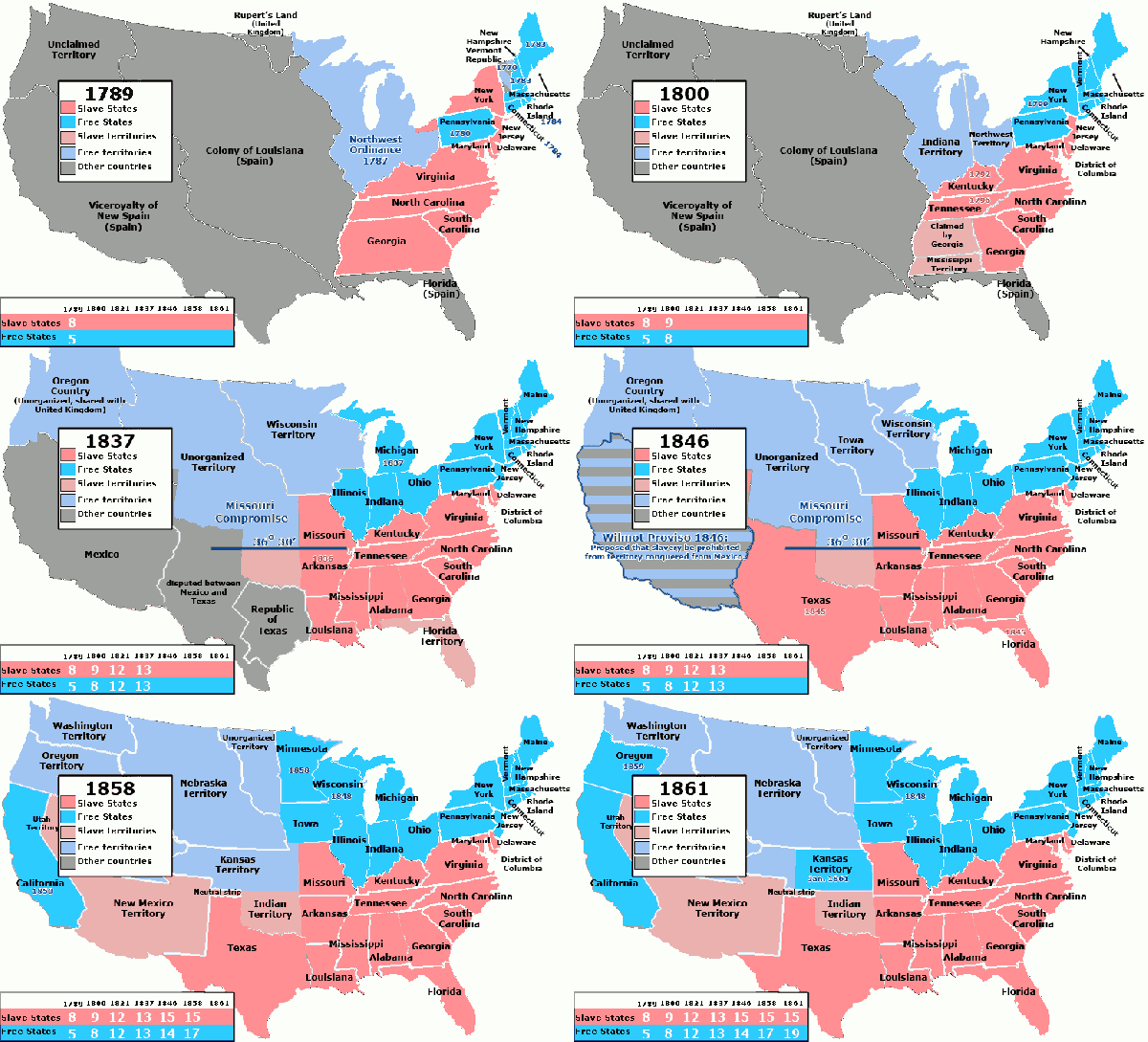
Discussion Questions
- What connection do you see between the number of electors and the map above?
- What can you likely infer (make an educated guess) about the political issues that the candidates of the election of 1800 will likely support?
- How does population size impact the presidential election?
Stop and Talk
According to what we have seen thus far, a candidate does not necessarily have to be the most popular person in the country to win the presidency. They only have to be the most popular in the states with larger numbers of electors OR in enough smaller states to make up the difference between loosing bigger states.
- What do you think of this as a system to choose the president?
- Is it effective, fair, and/or necessary?
Part 3: The Legitimacy of the Electoral College
Discussion: “For” or “Against” the Electoral College?
Argument FOR the Electoral College
Federalist 10
This essay, the first of Madison’s contributions to the series, was a rather long development of the theme that a well-constructed union would break and control the violence of faction, a “dangerous vice” in popular governments.
As defined by Madison, a faction was a number of citizens, whether a majority or minority, who were united and activated “by some common impulse of passion, or of interest, adverse to the rights of other citizens, or to the permanent and aggregate interests of the community.”
Federalist 68
The way of electing a president, Hamilton noted with relief, was almost the only part of the system, of any consequence, which has escaped without severe censure.”
Rightly, the “sense of the people should operate in the choice” of the chief executive. But this was to be accomplished in a special way. Instead of committing the election of the president to any established body, the choice should be made by men chosen for the special purpose, and meeting at particular times. Such men of distinction would be the most capable of deciding which presidential candidate had the best qualifications for office.
Argument AGAINST the Electoral College
First, the result of this year’s presidential race will likely have been decided by fewer than a million voters. Those are the undecided voters in a handful of large swing states like Michigan, Pennsylvania, and Florida, which have lots of votes in the Electoral College.
Second, while Gov. George W. Bush has pulled slightly ahead of Vice President Al Gore in the presidential popularity contest, some oddsmakers still give Mr. Gore the lead in the projected Electoral College vote. Voters may wake up to find that Gore has won the election with fewer popular votes than Mr. Bush.
Since the Civil War, this calamity has only occurred twice, in 1876 and 1888. But the specter hangs over every presidential election that is remotely close. That’s because with the 18th-century Electoral College, each presidential race is conducted as individual contests in the 50 states.
What’s more, since the rules are “winner take all” and heavily tilted toward the largest states, it means that a presidential candidate need only win a plurality of votes in each of the 11 largest states to win enough Electoral College votes to capture the prize.
Place yourself somewhere on the spectrum:
The Electoral College ensures that popular but immoral political ideas/parties do not become to powerful by getting into the office of the Presidency?
Agree <————-I———————->Disagree
The Electoral College should not be in charge of determining which ideas/parties are in charge of the country: a popular vote should determine that.
Agree <————-I———————->Disagree
The Electoral College as it exists today is able to effectively uphold it’s original purpose.
Agree <————-I———————->Disagree
It is logistically more useful to use the Electoral College system than to attempt to accurately count all ballots in an election.
Agree <————-I———————->Disagree
Stop and TALK
- What have you heard about the Electoral College in the news recently?
- How does what you learned today help you interpret the election results for 2016?
- What does what you learned today make you think about the efforts to recount votes in “swing” states?
- Do you think the Electoral College System will need to change at all? If so, how should it change? If not, why shouldn’t it change?
Homework
Have students read the following Opinion Editorial and respond to the following: what are the author’s key points? Do you agree with the author? Do you think that the Electoral College is flawed? And if so, why? If not, why?
Opinion-Editorial
Why I Will Not Cast My Electoral Vote for Donald Trump*
By Christopher Suprun, December 5, 2016
DALLAS — I am a Republican presidential elector, one of the 538 people asked to choose officially the president of the United States. Since the election, people have asked me to change my vote based on policy disagreements with Donald J. Trump. In some cases, they cite the popular vote difference. I do not think presidents-elect should be disqualified for policy disagreements. I do not think they should be disqualified because they won the Electoral College instead of the popular vote. However, now I am asked to cast a vote on Dec. 19 for someone who shows daily he is not qualified for the office.
Fifteen years ago, as a firefighter, I was part of the response to the Sept. 11 attacks against our nation. That attack and this year’s election may seem unrelated, but for me the relationship becomes clearer every day.
George W. Bush is an imperfect man, but he led us through the tragic days following the attacks. His leadership showed that America was a great nation. That was also the last time I remember the nation united. I watch Mr. Trump fail to unite America and drive a wedge between us.
Mr. Trump goes out of his way to attack the cast of “Saturday Night Live” for bias. He tweets day and night, but waited two days to offer sympathy to the Ohio State community after an attack there. He does not encourage civil discourse, but chooses to stoke fear and create outrage.
This is unacceptable. For me, America is that shining city on a hill that Ronald Reagan envisioned. It has problems. It has challenges. These can be met and overcome just as our nation overcame Sept. 11.
The United States was set up as a republic. Alexander Hamilton provided a blueprint for states’ votes. Federalist 68 argued that an Electoral College should determine if candidates are qualified, not engaged in demagogy, and independent from foreign influence. Mr. Trump shows us again and again that he does not meet these standards. Given his own public statements, it isn’t clear how the Electoral College can ignore these issues, and so it should reject him.
I have poured countless hours into serving the party of Lincoln and electing its candidates. I will pour many more into being more faithful to my party than some in its leadership. But I owe no debt to a party. I owe a debt to my children to leave them a nation they can trust.
Mr. Trump lacks the foreign policy experience and demeanor needed to be commander in chief. During the campaign more than 50 Republican former national security officials and foreign policy experts co-signed a letter opposing him. In their words, “he would be a dangerous president.” During the campaign Mr. Trump even said Russia should hack Hillary Clinton’s emails. This encouragement of an illegal act has troubled many members of Congress and troubles me.
Hamilton also reminded us that a president cannot be a demagogue. Mr. Trump urged violence against protesters at his rallies during the campaign. He speaks of retribution against his critics. He has surrounded himself with advisers such as Stephen K. Bannon, who claims to be a Leninist and lauds villains and their thirst for power, including Darth Vader. “Rogue One,” the latest “Star Wars” installment, arrives later this month. I am not taking my children to see it to celebrate evil, but to show them that light can overcome it.
Gen. Michael T. Flynn, Mr. Trump’s pick for national security adviser, has his own checkered past about rules. He installed a secret internet connection in his Pentagon office despite rules to the contrary. Sound familiar?
Finally, Mr. Trump does not understand that the Constitution expressly forbids a president to receive payments or gifts from foreign governments. We have reports that Mr. Trump’s organization has business dealings in Argentina, Bahrain, Taiwan and elsewhere. Mr. Trump could be impeached in his first year given his dismissive responses to financial conflicts of interest. He has played fast and loose with the law for years. He may have violated the Cuban embargo, and there are reports of improprieties involving his foundation and actions he took against minority tenants in New York. Mr. Trump still seems to think that pattern of behavior can continue.
The election of the next president is not yet a done deal. Electors of conscience can still do the right thing for the good of the country. Presidential electors have the legal right and a constitutional duty to vote their conscience. I believe electors should unify behind a Republican alternative, an honorable and qualified man or woman such as Gov. John Kasich of Ohio. I pray my fellow electors will do their job and join with me in discovering who that person should be.
Fifteen years ago, I swore an oath to defend my country and Constitution against all enemies, foreign and domestic. On Dec. 19, I will do it again.
Christopher Suprun lives in Texas and works as a paramedic.
*A version of this op-ed appears in print on December 6, 2016, on page A27 of the New York edition with the headline: Why Electors Should Reject Trump.
Resources:
National Archives and Records Administration: U.S. Electoral College
Giving Voice & Making Space: Dismantling the Education Industrial Complex in an Effort to Free Our Black Girls* (MS/HS)
Aja Reynolds & Stephanie D. Hicks

Photo: Eduardo Munoz Alvarez/AFP/Getty Images
Intended Audience: Middle and High School
Objectives: To create and deepen awareness of black girls’ interactions with law enforcement in schools and the school to prison pipeline; to critically examine and respond to policies and laws that shape students in-school experiences; to participate in large and small group discussions based on readings and research; and, to create a historical timeline that highlights and connects the individual stories of people and the actions of large institutions (legal system, schools, etc.).
Connections to Middle School and/or High School: Timelines can be used to help students understand the context of historical and current events. They can also be used creatively to encourage students to imagine different paths of engagement and activism. In this lesson plan, students will construct a large-scale timeline outlining some of the interactions that black women and girls’ have had with law enforcement in schools.
National Council for Social Studies (NCSS) Standards
- Assist learners in utilizing chronological thinking so that they can distinguish between past, present, and future time; can place historical narratives in the proper chronological framework; can interpret data presented in time lines; and can compare alternative models for periodization;
- Guide learners in practicing skills of historical analysis and interpretation, such as compare and contrast, differentiate between historical facts and interpretations, consider multiple perspectives, analyze cause and effect relationships, compare competing historical narratives, recognize the tentative nature of historical interpretations, and hypothesize the influence of the past;
- Help learners to identify issues and problems in the past, recognize factors contributing to such problems, identify and analyze alternative courses of action, formulate a position or course of action, and evaluate the implementation of that decision; and,
- Enable learners to develop historical understanding through the avenues of social, political, economic, and cultural history and the history of science and technology.
Lesson Plan Activities
- Using the Endnotes section of the Black Girls Matter report, have students read stories about the interactions that black girls have in schools with police officers.
- Have students work in small groups to research and document additional incidents to help construct a classroom-scale timeline of these stories and incidents. (Students should be encouraged to add their own stories and stories of family and friends to the timeline.)
- Have students add to the timeline local, state and national education policies that contribute to the increased criminalization of black girls in school environments.
- Moderate a classroom discussion and have the students think out loud about potential solutions.
- At the end of the discussion, students should work together to construct an alternative timeline that features possible solutions for discipline policies at the school, district, state and national level.
Assessments
1) Partial assessment takes place as the students work to construct their alternative timeline during the activity. The students’ ability to imagine alternative discipline policies and practices depends upon the critical thinking that took place in the classroom discussion.
2) Additional assessment can take place in follow-up classroom discussions where students can construct alternative timelines about #BlackLivesMatter, the Civil Rights Movement, and the Women’s Rights Movement, to name just a few.
3) Students should be encouraged to share with the group their ideas for future practices and policies.
4) Students can also share their ideas in an informal free-writing exercise after the discussion.
BACKGROUND INFORMATION
My child – and I’m not mad at her – she was brave enough to speak out against what was going on, and didn’t back down. And it resulted in her being arrested…But looking at the video, who was really disturbing the school? Was it my daughter? Or was it the officer that came into the classroom and did that to the young girl? – Doris Kenny, mother of Spring Valley High School student Niya Kenny, who spoke out against the forcible restraint and arrest of her SVHH classmate
Introduction
In October of 2015, a black student at Spring Valley High School was forcibly removed from her desk and thrown across a classroom by Deputy Ben Fields, a white school resource officer. The officer and school officials contended the student was handled so aggressively because she refused to surrender her cellular phone and leave the classroom when asked.
A video of the incident taken by another student went viral on the internet, capturing the attention of national news outlets, law enforcement officials and supporters, and political and religious leaders. Reactions ranged from skepticism about the cause of the incident to defense of the officer to questions about why witnesses (school staff and students) chose not to intervene. Eventually, background research on the officer revealed that this was not the first time that he had used aggressive force with students. Deputy Fields was actually under investigation for targeting black and Latino students at the schools where he worked.
Outraged students, parents, community members, and activists sounded off online and elsewhere in the media: Why was such force used against a child? Did the student’s actions justify Deputy Fields’ response? Why was the student’s “disruptive” behavior deemed a criminal act and not a school discipline issue? Would Deputy Fields reaction have been different if the student was white? If it was a white female student, would the teacher had even called an officer? And, what are the ramifications of having resource officers (SROs) in schools? Scholars and activists who focus on the school to prison pipeline broadly, and the criminalization of black women and girls specifically, were a loud and dissenting voice amidst the chorus of supporters for SROs and their use of force. As authors and researchers, we place this incident in the context of the ongoing criminalization of black women and girls with the aim to advocate for changes in the ways in which black girls are policed in school environments.
The Criminalization of Black Women and Girls
From 1985 to 1997, black girls were the fastest growing segment of the juvenile justice population (Puzzanchera, Adams, & Sickmund, 2011). By 2010, black girls were 36% of juvenile females in residential placement (Sickmund, Sladky, Kang, & Puzzanchera, 2011). In examining data from the 2011-2012 academic year, the Department of Education (2014) found that black girls were six times more likely to be suspended than white girls. During that academic year, black girls represented approximately 12% of the suspensions compared to 2% of white girls.
Using the lens of anti-blackness, researchers Connie Wun (2015) and Michael Dumas (2016) have contributed rich critiques of schooling for black children. They re-identify educational institutions as prisons, reliant on policing black bodies, and on diminishing their sense of agency. Their studies have challenged the school-to-prison pipeline (STPP); pointing us to a deeper analysis of the ways in which schools operate as prisons and as sites of trauma for black students. Literature focusing on the imprisonment and surveillance of black women helps us understand schools as an apparatus of prison systems (Davis, 2003; Richie, 2012). Kimberle Crenshaw’s (1991) intersectional analysis intervention provides a method to assess the nuances of oppression experienced by black girls. This work details the racism, sexism, and misogyny, that black women and girls experience and offer critiques with an intent to dismantle these oppressive systems.
Black Girls in School
In recent years, more research that centers on the strengths and assets of black children has been generated, but it has been primarily concerned with the plight of black boys. An effect of this trend is that we see black girls as marginal (Grant, 1992; Morris, 2012; AAPF & CCISPS, 2014; Wun 2015). Taken together, these problems—specifically the lack of focus on asset-based black education research, the typifying of black communities as problematic, and the disregard of the plight of black girls in schools—could be considered a crisis in black education. What affect does focusing on the effects of school discipline on black girls do for black education research as a field? And what can it do for black girls?
When black girls in schools display behaviors that are deemed “ghetto” or are a deviation from the social norms that construct acceptable behavior according to a narrow, white middle-class scope of femininity, they are deemed non-conforming and thereby subject to criminalizing responses (Holsinger & Holsinger, 2005; Blake, Butler, Lewis, & Darensbourg, 2011; Morris, 2012). In a study by AAPF & CCISPS, black girls expressed that teachers spent a profound amount of time correcting their behavior, much more time than they spent on teaching (2014). Teachers perceive black girls as being “loud, defiant, and precocious,” and black girls are more likely than their white or Latino peers to be reprimanded for being “unladylike” (Morris, 2007). In Grant’s (1992) research, emphasis placed by teachers on learning and performing social skills was less apparent for white girls, black boys, and white boys than black girls. Furthermore, Grant’s work suggested that educators expressed more interest in promoting the social—rather than academic—skills of black girls. Some black female teachers also play an active role in trying to correct black girls’ behaviors, but with the consciousness of the implications of these stereotypes (Tyson, 2003). In other words, they are trying to protect black girls from being reprimanded for not being “lady-like,” according to white middle class standards. bell hooks (1984) and Patricia Hill Collins (2013) developed foundational critical Black Feminist Theories to deconstruct white supremacist, patriarchal influences that creep into intimate spaces in black communities, including home, church, and organizing spaces. Their contributions challenged respectability politics, and created new possibilities for black women to define themselves.
Hortense Spillers (1987) and Saidiya Hartman (1997) intently explore the dehumanization of black women under the conditions of slavery and the “after-life of slavery” that animates anti-Blackness today. Their work forces us to wrestle with our “captive” or enslaved African experiences and the ways those experiences shape our identities and all sectors of black life, including educational institutions. Their work suggests that we refer to previous Black Feminist critiques when formulating research and theories that address the experiences of black girls in school, and that we support the resistance of black girls to better support them.
Creating spaces of/for “Carefree Black Girls”
In order to effectively reckon with the neglect of black girls, we must not only begin and end with images of them being tackled, dragged and punched by white law enforcement, we must also critically assess all the ways they are disposed of daily. Programs aimed solely at supporting black boys, like the White House Initiative, reinforce the invisibility of black girls. Several spectacles of black girls being violently apprehended by law enforcement in schools and at pools last year, unfortunately, exposed truths about the vulnerability of black girls’ bodies to police brutality, and reminded black girls that they must repeatedly come to their own rescue. These situations should not be read as a new phenomena, but should be understood as part of a tradition that legitimizes the use of violence to control the behaviors of black girls inside and outside the community. The emphasis on “correcting” behavior, as discussed previously in this article, demonstrates this historical commitment to manipulating Black bodies.
In our experience, “carefree” black girls become the most targeted in educational spaces. They unapologetically embrace their black girl identity, and will aggressively protect their right to exist. They are also defying the social contract and articulating their protest to such restrictions through various expressions, both verbally and non-verbally. It is imperative that as we are deconstructing and interpreting the systems of oppressions that impact the lives of black girls, we simultaneously construct spaces for them to become their most authentic selves. Rather than criminalizing them for being “sassy” or “un-ladylike,” we must be willing to relinquish conventional ideas of respectability to better affirm “care-free” black girls. More than creating a space for them to express themselves, we must commit ourselves to responding to their needs lovingly, appropriately and effectively.
Conclusion: Using Research to Advocate for Black Girls
What does creating spaces for “carefree black girls” mean for black educators? And what does it mean for the field of black education?
In classrooms, schools, and other educational spaces, it means that teachers and school staff must recognize the informal and formal policies that disproportionately criminalize black girls. This includes interrogating what is deemed appropriate verbal and non-verbal responses while deepening knowledge about the ways in which racism and sexism have informed the relationship between schools and law enforcement. It also means holding ourselves accountable when crafting and enforcing school discipline policies, and questioning our own motives.
In black education research broadly, we must continue to interrogate black girls’ in-school experiences. This work cannot be tangential. We must also collectively articulate the kind of world we want to give to black girls. If an aim of our research is to inform future educational practices with the hope of improving the educational experiences of black girls (and boys), we must ask what world our findings are preparing them for. Is that the world we hope to create for them?
Works Cited
African American Policy Forum & Columbia Center for Intersectionality and Social Policy Studies. Black girls matter: Pushed out, overpoliced and underprotected. Center for Intersectionality and Social Policy Studies, 2014.
Blake, Jamilia J., Bettie Ray Butler, Chance W. Lewis, and Alicia Darensbourg. “Unmasking the inequitable discipline experiences of urban Black girls: Implications for urban educational stakeholders.” The Urban Review 43, no. 1 (2011): 90-106.
Collins, Patricia Hill. Black Feminist Thought: Knowledge, Consciousness, and the Politics of Empowerment. Routledge, 2004.
Crenshaw, Kimberle. “Mapping the margins: Intersectionality, identity politics, and violence against women of color.” Stanford law review (1991): 1241-1299.
Davis, Angela Y. Are prisons obsolete? Seven Stories Press, 2011.
Dumas, Michael J. “Things Are Gonna Get Easier: Refusing Schooling as a Site of Black Suffering.” Huffpost Black Voices. Web. 15 Feb. 2016.
Grant, Linda. “Race and the schooling of young girls.” Education and gender equality (1992): 91-113.
Hartman, Saidiya V. Scenes of subjection: Terror, slavery, and self-making in nineteenth-century America. Oxford University Press on Demand, 1997.
Holsinger, Kristi, and Alexander M. Holsinger. “Differential pathways to violence and self-injurious behavior: African American and white girls in the juvenile justice system.” Journal of Research in Crime and Delinquency 42, no. 2 (2005): 211-242.
Hooks, Bell. Feminist theory: From margin to center. South End, 1984.
Jarret, Valerie and Broderick Johnson. “My Brother’s Keeper: A New White House Initiative to Empower Boys and Young Men of Color.” The White House Blog. Web 15 Feb 2016.
Morris, Edward W. ““Ladies” or “loudies”? Perceptions and experiences of black girls inclassrooms.” Youth & Society 38, no. 4 (2007): 490-515.
Morris, Monique W. Race, Gender, and the School to Prison Pipeline: Expanding Our Discussion to Include Black Girls. African American Policy Forum, 2012.
Puzzanchera, Charles, Benjamin Adams, and M. Sickmund. Juvenile Court Statistics 2008 Report. Pittsburgh, Pa: National Center for Juvenile Justice (2011).
Richie, Beth. Arrested justice: Black women, violence, and America’s prison nation. NYU Press,2012.
Sickmund, Melissa, T. J. Sladky, Wei Kang, and Charles Puzzanchera. “Easy access to thecensus of juveniles in residential placement.” Retrieved February 14 (2011): 2013.
Spillers, Hortense J. “Mama’s baby, papa’s maybe: An American grammar book.” diacritics 17.2 (1987): 65-81.
Tyso Karolyn. “Notes from the back of the room: Problems and paradoxes in the schooling ofyoung black students.” Sociology of Education (2003): 326-343.
U.S. Department of Education. Office of Civil Rights: Civil rights data collection. Department of Education, 2014.
Wun, Connie. “Against Captivity: Black Girls and School Discipline Policies in the Afterlife of Slavery.” Educational Policy (2015)
Yan, Holly, Kevin Conlon and John Newsome. “S.C. school officer Ben Fields’ career marked with lawsuits, praise.” CNN. 15 Feb. 2016.
*A version of this lesson plan and essay were originally published under the title “Can We Live? Working Toward a Praxis of Support for Carefree Black Girls” in the Association for the Study of African American Life and History’s Black History Bulletin, v79, (2). It is reprinted here with permission from the authors.
Trump Syllabus K12: Lesson Plans for Teaching During this New Age of Resistance (#TrumpSyllabusK12)
created & compiled by Karsonya Wise Whitehead, Ph.D.
with Alicia Moore, Ph.D. & Regina Lewis, Ph.D.
Lesson Plans for Teaching During this New Age of Resistance (#TrumpSyllabusK12)
#TrumpSyllabusK12 is a compilation of lesson plans and resources written by and for K-12th grade teachers (and college educators) for teaching about the 2016 presidential campaign; about resistance and revolution; about white privilege and white supremacy; about state-sanctioned violence and sanctuary classrooms; about fake news and Facebook; and, about freedom and justice. It is designed to transform our classrooms into liberated nonsexist nonmisogynistic anti-racist anti-classist spaces without any boundaries or borders. It is meant to liberate and free our students by providing them with lesson plans to challenge them to become global critical thinkers. We invite you to join with us as we actively work to push back against the establishment of this New World Order and we draw our line in the sand and work to liberate and change the world, one student at a time.
The syllabus is divided into four sections: the opening section provides resources and tools to ground the classroom discussion; Section One: Examining Campaign 2016, includes lesson plans and resources that examine the presidential campaign of Donald J. Trump and Hillary Rodham Clinton (see Clinton Syllabus 1.0 for more information); Section Two: Politics in the “Post-Trump” Narrative, which includes lesson plans and resources that explore the ways that we can transform our classes into safe liberated spaces designed to openly discuss and address white privilege, race, and citizenship; and, Section Three: From Dr. King to President Trump: Examining History, Now & Then, which consists of lesson plans and resources provided by the National Visionary Leadership Project that explore and connect the work from the Civil Rights Movement to Black Lives Matter to the current activist work against the Trump Administration.
Each lesson plan is presented in its entirety and includes Warm Up and Group Activities, Essential Questions and Objectives, Resources, an Essay or an Overview, and they connect directly to the Common Core Standards for Math, History, or Language Arts; and, to the National Council of Social Studies Standards.
Please note that lesson plans are still being accepted at griotonthego@gmail.com and are being added daily.
(ES=Elementary School; MS=Middle School; HS=High School)
######
TABLE OF CONTENTS
RESOURCES & TOOLS TO GROUND THE DISCUSSION
1. America is a Divided Nation: Singing the Post-Trump Blues **NEW**
-Karsonya Wise Whitehead, Ph.D.
2. Teaching After the Election of Trump **NEW**
-The Zinn Education Project
3. Opinion Editorial: “These Are Our First 100 Days, Too” **NEW**
-Karsonya Wise Whitehead, Ph.D.
4. Resistance 101: A Lesson for Inauguration Day Teach-Ins and Beyond **NEW**
-Teaching for Change
5. 40 Acres, A Mule, & $50 Dollars: Making the Case for Reparations **NEW**
-Conra Gist, Ph.D., and Karsonya Wise Whitehead, Ph.D.
6. Tips for Facilitating Classroom Discussions on Sensitive Topics
-Alicia Moore, Ph.D., and Molly Deshaies
SECTION ONE: EXAMINING CAMPAIGN 2016
7. The Electoral College vs The Popular Vote: Who Should Choose OUR President? (HS)
-Jocelyn Thomas
8. Exploring the (New) Political Climate (MS)
-Nadiera Young
9. Exploring the Reasons Why Trump Won (MS/HS)
-Gloria Ladson-Billings, Ph.D.
10. Exploring the Fake News Cycle (MS)
-Baba Ayinde Olumiji
11. Using Photographs to Explore Differing Political Perspectives (ES)
-Alicia Moore, Ph.D., and Angela Davis Johnson
12. Trump and Gender Bias, By the Numbers (HS)
-Kelly Cross Ph.D.
ADDITIONAL RESOURCES (POETRY):
13. Oya for President (to be read OutLoud)
-Alexis Pauline Gumbs
14. Mourning in America: A Black Woman’s Blues Song
-Karsonya Wise Whitehead, Ph.D.
15. Songs in a Key Called Baltimore
-Karsonya Wise Whitehead, Ph.D.
SECTION TWO: POLITICS IN THE “POST-TRUMP” NARRATIVE
16. Harassment and Intimidation in the Aftermath of the Trump Election: What Do We Do Now? (MS/HS)
-Sarah Militz-Frielink and Isabel Nunez, Ph.D.
17. From “I Have A Dream” to “I Dream of a World”: Steps to Creating a Sanctuary Classroom (All Grades)
-Karsonya Wise Whitehead, Ph.D.
18. Hope, Action, & Freedom in the Times of Uncertainty (HS)
-Conra D. Gist,Ph.D., Angela Davis Johnson, & Tyson E.J. Marsh, Ph.D.
19. Writing White Privilege, Race, and Citizenship: Reading Angela Davis, Toni Morrison, Claudia Rankine, and Walt Whitman (HS)
-Ileana Jiménez
20. A Pedagogy of Resistance in the Struggle Against White Supremacist State-Sanctioned Violence* (MS/HS)
-Tyson E.J. Marsh, Ph.D.
21. Lessons in Black Feminist Criminology: Disrupting State and Sexualized Violence Against Women and Girls #GrabtheEmpowerment (HS)
-Nishaun T. Battle, Ph.D.
22. Giving Voice & Making Space: Dismantling the Education Industrial Complex in an Effort to Free Our Black Girls* (MS/HS)
-Aja Reynolds & Stephanie Hicks
23. Exploring the “Crisis” in Black Education from a Post-White Orientation* (MS/HS)
-Marcus Croom
24. The African American Saga: From Enslavement to Life in a Color-Blind Society (Or Racism Without Race)*(HS)
-Yolanda Abel, Ed.D., and LeRoy Johnson
25. #Evolution or Revolution: Exploring Social Media through Revelations of Familiarity* (HS)
-Kimberly Edwards-Underwood, Ph.D.
26. Replace Fear with Curiosity: Using Photographs and Poetry to Process Election 2016 (ES)
-Tracy Kent-Gload
27. #WeGotNext: Black Youth Activism and the Rise of #BlackLivesMatter* (HS/MS) **NEW**
-Sekou Franklin
ADDITIONAL RESOURCES:
28. Steps to Combating Anti-Muslim Bullying in Schools
-Mariam Durani, Ph.D.
29. #ClintonSyllabus 1.0
-Karsonya Wise Whitehead, Ph.D., Alicia Moore, Ph.D., Regina Lewis, Ph.D.
30. Book: Black Lives Matter (Special Reports)
–
31. Book: Shock Exchange: How Inner-City Kids from Brooklyn Predicted the Great Recession and the Pain Ahead **NEW**
–
*The marked lesson plans above were originally published in the Association for the Study of African American Life & History’s Black History Bulletin and are reprinted here by permission of the authors.
SECTION THREE: FROM DR. KING TO PRESIDENT TRUMP: EXAMINING HISTORY, NOW & THEN
The following lesson plans and historiographies were originally published on the National Visionary Leadership Project’s website. They were written by Karsonya Wise Whitehead and are reprinted here with her permission.
32. From Plessy to Brown: Examining the Ways We Worked to Overcome (ES/MS)
33. Examining the Modern Civil Rights Movement & the Birth of Our Activist Spirit (MS/HS)
34. From Brown (v Board) to Black (Power): Examining the Roots of the Civil Rights Movement **NEW**
35. Nevertheless They Persisted: Black Women & The Fire Within Them (Essay) **NEW**
36. Nevertheless They Persisted: Black Women & The Fire Within Them (Lesson Plan) (MS/HS) **NEW**
Trump Syllabus K12: Lesson Plans for Teaching During this New Age of Resistance (#TrumpSyllabusK12)
created & compiled by Karsonya Wise Whitehead, Ph.D.
with Alicia Moore, Ph.D. & Regina Lewis, Ph.D.
Lesson Plans for Teaching During this New Age of Resistance (#TrumpSyllabusK12)
#TrumpSyllabusK12 is a compilation of lesson plans and resources written by and for K-12th grade teachers (and college educators) for teaching about the 2016 presidential campaign; about resistance and revolution; about white privilege and white supremacy; about state-sanctioned violence and sanctuary classrooms; about fake news and Facebook; and, about freedom and justice. It is designed to transform our classrooms into liberated nonsexist nonmisogynistic anti-racist anti-classist spaces without any boundaries or borders. It is meant to liberate and free our students by providing them with lesson plans to challenge them to become global critical thinkers. We invite you to join with us as we actively work to push back against the establishment of this New World Order and we draw our line in the sand and work to liberate and change the world, one student at a time.
The syllabus is divided into four sections: the opening section provides resources and tools to ground the classroom discussion; Section One: Examining Campaign 2016, includes lesson plans and resources that examine the presidential campaign of Donald J. Trump and Hillary Rodham Clinton (see Clinton Syllabus 1.0 for more information); Section Two: Politics in the “Post-Trump” Narrative, which includes lesson plans and resources that explore the ways that we can transform our classes into safe liberated spaces designed to openly discuss and address white privilege, race, and citizenship; and, Section Three: From Dr. King to President Trump: Examining History, Now & Then, which consists of lesson plans and resources provided by the National Visionary Leadership Project that explore and connect the work from the Civil Rights Movement to Black Lives Matter to the current activist work against the Trump Administration.
Each lesson plan is presented in its entirety and includes Warm Up and Group Activities, Essential Questions and Objectives, Resources, an Essay or an Overview, and they connect directly to the Common Core Standards for Math, History, or Language Arts; and, to the National Council of Social Studies Standards.
Please note that lesson plans are still being accepted at griotonthego@gmail.com and are being added daily.
(ES=Elementary School; MS=Middle School; HS=High School)
######
TABLE OF CONTENTS
RESOURCES & TOOLS TO GROUND THE DISCUSSION
1. America is a Divided Nation: Singing the Post-Trump Blues **NEW**
-Karsonya Wise Whitehead, Ph.D.
2. Teaching After the Election of Trump **NEW**
-The Zinn Education Project
3. Opinion Editorial: “These Are Our First 100 Days, Too” **NEW**
-Karsonya Wise Whitehead, Ph.D.
4. Resistance 101: A Lesson for Inauguration Day Teach-Ins and Beyond **NEW**
-Teaching for Change
5. 40 Acres, A Mule, & $50 Dollars: Making the Case for Reparations **NEW**
-Conra Gist, Ph.D., and Karsonya Wise Whitehead, Ph.D.
6. Tips for Facilitating Classroom Discussions on Sensitive Topics
-Alicia Moore, Ph.D., and Molly Deshaies
SECTION ONE: EXAMINING CAMPAIGN 2016
7. The Electoral College vs The Popular Vote: Who Should Choose OUR President? (HS)
-Jocelyn Thomas
8. Exploring the (New) Political Climate (MS)
-Nadiera Young
9. Exploring the Reasons Why Trump Won (MS/HS)
-Gloria Ladson-Billings, Ph.D.
10. Exploring the Fake News Cycle (MS)
-Baba Ayinde Olumiji
11. Using Photographs to Explore Differing Political Perspectives (ES)
-Alicia Moore, Ph.D., and Angela Davis Johnson
12. Trump and Gender Bias, By the Numbers (HS)
-Kelly Cross Ph.D.
ADDITIONAL RESOURCES (POETRY):
13. Oya for President (to be read OutLoud)
-Alexis Pauline Gumbs
14. Mourning in America: A Black Woman’s Blues Song
-Karsonya Wise Whitehead, Ph.D.
15. Songs in a Key Called Baltimore
-Karsonya Wise Whitehead, Ph.D.
SECTION TWO: POLITICS IN THE “POST-TRUMP” NARRATIVE
16. Harassment and Intimidation in the Aftermath of the Trump Election: What Do We Do Now? (MS/HS)
-Sarah Militz-Frielink and Isabel Nunez, Ph.D.
17. From “I Have A Dream” to “I Dream of a World”: Steps to Creating a Sanctuary Classroom (All Grades)
-Karsonya Wise Whitehead, Ph.D.
18. Hope, Action, & Freedom in the Times of Uncertainty (HS)
-Conra D. Gist,Ph.D., Angela Davis Johnson, & Tyson E.J. Marsh, Ph.D.
19. Writing White Privilege, Race, and Citizenship: Reading Angela Davis, Toni Morrison, Claudia Rankine, and Walt Whitman (HS)
-Ileana Jiménez
20. A Pedagogy of Resistance in the Struggle Against White Supremacist State-Sanctioned Violence* (MS/HS)
-Tyson E.J. Marsh, Ph.D.
21. Lessons in Black Feminist Criminology: Disrupting State and Sexualized Violence Against Women and Girls #GrabtheEmpowerment (HS)
-Nishaun T. Battle, Ph.D.
22. Giving Voice & Making Space: Dismantling the Education Industrial Complex in an Effort to Free Our Black Girls* (MS/HS)
-Aja Reynolds & Stephanie Hicks
23. Exploring the “Crisis” in Black Education from a Post-White Orientation* (MS/HS)
-Marcus Croom
24. The African American Saga: From Enslavement to Life in a Color-Blind Society (Or Racism Without Race)*(HS)
-Yolanda Abel, Ed.D., and LeRoy Johnson
25. #Evolution or Revolution: Exploring Social Media through Revelations of Familiarity* (HS)
-Kimberly Edwards-Underwood, Ph.D.
26. Replace Fear with Curiosity: Using Photographs and Poetry to Process Election 2016 (ES)
-Tracy Kent-Gload
27. #WeGotNext: Black Youth Activism and the Rise of #BlackLivesMatter* (HS/MS) **NEW**
-Sekou Franklin
ADDITIONAL RESOURCES:
28. Steps to Combating Anti-Muslim Bullying in Schools
-Mariam Durani, Ph.D.
29. #ClintonSyllabus 1.0
-Karsonya Wise Whitehead, Ph.D., Alicia Moore, Ph.D., Regina Lewis, Ph.D.
30. Book: Black Lives Matter (Special Reports)
–
*The marked lesson plans above were originally published in the Association for the Study of African American Life & History’s Black History Bulletin and are reprinted here by permission of the authors.
SECTION THREE: FROM DR. KING TO PRESIDENT TRUMP: EXAMINING HISTORY, NOW & THEN
The following lesson plans and historiographies were originally published on the National Visionary Leadership Project’s website. They were written by Karsonya Wise Whitehead and are reprinted here with her permission.
31. From Plessy to Brown: Examining the Ways We Worked to Overcome (ES/MS)
32. Examining the Modern Civil Rights Movement & the Birth of Our Activist Spirit (MS/HS)
33. From Brown (v Board) to Black (Power): Examining the Roots of the Civil Rights Movement **NEW**
34. Nevertheless They Persisted: Black Women & The Fire Within Them (Essay) **NEW**
35. Nevertheless They Persisted: Black Women & The Fire Within Them (Lesson Plan) (MS/HS) **NEW**
#Evolution Or Revolution: Exploring Social Media through Revelations of Similitude*
Kimberly Edwards-Underwood, Ph.D.
Intended Audience: High School
Overview: This lesson focuses on the use of social networking websites, such as Facebook and Twitter, as an instrument to support the development of social responsibility and citizenship in culturally diverse environments. Students will explore current events within the context of discussions on social networking sites and explore the constructive use of these sites as conduits for social justice and reform.
National Council for Social Studies (NCSS) Standards:
Culture and Cultural Diversity
Teacher Expectations:
- have learners interpret patterns of behavior as reflecting values and attitudes, which contribute to or pose obstacles to cross-cultural understanding
- have learners explain and apply ideas, theories, and modes of inquiry drawn from anthropology and sociology in the examination of persistent issues and social problems.
Individual Development and Identity
Teacher Expectations:
- guide learners as they analyze the interactions among ethical, ethnic, national, and cultural factors in specific situations;
- have learners compare and evaluate the impact of stereotyping, conformity, acts of altruism, discrimination, and other behaviors on individuals and groups;
- assist learners as they work independently and cooperatively within groups and institutions to accomplish goals.
Teacher Expectations:
- guide learner efforts to identify, analyze, interpret, and evaluate sources and examples of citizens’ rights and responsibilities;
- facilitate learner efforts to locate, access, analyze, organize, synthesize, evaluate, and apply information about selected public issues—identifying, describing, and evaluating multiple points of view and taking reasoned positions on such issues;
- provide opportunities for learners to practice forms of civic discussion and participation consistent with the ideals of citizens in a democratic republic.
National Council of Teachers of English (NCTE) Standards:
- Students conduct research on issues and interests by generating ideas and questions, and by posing problems. They gather, evaluate, and synthesize data from a variety of sources (e.g., print and non-print texts, artifacts, people) to communicate their discoveries in ways that suit their purpose and audience.
- Students use a variety of technological and information resources (e.g., libraries, databases, computer networks, video) to gather and synthesize information and to create and communicate knowledge.
Lesson Plan:
Students should be able to:
- identify behaviors and attributes that contribute to positive communication environments on social networking sites;
- develop civic ideals and practices that support cultural diversity and inclusion; and
- identify acceptable manners in which to use social networking sites for advancing social justice.
Activity
- Students should prepare for class by reading the article: “#Evolution or Revolution: Exploring Social Media through Revelations of Similitude” by Kimberly Edwards-Underwood.
- Ask students if they use social networking sites, such as Facebook and Twitter. Ask students how they use social networking within their personal lives. Reference the article and have students reflect on their thoughts about the preparatory reading.
- Tell students that they are charged within creating a new social networking site (imaginary) called Friendrist. The goal of Friendrist is to create an atmosphere where all are respected and included. Have students to individually create their own individual profile for the new social networking site. Ask students to reflect on areas where inclusion may not occur on other social networking sites.
- Students should collaborate to create the “rules of engagement” in their new social networking site. Have them create a list of “rules” that allow for intellectual discussion, respect and inclusion. Have them further identify behaviors that would allow one to administratively be removed from the site. Have them discuss how this activity could guide the way they interact with others in the future in social networking sites.
Assessments
- Students will write a personal reflection describing how they feel their profile best identifies them as a diverse individual.
- Students should be able to effectively identify acceptable behaviors for respect and inclusion within the site.
- Students should be able to identify the “unacceptable”behaviors that will cause an individual to be removed from their list of participants on their site.
Background Information
Their stories are regrettably familiar: the shooting of unarmed Michael Brown by a white Ferguson, Missouri police officer; the choking death of Eric Garner by a New York police officer stemming from the allegation of selling single cigarettes; and the shooting of 12-year old Tamir Rice, who was shot by a Cleveland, Ohio police officer for playing with a toy gun in a park. Undeniably, these incidents have allowed social media to firmly solidify its place in mainstream media. Within social media platforms, amidst the constant stream of photos and messages from around the world, powerful symbols are emerging of the current unrest within the United States. “Hands up, don’t shoot,” “Black lives matter,” and “I can’t breathe” have become the newest rallying calls around the long-standing issues of racial inequality, racial profiling and racial discrimination. Moreover, posts on social media sites have challenged members to move past reactionary commentary to actions for mobilization and advocacy.
Currently, society has embraced the usage of social media as a primary tool for communication, especially within communities of color. For instance, social networking has assisted in closing the technology gap between African Americans and whites in this country. Although the digital divide still exists when considering Internet usage, African Americans are on more equitable footing when it comes to social networking, with 73% of African Americans-in comparison with 72% of whites- actively using social networking sites. As more voices of color are represented within these forums amidst current affairs, emerging resemblances to movements of the past have surfaced, interspersed with influences of modern-day technology.
Substantiated by both the history and current state of this country, the obstinate foundations of stratification and racialization continue to fuel a cyclical, pestilent succession of social ills. Within this current period of civil unrest, social networking has undoubtedly provided a highly sophisticated contrivance for disseminating information efficiently to large audiences, often times more rapidly than traditional media outlets. Today, social media has emerged as the conduit for many of the conversations echoing the sentiments of movements past. Not forgotten are the days of meetings within churches, such as the 16th Street Baptist Church in Birmingham, Alabama, which served as a rallying point for civil rights activities and focal conversations during the 1960’s Civil Rights Movement and was subsequentially bombed. Similarly, social media remains ablaze with cries for justice in the recurring instances of police shootings involving people of color. For instance, immediately following the Michael Brown shooting, within a nine-day period, there were over 7.8 million tweets citing #Ferguson. Subsequently, after the release of the grand jury’s decision not to indict the police officer in this case, over 3.5 million tweets trended within a three-hour span and sparked a wave of unrest and a call for mobilization and action across the country.
Similar to the Civil Rights Movement, these types of conversations within social media platforms are often met with opposition. Although social networking platforms, such as Twitter and Facebook, were initially designed for networking and socialization, often times interactions within these sites are not always affirmative in content. In truth, many of the social ills within our society are often reflected within the messages found on these sites. In a Pew Report surveying close to 3,000 social media users, although almost half of participants have experienced some form of harassment online, people of color are more likely than their white counterparts to be harassed in a social media forum. As one participant noted, “They get pretty ignorant. Racism, discrimination, generalization, you name it… I’ve seen it.”
Anonymity remains a constant in the struggle for racial equality and fair treatment. Within the confines of social media platforms, faces of hate no longer have to hide behind the white sheets of movements past. Instead antagonistic hate speech is found within several social media sites, addressing a wide range of topics, and clearly veiled by the obscurity of falsified user names and identities. One study participant best summarizes this dynamic by noting, “People regularly insult others on the internet far more freely than in personal situations because of the anonymity involved. People wouldn’t regularly insult others for such minor things, but on the internet there are seldom consequences, and people take advantage of this.”
Regrettably, some communications on social media sites have been characterized as microassaults. According to Sue et al.,
“A microassault is an explicit racial derogation characterized primarily by a verbal or nonverbal attack meant to hurt the intended victim through name-calling, avoidant behavior, or purposeful discriminatory actions… Microassaults are most similar to what has been called “old fashioned” racism conducted on an individual level. They are most likely to be conscious and deliberate, although they are generally expressed in limited “private” situations (micro) that allow the perpetrator some degree of anonymity.”
Social media allows for the modification of this definition, as anonymity is afforded to many in public to semi-public platforms without the fear of being exposed. However, in these instances, an exploration of social media can be useful in providing a larger and more candid representative sample to gain a clearer reflection of the current racial pulse of society.
Facebook, Twitter and Tumblr have been used to support recent organizing efforts for collective actions across the country and the world. Users of these social networking sites have been able to quickly post meeting sites and call for the collection of donations and supplies to support protesters within numerous cities. When news surfaced that the grand jury chose not to indict the white police officer involved in the videotaped choking of Eric Garner, protests erupted in cities across the country within a matter of hours. Additionally, social media sites have allowed organizers across the country to collaborate in a state of solidarity around a large-scale issue. For instance, a Facebook page, The Cleveland Ferguson Stance, invited over 5,000 participants from Ferguson, Missouri and Cleveland, Ohio to mobilize around the existing overarching issue of police violence against people of color.
Social media clearly plays a significant role within socialization, mobilization and the mass dissemination of ideas. As a society, we have evolved in the modes used for social communications through the sophisticated technology of modern-day social networking platforms. Nevertheless, sentiments of inequality and messages of hate remain dissonantly familiar to past experiences etched into the foundation of this country. Since the inception of social media platforms, the ability of social media to foster a revolution of sorts has always been questioned. It may be too soon to note the long term impact of social media on recent events. Yet, a renewed sense of self-efficacy and a heightened awareness of these incidents that has spiraled into an increased call for action may just be the revolutionary spark needed moving forward towards social justice.
Teacher Resources
Paolo Gerbaudo. Tweets and the streets: Social media and contemporary activism. Pluto Press, 2012.
Amanda Lenhart, Kristen Purcell, Aaron Smith, and Kathryn Zickuhr. “Social Media & Mobile Internet Use among Teens and Young Adults. Millennials,” Pew Internet & American Life Project (2010).
Jose Van Dijck, The culture of connectivity: A critical history of social media. Oxford University Press, 2013.
Additional Resources
*The lesson plan and essay were originally published in the Association for the Study of African American Life and History’s Black History Bulletin, v77, (2). It is reprinted here with permission from the author.
Exploring the Fake News Cycle
Baba Ayinde Olumiji
Intended Audience: Middle School Students
Objective: Students will analyze data, news reports, and respond to text dependent questions and active reading tasks in order to understand the spread of “Fake News” and the impact it has on our society and on how we receive political information.
Common Core Standards
Lesson Plan
Opening Activity: The chart below shows the number of Facebook Engagements for the Top 20 Election stories. Use the information from the chart below to answer the following questions. (10 points)
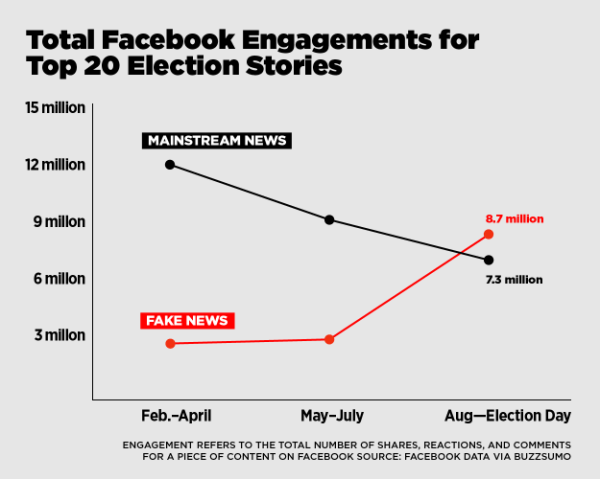
1) What is the difference in Facebook engagements between mainstream news and fake news between February and April?
2) What is the difference in Facebook engagements between mainstream and fake news in the period between May and July?
3) What is the difference in Facebook engagements between mainstream and fake news in the period between August and Election Day?
4) Explain the difference in the number of Facebook engagements between mainstream and fake news between February and Election Day?
5) Predict: Why do you think there was such a rise in Facebook engagements, as the calendar moved closer to Election Day?
Shared Reading: The Issue with Fake News: Read the article below and use the information from the text to answer the following questions and complete the following active reading tasks. (40 points)
P1 – (1) Reading a headline does not mean that you know all the information about a story. (2) Sometimes, headlines and stories are not true. (3) It is an old lesson Americans famously learned in Nov. 3, 1948, when the Chicago Daily Tribune headline proclaimed, “Dewey Defeats Truman,” before the presidential race was called and the final result was tallied. The next day, they had to recant to announce that President Harry Truman had defeated then-New York Gov. Thomas Dewey. (4) This moment is worth revisiting as millions of people rely on their social media feeds that have recently become inundated with made-up headlines. (5) These hoaxes are not just bouncing around among like-minded conspiracy theorists; candidates and elected officials are sharing them, too. (6) Senator Ben Sasse, Republican of Nebraska, on Thursday tweeted about people who have been paid to riot against Donald Trump, an idea that had been spread by fake news stories. (7) A man who wrote a number of false news reports told the Washington Post that Trump supporters and campaign officials often shared his false anti-(Hillary) Clinton posts without bothering to confirm the facts and that he believes his work may have helped to elect the Republican nominee (Facebook and the Digital Virus Called Fake News). (8) Abroad, the dissemination (spread) of fake news on Facebook, which reaches 1.8 billion people globally, has been a longstanding problem.(9) In countries like Myanmar, deceptive Internet content has reportedly contributed to ethnic violence. (10) And it has influence elections in Indonesia, the Philippines and elsewhere (Fake news in U.S. Election? Elsewhere, That’s Nothing New). (11) Social media sites have also been used to spread misinformation about the referendum on the peace deal in Colombia and about Ebola in West Africa.
1) Why does the author begin the selection with the story of the 1948 election? How does this example connect to our current history?
2) What line in the text supports this statement, “These hoaxes are not just bouncing around among like-minded conspiracy theorists; candidates and elected officials are sharing them, too”
3) Why does Paul Horner (the man who wrote the fake news reports) believe that he helped get Donald Trump elected?
4) Active Reading Task: Highlight at least 2 pieces of evidence that describes the impact of misinformation of Facebook on Global Politics.
P2 – (1) Margot Susca, a professor of journalism and communication at American University, said it can become difficult for Facebook and Twitter users to decipher the legitimacy of a news story because oftentimes fake articles are published on websites that sound trustworthy in name and provide professional looking layout and graphics but are not trustworthy.(2) “Let’s remember that millions of posts are flying around,” Susca said. “But more fake news stories generated hits than genuine news stories in the last critical months of the election.” (3) Moreover, Susca said many news consumers only bother to read a headline, never reading the story (even the ones that have a disclaimer at the bottom indicating that the story is satirical).
5) According to Dr. Susca, explain at least 2 challenges people online face when attempting to determine the accuracy of new stories ? In addition, how do people themselves contribute to the spread of fake news?
6) Active Reading Task: Highlight the evidence in the selection below that supports this statement “Social media had an impact on people’s political perspectives during the 2016 election cycle”
P3 – (1) Susca said there is anecdotal evidence suggesting social media had some effect on news consumers during the most recent presidential election. (2) She pointed out a recent Pew Research Center study that found “20 percent of social media users say they’ve modified their stance on a social or political issue because of material they saw on social media, and 17 percent say social media has helped to change their views about a specific political candidate.” (3) Facebook’s role in the dissemination of political news is undeniable. (4) In May 2016, 44 percent of Americans said they got news from the social media site.
How to Prevent the Spread of Fake News
P4 – (1) The best tool at your disposal, of course, is common sense. (2) No matter what your political beliefs, if a story serves only to reinforce your beliefs, it is best to be extra skeptical before sharing it. (3) If a report is purportedly based on other news stories, find the original source of the information. (4) You might find some of the quotes are correct, but the rest may have been taken out of context or fabricated. (5) If the story you are reading does not link to an original source, that could be an indication that it is a fake news story. (6) Use a search engine to look for the keywords in the story to see if the “news” is being reported by any other outlets. (7) Some stories, intentionally or not, read like satire. (8) If it sounds like it could be a headline on the Onion, it’s best to double-check the story. (9) And check the URL. (10) If it has a strange ending, think twice about the story. (11) For example, an article claiming President Barack Obama banned the national anthem at US sporting events was false. It came from a website with the suffix, “com.de,” which makes no sense.
7) Explain the importance of the original source in determining if a story is real or fake.
8) How can additional research help prevent the spread of fake news stories?
9) Active Reading Task: Highlight additional steps that consumers can take to prevent the spread of fake news.
P5-Facebook’s Solution to Fake News (1) Facebook has long argued that it is not a media company, but that it is a technology platform that simply carries information. (2) The truth of the matter is that Facebook and its algorithms determine what news articles hundreds of millions of people see around the world each day. (3) This brings with it some ethical responsibilities as well. (4) Facebook founder and CEO Mark Zuckerberg outlined a number of other updates that are apparently in the works. (5) A few of the potential changes: he proposed adding a warning label to stories that users have flagged as inaccurate.(6) He pledged that Facebook would be working with more third-party fact checking organizations.(7) He also said that it would improve the accuracy of the “related articles” that they suggest for users to read. (8)The company will also block fake news distributors from paying to promote their content. (9) Zuckerberg also added that they would be build algorithms to automatically detect fake news.
10) Active Reading Task: Highlight all of Facebook’s proposals to address the spread of Fake News. Which proposals do you think are the strongest in addressing the issue and why?
11) Closing Activity: Working with your table, go online and find five fact Facebook headlines and describe whether it seems true or false and explain your position. Have students share out their conclusions with the class (16 points)
12) Wrap-Up: Students should complete their Exit Ticket and leave it on their desk as they leave the classroom.
EXIT TICKET
What level of responsibility do you think Facebook has in preventing the spread of fake news on its platform ? ( 4 points)
What level of responsibility do citizens have in preventing the spread of fake news ? (4 points)
President Obama, while in Germany, said “If we are not serious about facts and what’s true and what’s not … if we can’t discriminate between serious arguments and propaganda, then we have problems.” Thinking about this quote, what is the long term impact, how can it be spread and what impact can our belief in fake news have on our government and society ? (4 points)
Trump and Gender Bias, By the Numbers
Kelly J. Cross, Ph.D.
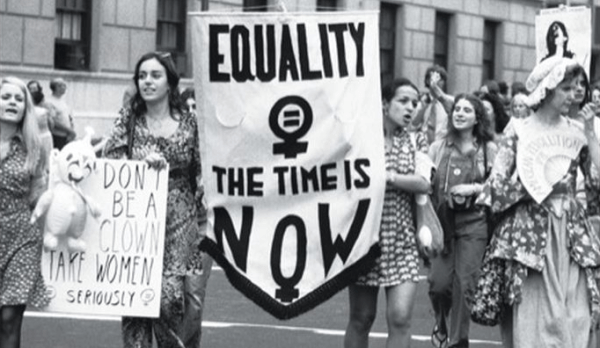
Equality: The Time is Now
Intended Audience: Middle and High School Students
Overview: This lesson explores how gender bias influences decisions in politics and campaigning strategies. Gender bias is an ongoing concern in political and educational settings. An example of gender bias in politics, is the perception that women are less capable of making sound data driven decisions than their male counterparts. The 2016 presidential campaign, for a variety of reasons, was unlike any in recent history. According to a recent survey of educators (Teachers Cite Post-Election Rise in Negativity), the campaign media coverage and its results provoked fear and anxiety among children of color, immigrants and Muslims; encouraged students to use offensive rhetoric that had been used by Donald Trump; and, disrupted opportunities to teach effectively about political campaigns and civic engagement. Multiple graphical representations of data on media coverage are analyzed and interpreted.
Scope and Sequence: The lesson begins with an introduction to the concept of gender bias. Students will examine commercial advertisements and article clippings to understand the tone of the 2016 presidential election campaign season. With the definitions and the context in mind, the students will examine some of the key events that shaped the focus and work of the modern Civil Right Movement. Students will also examine a series of videos, photos, textile, and audio sources to interpret the historical context of this time period. Finally, students will engage in a series of close reading activities in order to analyze and evaluate three political essays that are emblematic of the opposition against, as well as the need for, a proactive nonviolent movement.
Common Core Standards for Mathematics
Standard 1: Functions and Algebra
Common Core Standards for Literacy
Objectives
The lesson objectives are to:
1) Develop analytical and critical thinking skills of students;
2) Review and evaluate election coverage data to identify the presence of gender bias; and,
3) Write a critical essay describing their role in minimizing gender bias in their environment.
Essential Questions
- Did gender stereotyping and sexism dominate the campaign and election?
- Given that Hillary Clinton was the only female candidate, did the media treat her differently from the other presidential candidates?
- Did Hillary Clinton’s candidacy motivate other women to consider historically male dominated fields such as politics, business, science, technology, engineering, and mathematics fields?
DAY ONE: Introduction and Definitions
Motivation
- Tell students that they are going to spend the next four days talking about how math applies to common everyday problems. This lesson focuses specifically on gender bias and sexism that impacted the 2016 presidential election.
- Activate prior knowledge by asking the students to share what they know about the election. Record their answers and tell them that the class will review the list to determine strategies to overcome bias. Ask students to share questions they have about the presidential season and their feelings about the final election results. Ensure that students are engaged in inquiry as they move through the lesson by responding to questions but also by listening and considering different ideas.
- Give students the definition of gender bias and sexism and have them think about what this looks like in practical application. Tell them that gender bias and sexism ranges from the individual to the institutional level and includes (a) beliefs, (b) behaviors, (c) use of language and (d) policies reflecting and conveying a pervasive view that women are inferior.
- Definitions:Gender bias: prejudicial attitudes and discriminatory behaviors against women on the basis of socially constructed feminine and masculine roles or characteristics their sex-Sexism: the subordination of one sex, usually female, based on the assumed superiority of the other sex (Kendall 2005) or an ideology that defines females as different from and inferior to males (Andersen & Taylor 2005).
Shared Reading
- Explain to students that managing bias requires that bias or preferences are acknowledged. As a result, it usually easier to see bias in others before we recognize our own biases. However to understand the concept of gender bias, we will start with our common experience of the classroom. Have students provide examples of potential bias in the classroom.
- Have students discuss and read the Gender Bias in the Classroom handout and make a list of any biased behaviors that they have seen in their classroom. Work with them to create a chart that diagrams sexism and gender bias in the classroom.
- Organize students in small groups to discuss what data would be required to measure gender bias in the classroom. Ask students to use the modeled close reading strategies to analyze the essay and discuss the most salient points. Once small groups complete their initial reading and analysis, facilitate a whole class discussion.
Wrap-up
- After completing the close reading discussion have students revisit the sexism and gender bias diagram.
- To close the session and assess student learning instruct, have students write a short reflection on what it means to identify gender bias in common everyday experiences.
DAY TWO: The Data and Gender Bias
Motivation
- Tell the students that they are going to revisit the discussion from yesterday and add to it by talking about the gender gap and the political gender gap. Ask them if they are familiar with these terms and have them share out their definitions. Tell them that the gender gap (unequal access to resources between women and men) divides our country in almost every way: from healthcare to education, the economy to politics. Because of the hard work of women and their male allies, the healthcare and education gaps are showing signs of shrinking. Unfortunately economic justice for women, particularly for women of color, remains stalled. And political equality, even in light of recent gains, remains a dream.
- Explain to them that women once were considered the property of men (The Legal Status of Women, 1776-1830). They were denied the right to vote, the right to run for office, and the right to own property of their own. African American women were denied basic personhood and up into the 1970s, many women were required to show their husband’s signature to attain a credit card, rent an apartment, or apply for a job. Politically, socially, and economically, women have had a lot of catching up to do.
But why does the gender gap still exist? Here are some of the reasons:
- Gender roles: even after women won their basic freedoms, strong cultural myths created very narrow definitions of what women could and could not do. These prescribed roles (“gender roles”) taught girls and boys in subtle and overt ways what they are capable of and/or allowed to do, solely based on their gender. Over time, some women internalized these messages, believing that they did not belong in positions of power. An example of internalized gender bias can be seen in the CBS poll, “Americans Are More Ready than Ever to Elect a Female President,” when asked whether they thought the country was ready for a female president, men were more likely than women to say yes.
- Cultural norms: in addition to gender roles, more generalized cultural norms thwart women’s ability to achieve greater access to power. For example, while women and men work full time jobs at almost equal rates, women still do the majority of household tasks, like child-rearing, cleaning, and cooking. This helps explain why men far surpass women in the best-paid, high-level jobs, even though the number of women in college now surpasses the number of men.
- Sexist policies: from the Gender Pay Gap (women make about 75 cents for every dollar earned by men) to the fact that the federal welfare program does not allow welfare recipients (the vast majority of whom are women) to count most forms of post-secondary education toward “work requirements,” corporate and governmental policies put women at a disadvantage.
- Media representation: the media can act as a vehicle for cultural norms and stereotypes. For example, men are three times more likely than women to play the lead in a television show. Women are more likely to be portrayed as victims, and women’s lead characters are almost always younger and more stereotypically “beautiful” than male leads. In addition, the press treatment of real women continues the sexist pattern. Press stories about female politicians and business leaders are far more likely to include mentions of hairstyles, shoes, and shopping, while press coverage of male leaders is more likely to focus solely on substantive issues.
Partnership
- Recap definitions and activities from Day 1 and explain to students that they will break into small groups to discuss four reasons for gender bias.
- Group Activity 1: Using the article, “Is the media biased against Clinton or Trump?,” describe in mathematical terms the differences between the Clinton and the Trump media data.
- Group Activity 2: Using the article, “Who said It,” match the quote with the presidential candidate and discuss how the data can be used to demonstrate gender bias.
Homework
- Have students use the Gender Bias in the Classroom handout, develop three strategies to address gender bias in the classroom
DAY THREE: Strategies to Recognize and Manage Gender Bias
Small group
- Tell students that today they are going to work in small groups to share the strategies they developed last night and to compile a list of additional strategies that can be used to address gender bias.
- If possible, allow students to discuss other examples of bias common in education or the workplace.
Class Discussion
- Once students are finished, have them share their lists and then, as a class, have them discuss the following questions:
- In what ways did gender bias impact the recent election?
- In what ways can gender bias impact the classroom environment?
- What are some examples of the beliefs, behaviors, language, or policies that indicate or support gender bias?
- What impact, if any, did Hilary Clinton’s presidential campaign have on women (and girls) around the world?
Wrap-up
Tell students to take a moment and write a reflection on the three things that they have learned about gender bias and approaches to address gender bias.
Critical Essay
Tell students that they are going to write a critical essay taking a position on whether gender bias impacted the recent presidential election. The students should provide data and publications to support their position. The students should also argue how their shared strategies of activism can improve or minimize the impact of gender bias on the current election process.
 Karsonya (Kaye) Wise Whitehead #blackmommyactivist
