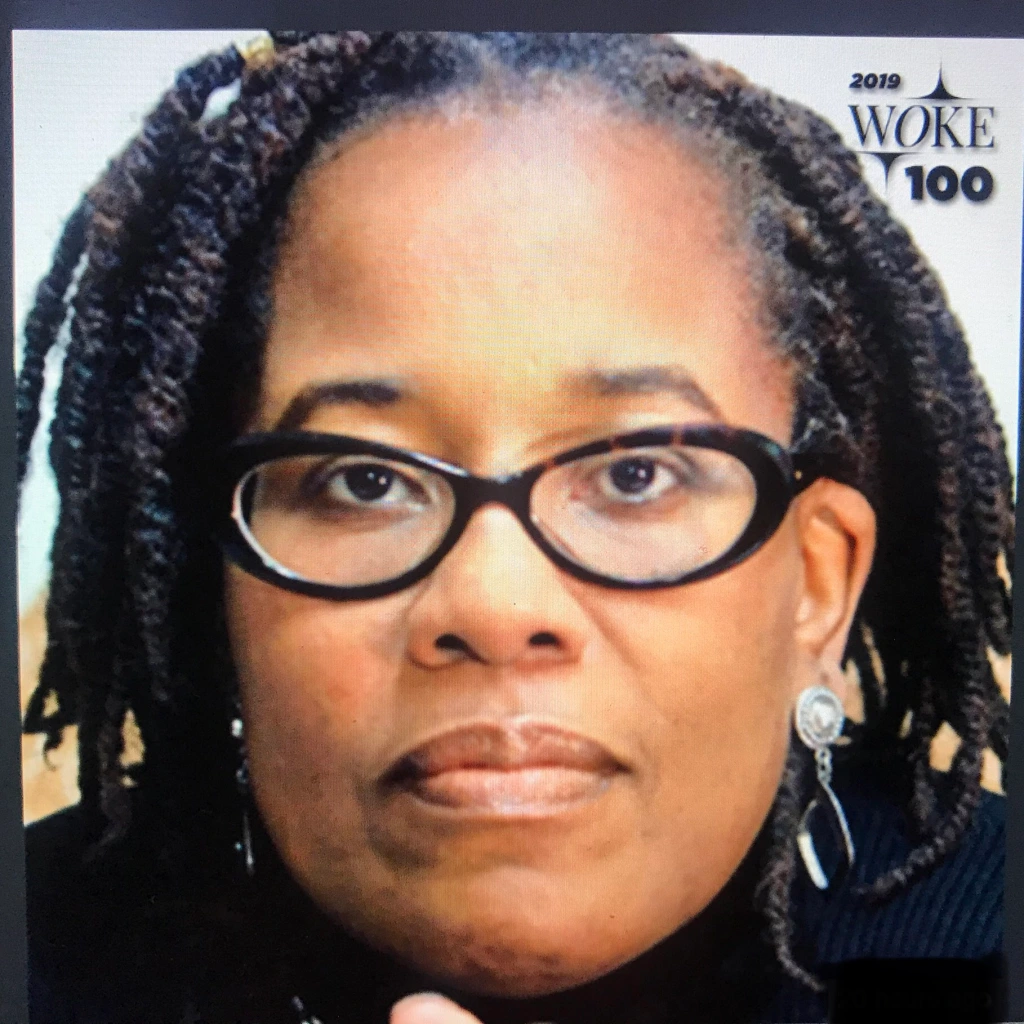
Reflections: On Being Selected to Essence’s 2019 Woke 100 List
#RedNanaDrops
So who do you write for? Who do you protest for? Who do you struggle for? Who gets you up in the morning? Whose voice do you have in your head? Who is the wind beneath your wings and the hand that pushes you forward? Who do you look for when you want to hear the words well done?
~For me, it was my Nana. I loved her so much. She encouraged me. She admonished me. She pushed me. She laughed at and with me. She told me my truth. She sang the songs of my soul. She knew who I wanted to be long before I could articulate my being to myself. She made me acknowledge when I was wrong and celebrate when I was right. We used to read the Essence magazine while we were standing in line. Once in a while, we would buy a copy and I would put my picture between the pages and pretend that I was between the fold. I used to write out an interview, detailing all the wonderful things profiled in the article: that I was changing the world, I was a trendsetter, my voice spoke volumes, I was brave, I was unashamed, I was beautiful. She would always say that I was already all of those things, the world just needed to catch up and see me.
~Six years ago today, this week, my Nana died. She ran on home to see how the end is going to be. This is also the week that I made it to between the Essence fold. Oh how I wish she was here to see it so we could laugh about it, cry about it, and just be in the same space together. My heart is heavy because a piece of it is missing.
Essence link: https://www.essence.com/news/2019-woke-100/#474573
Baltimore Sun article: https://www.baltimoresun.com/features/bs-fe-whitehead-essence-20191028-6wfcfx4kybb47kkpvtqlhdraqm-story.html
The Moral Arc of the Universe: Deconstructing Black Women’s Political Activism, Struggle, and Resistance
#InDefenseofOurselves
Karsonya Wise Whitehead, Ph.D.[1]
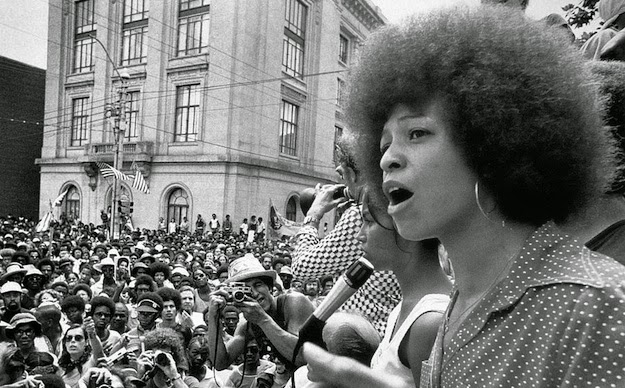
Introduction: Less than sixty years ago, our country operated under a system of legalized segregation and oppression. Schools were separate and unequal and we had two nations—one black and one white—one oppressed and the other free.[1] Even though any challenge to the system was met with resistance there was a growing collective that was crying out for change and was willing to challenge and confront the system in both the courtroom and in political and social spaces. While college students were sitting down at counters in North Carolina; high school students were sitting down in classrooms in Little Rock Arkansas. And while nonviolent resistance was the battle plan for black and white foot soldiers throughout the South; unchecked violence, mass arrests, and murder were the primary responses of white Southern politicians and police officers. This effort in so many ways was led by black women who have often been left out of the historical narrative. While Thurgood Marshall’s name took center stage, lawyers like Constance Baker Motley and Elaine Jones also worked tirelessly to change the laws; and, while leaders like Martin Luther King, Jr. and Andrew Young were discussed and profiled, civil rights leaders like Dorothy I. Height and Fannie Lou Hamer also bent their privilege and found ways to use their social power to mobilize people to work within their organizations to bring about change.
America, particularly in cities throughout the South, was separated and deeply divided. It was an extraordinary time where leadership was a burden and jail time, particularly during the Birmingham Children’s March, was seen as something that was inevitable. From that tumultuous time where black people were fighting to have their right to vote be protected to today where a black man has been elected twice to the highest office in our country, our American society has drastically changed. From the work being done around the #MeToo movement to a record number of women being elected to political office, there is a sense that our society is on its way to becoming more inclusive, more diversity, and more just. At the same time, there are some members of our society, including our current president Donald Trump, who seem to be focused on pushing an agenda replete with white nationalism, Islamophobia, sexism, and white separatism. All ideas that are designed to drive us further apart rather that bring us together.
At this moment in time, as educators, our questions have changed so it “How do we teach young people about the Civil Rights Movement” but rather “What do we teach young people about the Civil Rights Movement.” And it is not “How do we tell them about the leaders from this time” but rather, “How do we let these leaders speak for themselves.” It is not “How do we include lessons about women and people of color” but rather, “How do we amplify their voices, highlight their experiences, and lift up their work?” In helping students to understand the significance of black women’s current activism, they must learn how the black women activists of the past and how their work has helped to shape their present reality.
Intended Audience:Middle and high school students
Overview: Using the March on Washington as a lens, students will explore the history and the significance of the modern Civil Rights Movement, including the bombing of the Birmingham church, the assassination of President John F Kennedy, and the passage of both the1964 Civil Rights Act and the 1965 Voting Rights Act.
Scope and Sequence: The lesson begins with a broad contextualization of some of the key events that shaped the focus and planning of the March on Washington. Students will examine videos, photos, textile, and audio sources to interpret the historical context of this time period. With this context in mind, students will then engage in a series of close reading activities in order to analyze and evaluate this event.
National Standards for History[2]
Standard 3: Historical Analysis and Interpretation
A. Compare and contrast differing sets of ideas, values, personalities, behaviors, and institutions by identifying likenesses and differences.
B. Consider multiple perspectives of various peoples in the past by demonstrating their differing motives, beliefs, interests, hopes and fears.
H. Hold interpretations of history as tentative, subject to changes as new information is uncovered, new voices heard, and new interpretations broached.
J. Hypothesize the influence of the past, including both the limitations and opportunities made possible by past decisions.
Common Core State Standards
This lesson plan is designed to meet the Common Core State Standards in History/Social Studies for grades 6th-12th grades.
English Language Arts Standards » History/Social Studies » Grade 6-8 http://www.corestandards.org/ELA-Literacy/RH/6-8
English Language Arts Standards » History/Social Studies » Grade 9-10: http://www.corestandards.org/ELA-Literacy/RH/9-10English Language Arts Standards » History/Social Studies » Grade 11-12: http://www.corestandards.org/ELA-Literacy/RH/11-12
Objectives
1) Examine, analyze, and evaluate the events that took place leading up to the Civil Rights Movement.
2) Review and synthesize the major events that happened after the Civil Rights Movement, including the 1964 Civil Rights Act and the 1965 Voting Rights Act.
3) Write a critical essay exploring the impact of the Civil Rights Movement.
4) Write and produce a mini-visionary community audiotaped interview with an elder 70+ years of age or older.[3]
Essential Questions
1. Who were the leaders that helped to organize the March on Washington; how were their organizations involved in the planning of the event; and what was the impact of their speech on the day’s events?
2. What are some of the incidents that led up to the March on Washington and how were these incidents addressed during the March?
3. How was the March designed to support President Kennedy’s Civil Rights bill? How was the bill changed prior to it becoming the 1964 Civil Rights Act?
4. How was
the 1965 Voting Rights Act designed to support and protect the voting rights of
people of color?
DAY ONE: Deconstructing the Civil Rights Movement: Understanding Nonviolence
Motivation
- Tell the students that they are going to spend the next five days talking about the modern Civil Rights Movement, the March on Washington, and some of the legislation that was enacted after the March. Explain that the use of activist writing to advance the Movement’s mission will also be explored.
- Show a small clip from a NVLP interview and tell the students that for their final project, they will identify and conduct a short interview with a local visionary.
- Activate prior knowledge by asking the students to share what they know about the non-violence movement. Write their answers on the board and tell them the class will review the list to determine what is true and what is not at the end of the lesson. Ask students to also share questions they have about the Civil Rights Movement so they are also engaged in inquiry as they move through the lesson.
- Depending upon whether or not your classroom has internet access: play the song “Strange Fruit” while showing them photos from the primary source package that depicts some of the violence that occurred during the Civil Rights Movement.[4]
- Once the students have listed to the music, tell them that they are going to watch a NVLP webisode about Dorothy I. Height where she explains Dr. King’s reaction to the Birmingham church bombing. Take time to explain the legacy of Dorothy Height and her contribution to the Civil Rights Movement and her involvement with the March on Washington. Once finished the clip, have them think-aloud about why Dr. King stated that he “needed” women to come to Birmingham.
- After the class discussion, have them read the quotes and work in small groups to discuss how Dr. King’s quote and Malcolm X’s quotes contradict one another and then decide which quote do they agree with and why.
If necessary, explain to them that even though African Americans were legally free in America their political, social, and economic rights were restricted by the Jim Crow Laws (or the American system of apartheid).
Nonviolence is a powerful and just weapon. It is a weapon unique in history, which cuts without wounding and ennobles the man who wields it. It is a sword that heals. -Dr. King, 1964
I don’t favor violence. If we could bring about recognition and respect of our people by peaceful means, well and good. Everybody would like to reach his objectives peacefully. But I’m also a realist. The only people in this country who are asked to be nonviolent are black people. –Malcolm X[5]
Shared Reading
- Explain to students that writing political essays[6] is a form of activism that leaders can use to work for social change. Over the next couple of days they will examine different types of essays from the modern Civil Rights Movement that will give them opportunities to fully engage with the material.
- The first political essay students will read is Dr. King’s “The Power of Non-violence.”[7] Explain and model how they will use a close reading strategy[8] to understand the central arguments underpinning the essay. Identify appropriate close reading strategies from “Closing in On Close Reading” [9] to model for students.
- Organize students in small groups to conduct a shared reading of Dr. King’s political essay “The Power of Non-violence.” Ask students to use the modeled close reading strategies to analyze the essay and discuss the most salient points. Once small groups complete their initial reading and analysis, facilitate a whole class discussion.
Wrap-up
- After completing the close reading discussion have students revisit the no-violence list they made at the beginning of the lesson to determine the following: whether the list is accurate; remove things that are not true; add other points to the list; and identify any outstanding questions.
If students are still unclear about the history of nonviolence (as a religious ideology and as an organizing tactic) from Jesus Christ to Mahatma Gandhi to James Famer to Dr. King, take a few minutes to conduct a short Lecture Blast.[10]
- To close the session and assess student learning instruct students to write a short reflection on what it means to stage a “non-violent” campaign to achieve equality and social justice. Invite them to share out their responses with the class.
DAY TWO: Incidents in the Life of Civil Rights
Motivation
- Building on the previous activity, this lesson allows students to examine some of the incidents leading up to the March on Washington, including the release of Dr. King’s “Letter from a Birmingham Jail.” Explain to the students that they are going to discuss “A Call to Unity,” which is the political statement that prompted Dr. King to write his “Letter from a Birmingham Jail.”[11]
- Using both the “Timeline”[12] and the “Words and Phrases” [13] from the online Civil Rights Movement dictionary, create a timeline on the board to highlight some of the key events that took place during the modern Civil Rights Movement to help students understand what was happening throughout the South prior to Dr. King’s arrest. Time permitting (and depending upon your classroom’s access to technology), have students work through the “Timeline” website in small groups or individually.
- Have the students watch a clip from the Ray Charles interview where he discussed the 1961 incident at Payne College. Time permitting, play the 1972 clip of Ray Charles singing “America the Beautiful” and explain to the students who he was and his contribution to American history.[14]
Partnership
- Explain to students that they will practice another close reading technique called text annotations[15] to deconstruct the political essay “A Call to Unity.” Organize students in partnerships to complete the task.
- Once students complete text annotations on “A Call to Unity” discuss the parts of the text students annotated. Ask text dependent questions to guide the whole class in a discussion to deconstruct the central arguments of the Alabama clergymen.
- Return to the non-violence list from the previous day to clarify any understandings or outstanding questions with the class.
Homework
- Provide each student with a copy of the “Letter from a Birmingham Jail.”[16] Ask students to read the letter and complete text annotations as an independent homework assignment.
DAY THREE: Exploring the Letter from a Birmingham Jail
Small group
- Tell students that today they are going to work in small groups to re-read Dr. King’s “Letter” and generate two lists: a) the key events in the history of non-violence; and, b) the goals and activities of the Civil Rights Movement.
- Have students watch the NVLP Wyatt T. Walker mini-documentary and explain to them about his involvement in helping Dr. King to publish the “Letter.”
- Students should then use the internet to find more information on each of the points mentioned in Dr. King’s “Letter.”
Class discussion
- Once students are finished, have them share their lists and add any information that they have missed.
- Then, as a class discuss the following questions:
- In what ways did Dr. King’s letter contribute to the Civil Rights Movement?
- How can Dr. King’s “Letter” be used to understand the impact of the Civil Rights Movement?
- Did Dr. King effectively refute the arguments of the clergymen in “A Call to Unity?”
- What writing techniques did Dr. King use to extend his arguments for non-violence?
Wrap-up
- Tell students that the use of nonviolent resistance has been used in other nonviolent protests since 1849. Using the Time magazine photos of the “Top 10 Nonviolent Protests,” take them through a quick overview highlighting how it has been used, to help your students understand that it was not limited to the modern Civil Rights Movement.[17]
- Tell students to take a moment and write a reflection on the three things that they have learned about the non-violence movement and non-violent resistance.
DAY FOUR: Deconstructing the March on Washington
Motivation
- Tell the students that for the last three days the lessons that they have had have been preparing them to deconstruct the March on Washington and its impact on American policies, practices, laws, and procedures.
- Activate prior knowledge by asking the students to share what they know about the March on Washington. Write their answers on the board and tell them the class will review the list to determine what is true and what is not at the end of the lesson. Ask students to also share questions they have about the March on Washington so they are also engaged in inquiry as they move through the lesson.
- Ask them to think about “How old do you have to be to do the right thing?” Have them watch the NVLP interview of Dick Gregory talking about the four-year old boy being arrested because he wanted his “teetum” (freedom). Ask them to think about what they could have contributed to the Movement.
- Using the background narrative, outline the purpose for the March on Washington and the planning that went behind the day’s events.
- Share with them the Dorothy I. Height interview where she discusses If necessary, use the NVLP narrative on women in the Civil Rights Movement as a reference. Look to bring in the Odetta interview – as the second webisode
Shared Reading
- Provide each student with a copy of Dr. King’s speech and John Lewis’ speech from the March on Washington. Have them work in pairs to read the two speeches and mark the places where the speeches are similar and where they are different. If necessary, conduct a short lecture blast on the life and legacy of John Lewis.
- Conduct a whole-class discussion and note on the board the similarities and differences.
- Have them watch the NVLP webisode of Coretta Scott King talking about her husband and his vision for America. Look to move this – to another day
- Organize students in small groups to write a response to Dr. King and John Lewis’ challenges, being very specific about how their dreams have or have not been realized.
Wrap-up
- To close the session and assess student learning instruct students think about what would happened if America were to have a March on Washington today – what issues would be addressed? Who would attend? What are some of the problems we are struggling with as a nation? Who would be the speakers? And what would they contribute?
DAY FIVE: The Government Responds
Critical Essay
- Tell students that they are going to write a critical essay deconstructing the 1964 Civil Rights Act or the 1965 Voting Rights Act. Students should be broken into pairs and given one of the Acts to research and write about. The should take a position on whether these Acts were effective instruments for social change in society today. The students should cite the covered political essays in their paper, using evidence from the essays to support their position. Students should also reference current examples of social issues to support their claims about the effectiveness of the philosophy of non-violence in contemporary society.
- High School students should write a 5-7-page essay that includes a bibliography and footnotes.
- Middle School students in the 7th and 8th grades should write a 3-5-page essay that includes a bibliography.
- Middle School students in the 6th grade should write an essay that is no longer than 1-2 pages and should rely heavily on internet sources.
Share-Out
- Once the students have completed their essays, revisit the essential questions to make sure that they have been covered and have student volunteers read their essays to the class.
Final Project
- Students should be told that as a final activity,
they will find a community visionary and conduct an audiotaped 3-5 minute
interview with them asking them the following questions:
- What do you remember about the Civil Rights Movement?
- Do you think the Civil Rights Movement was a success of failure?
- What do you think was accomplished during the Movement?
- And do you think we need a “new” Civil Rights Movement?
- Share a story about the Civil Rights Movement – your participation, your involvement, how it impacted you, when did you first hear about it
**Note: younger students only conduct interviews with either a family member or a parent should be present at the interview.
- Students should bring their interviews to share with the class.
[1] See the Kerner Commission Report for more information. http://historymatters.gmu.edu/d/6545/
[2] National Center for History in the Schools. http://www.nchs.ucla.edu/Standards/ (Accessed 15 June 2013)
[3] Teachers will select three interviews to upload and share on the NVLP website.
[4] “1960s Civil Rights Movement” http://www.youtube.com/watch?v=AXBvLbYqVMA; National Visionary Leadership Project Primary Sources http://www.visionaryproject.org/teacher/lesson1/primary.html#id2; iTunes: “Strange Fruit” by Billie Holiday: https://itunes.apple.com/us/album/strange-fruit-remastered-single/id492233359
[5] Malcolm X Quotations http://www.malcolm-x.org/quotes.htm
[6] Overview of the Academic Essay: http://www.fas.harvard.edu/~wricntr/documents/Overvu.html
[7] The Power of Nonviolence: http://teachingamericanhistory.org/library/document/the-power-of-non-violence/
[8] How to Do a Close Reading: http://www.fas.harvard.edu/~wricntr/documents/CloseReading.html
[9]Closing in On Close Reading: http://www.ascd.org/publications/educational-leadership/dec12/vol70/num04/Closing-in-on-Close-Reading.aspx
[10] “Evaluating Nonviolence as a Method of Social Change,” http://www.visionaryproject.org/teacher/lesson3/hist.html
[11] “A Call to Unity” http://www.stanford.edu/group/King//frequentdocs/clergy.pdf
[12] http://www.visionaryproject.org/timeline/
[13] http://www.visionaryproject.org/teacher/lesson1/wordsphrases.html;
[14] Ray Charles on The Dick Cavett Show, 1972 http://www.youtube.com/watch?v=TRUjr8EVgBg
[15] “Independent Reading Strategies for Students” https://www.teachingchannel.org/videos/student-annotated-reading-strategy
[16] “Letter from a Birmingham Jail” http://mlk-kpp01.stanford.edu/index.php/resources/article/annotated_letter_from_birmingham/
[17] “Top 10 Nonviolent Protests” (note: photographs #6 and #7 are from the modern Civil Rights Movement) http://www.time.com/time/photogallery/0,29307,1887394,00.html
[1] Karsonya Wise Whitehead (todaywithdrkaye@gmail.com; Twitter: @kayewhitehead) is the #blackmommyactivist and an associate professor of communication and African and African American studies at Loyola University Maryland. She is the host of “Today With Dr. Kaye” on WEAA 88.9 FM and the author of the forthcoming “Dispatches from Baltimore: The Birth of the Black Mommy Activist.” She lives in Baltimore City with her husband and their two sons.
Written by Sarah Militz-Frielink, Ph.D. and Tracy Kent Gload
Intended Audience
Elementary Education Students 4th and 5th grade
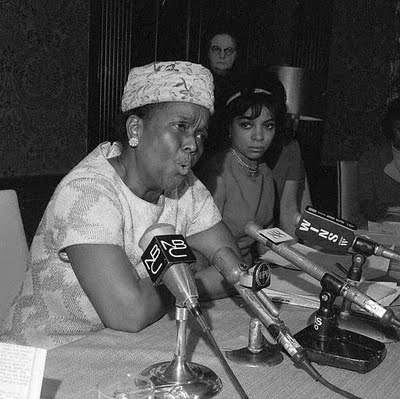
A Learning Series based on the book We who Believe in Freedom: The Life and Times of Ella Baker by Lea E. Williams
Until the killing of black men, black mother’s son becomes as important to the rest of the country as the killing of a white mother’s son, we who believe in freedom cannot rest. –Ella Baker
Overview
This lesson plan explores the political activism of Ella Baker, which spanned from 1930 to 1980. The lessons begin with the people and experiences in Ella Baker’s childhood who had a profound influence on her involvement in the Black freedom movement. Elementary education students will learn about several key aspects in Ella Baker’s activism and life. From her birth in Norfolk, Virginia to her childhood in Littleton, North Carolina, her role in the Student Nonviolent Coordinating Committee and her years in the NAACP, students will demonstrate knowledge about Ella Baker’s multiple leadership roles and her commitment to racial, social, and economic justice.
Scope and Sequence: Students will read We who Believe in Freedom: The Life and Times of Ella Baker by Lea E. Williams. In literature circles, students will discuss events, answer comprehension questions, and create notes about Ella Baker’s various leadership roles in the civil rights movement. In addition, students will discuss events, answer comprehension questions, and create notes about the importance of Ella Baker’s contributions to racial, social, and economic justice from 1930 to 1980. With the sequence of Ella Baker’s life and activism in mind, Students will identify some of the key events that shaped the focus of the Black Freedom Movement.
Common Core standards
CCSS.ELA-LITERACY.RL.5.1
Quote accurately from a text when explaining what the text says explicitly and
when drawing inferences from the text.
CCSS.ELA-LITERACY.RL.5.2
Determine a theme of a story, drama, or poem from details in the text, including
how characters in a story or drama respond to challenges or how the speaker in
a poem reflects upon a topic; summarize the text.
CCSS.ELA-LITERACY.RL.5.10
By the end of the year, read and comprehend literature, including stories,
dramas, and poetry, at the high end of the grades 4-5 text complexity band
independently and proficiently.
Objectives
Students will outline Ella Baker’s various leadership roles in the Black Freedom Movement.
Students will discuss events, answer comprehension questions, and write notes about the importance of Ella Baker’s contributions to racial, social and economic justice from the 1930 to the 1980.
Students will identify key events that shaped the focus of the Black Freedom Movement.
Teacher Preparation and Background Knowledge
Teachers would benefit from reading Ella Baker and the Black Freedom Movement by Barbara Ransby in preparation for this lesson.
Day 1- Day 5
Students will form Literature Circles to read and discuss the book We who Believe in Freedom: The Life and Times of Ella Baker. In Literature Circles, students will take turns reading aloud, facilitating the discussion and taking notes.
Literature Circles
- Break students up into groups of four and assign them the following roles to assist in the reading of We who Believe in Freedom: The Life and Times of Ella Baker
Note taker
Reader 1
Facilitator
Reader 2
- After each chapter students can switch roles so every student has a chance to be the facilitator, reader, note taker, etc.
Literature Circles Reading Guide for We who Believe in Freedom: The Life and Times of Ella Baker
After chapter 1, Growing up in the South, the facilitator will ask the following questions: Where did Ella Baker grow up? What was the name of Ella Baker’s home church? What was Grandfather Ross’s nickname for Ella? Why did the tenant farmers end up poor?
After chapter 2, School Days, the facilitator will ask the following questions: Explain the difference between white schools and black schoolhouses in Ella Baker’s rural farming community. Where did Ella Baker’s parents send her in 1917? What was her first petition about? During her junior year, Ella Baker and a large group of other students refused to take which examination? Despite her acts of rebellion against authority, what did Ella Baker accomplish in 1927?
After chapter 3, Making her Own Way, the facilitator will ask the following questions: What was the most important influence in Ella Baker’s life? Which speakers did Ella Baker listen to during the Harlem Renaissance?
After chapter 4, Harlem on her mind, the facilitator will ask the following questions: What were some of Ella Baker’s experiences in New York when she first arrived? What was George Schulyer’s idea to help ease poverty and the Great Depression? What did Ella Baker and her friends create as a result of Schulyer’s idea? In 1934, why did the Harlem branch library hire Ella Baker? Who did Ella Baker meet at the YMCA?
After chapter 5, The NAACP Years, the facilitator will ask the following questions: In 1940, the NAACP hired Ella Baker to fulfill what job? Within three years, the NAACP promoted Ella Baker to what post? As a result of Ella Baker’s promotion, how did the NAACP do as an organization? What was a common word used to describe Ella Baker at the NAACP?
After chapter 6, SCLC Keeps the Protest Spirit Alive, the facilitator will ask the following questions: What happened on May 17, 1954? What happened on December 1, 1955? Why was the Montgomery Improvement Association established? What does the SCLC stand for and what does it mean to the people who founded it? What were some of the civil right events that SCLC coordinated with the help of Ella Baker? What was challenging about Ella Baker’s relationship with Dr. Martin Luther King Jr.?
After chapter 7, The Birth of SNCC, the facilitator will ask the following questions: How were Black people affected by the Jim Crow laws? Give examples of how students reacted to the Jim Crow laws. What happened at the Woolworth’s lunch counter? What did Ella Baker say about the reactions of NAACP and SCLC to the students’ independent sit-in movement? How did Baker agree to help the students? What did Ella Baker provide to SNCC at the Atlanta Headquarters to help them?
After chapter 8, Mentoring the Sit-in Students, the facilitator will ask the following questions: What did Jean Wiley say about Ella Baker after her first SNCC meeting? As a founding member and third national chairman for SNCC, how did John Lewis assist Ella Baker with SNCC? How did Joanne Grant’s friendship with Ella Baker begin at SNCC? Who were some of the other gifted and capable women that Ella Baker mentored through SNCC?
After chapter 9, A New Mission for a New Day, the facilitator will ask the following questions: After the first wave of lunch counter sit-ins, what strategy did SNCC execute with the help of Ella Baker? What happened in Mississippi to the freedom fighters after they tested their strategy? As a testimony to Ella Baker’s influence in their lives and later career choices, name the SNCC leaders who became national leaders?
After chapter 10, The Black Power Struggle within SNCC, the facilitator will ask the following questions: In 1966, when Stokely Carmichael unseated John Lewis as the chairman of SNCC, what was the primary debate? How did the students resolve this debate? What is the black power ideal? What did Ella Baker do to help SNCC during these debates? Although Baker’s relationship with SNCC eroded as Black Power Advocates took control, she never severed her connection completely, name some of the other projects that she focused on.
After chapter 11, Standing for Something, the facilitator will ask the following questions: Rather than seeking high paying jobs, Ella Baker seized opportunities to do what? Give examples of how Ella Baker continued her advocacy for social justice even in her older years. Explain the many ways that Ella Baker has been honored since her death in 1986?
Day 6
Wrapping it all up
Upon completion of the book and the literature circles, students will break up into groups of four to fill out a chart that summarizes Ella Baker’s key contributions to the Black Freedom Movement. Students can use notes taken from the literature circles to help fill out the chart.
Large Group Discussion
Have students sit in a large circle. Use the completed charts for inspiration and discuss the meaning of “In Defense of Ourselves: Ella Baker and the Black Freedom Movement.” Ask students to share Ella Baker’s contributions to social, economic, and racial justice.
| Ella Baker’s Key Contributions to the Black Freedom Movement |
copyright 2019
Dispatches from Baltimore: Black History is America’s History
Written by Karsonya Wise Whitehead, originally published in the Afro newspaper 2/16/19
Growing up in Washington, DC, in a small all-black community full of teachers and pastors and government workers, I learned early on that Black history is America’s history and it is American history. There were days when my father and his friends would interrupt our game of Freeze Tag or Simon Says to teach us about our history. We were told, more than once, that our history did not begin and end with slavery. Africans arrived in this country and worked as indentured servants, just like everyone else. We were taught that the Christopher Columbus “1492 Arrival Story” was a lie and that as black people, we were a part of the 1619 legacy. It was not until I was a college student, majoring in history, that I finally began to make the connections between 1619 and the beginning of the Black American history story.
It was in late August 1619, at Point Comfort, on the James River, that the first 20 Africans arrived on the shores of this country aboard the White Lion, an English ship. They were sold in exchange for food and later transported to Jamestown, where they were placed on indentured servant contracts. Given that Virginia’s General Assembly had not yet worked out the terms for what constituted enslavement in the colony, it is likely that they received the same rights, duties, privileges, responsibilities, and punishments as white indentured servants. Five years later, in 1624, two of the people from that ship, Anthony and Isabella, had a son, William Tucker, who was the first person of African ancestry born in the 13 British Colonies. Although very little is known about his life, records suggest that he was born at Fort Monroe, baptized in Jamestown, and named after Captain William Tucker, who held his parents’ indentured contracts.
When I first read through the research, I was reminded of what my father used to always tell us, Black History is American History. It has been 400 years since Black people arrived in this country and we are at a moment where we must pause to reflect on what it means to be the descendants of people who survived being born black in this country. We have survived four hundred years of constant brutal attacks on our blackness. We have endured four hundred years of degradation, humiliation, pain, death, and fear. And, yet, we are still here. They did not break us. They did not stop us. They did not erase us. They did not kill our joy, our faith, and our absolute belief in justice. We survived, and it is not because of magic; it is because we come from people who chose every single day to survive.
We are here at a moment that will define us, where we have to decide who we want to be, what do we want to be remembered for, and how do we want to contribute to this current movement for humanity. We are witnessing a moment, during a week of what would have been Trayvon Martin’s 24th birthday, that Black Lives Matter is actively being taught in the classroom while Virginia Governor Ralph Northam defends his use of wearing blackface. It is a week where Stacey Abrams became the first black woman to give a Democratic rebuttal to our nation’s first whitelash president. It is a moment where we are dealing with the reality that across the country unarmed black people are still being shot by the police while right here in Baltimore, our homicide numbers within the Black Butterfly neighbors are slowly inching up.
Frederick Douglass once said, that Black people watered the soil of America with their tears, nourished it with their blood, and tilled it with their hands. As a Black woman, it makes me proud to realize and understand that we helped to build this country and we are one of the reasons why it is so great. Ninety-three years ago, Carter G. Woodson launched Negro History Week, as a time to remember and teach about Black history. In 1976, it was expanded to a month and became an internationally recognized time of celebration. I grew up celebrating Black History Month in February and being taught Black history from March to January. As both a supporter and a critic of Black History Month, I hold fast to the hope that one day we will not need a designated month to remind people of who we are but that people will recognize that Black History is American History. And as such, it should be regularly taught in the schools, around the dinner tables, on long drives across the country, and in the middle of Fortnight games and Netflix challenges. This is how we rise, how we move forward, and how we honor those who made a decision to survive so that we could thrive.
Karsonya Wise Whitehead (todaywithdrkaye@gmail.com; Twitter: @kayewhitehead) is the #blackmommyactivist and an associate professor of communication and African and African American studies at Loyola University Maryland. She is the host of “Today With Dr. Kaye” on WEAA 88.9 FM and the author of the forthcoming “Dispatches from Baltimore: The Birth of the Black Mommy Activist.” She lives in Baltimore City with her husband and their two sons.
Dispatches From Baltimore: ‘I’m From Baltimore, I’m Already Dead’
Karsonya (Dr. Kaye) Wise Whitehead
Originally published in The Afro 12.12.18
Synopsis: This is a Part VIII of my ethnographic study chronicling life inside the Black Butterfly hypersegregated neighborhoods of Baltimore City. Part of the reason why I am doing this is because of Jason, a ninth grade student from Frederick Douglass High School. I met him in the hallway last year when I hosted a teach-in at his school. I asked him what his plans were for his life and what did he want to be when he grew up. At first, he did not respond. He turned and leaned up against the locker. He sighed and checked his phone. “My father is dead.” he said, “My brother is dead. I had two cousins, they got shot. My uncles are locked up. What do I want to be when I grow up? Nothing. I’m from Baltimore, I’m already dead.”
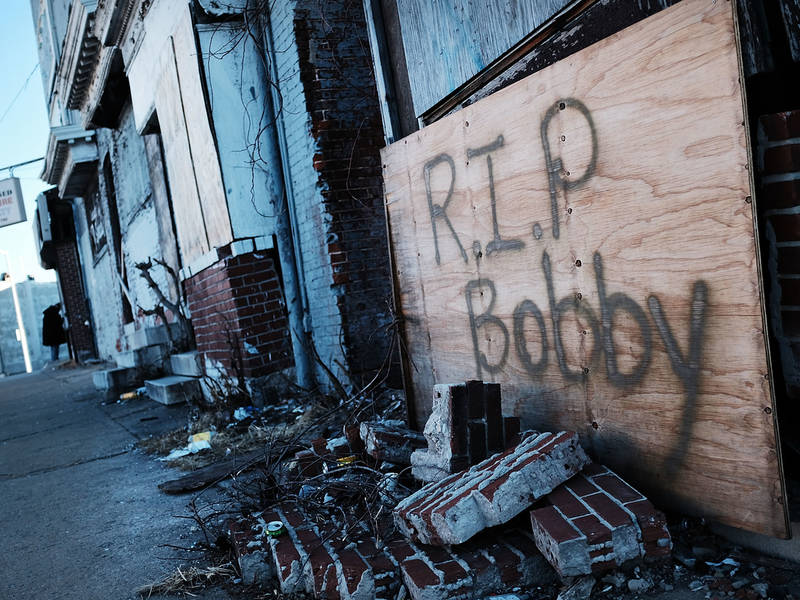
At any given moment, there are about a half a million stories that need to be told about the reality of growing up and trying to grow old in Baltimore City. Stories about racial and economic inequality; about predatory policing and structural racism; about health disparities and food apartheid; about some of the people who died, like Freddie Grey and Tyrone West, Taylor Hayes and Wadell Tate; and, about all of the people who are trying to live. In the book of Acts, the apostle Paul tells his fellow shipmates that an angel told him that the ship was going to crash and in order for them to survive, they would need to hang onto the broken pieces and make their way to shore. This is what it feels like trying to grow up and grow old in some neighborhoods in our city—you do everything you can to hang onto the broken pieces and try like hell to make it to the shore.
Life in Baltimore City is complicated. It is challenging and hard. It is racially segregated and economically divided. It is a tale of two cities—one mostly White and the other mostly Black, separate and unequal. I believe that in order to understand the deep sense of helplessness, hopelessness, and malaise that hangs like a cloud over certain parts of our city, you must intentionally spend some time in both Baltimores. You have to visit the schools, the corner stores, and the churches. You have to catch the buses and walk the streets. You have to try and see what it feels like to hang onto the broken pieces and what it feels like when you do not have to do this. This is what I have been doing for the past five months as I have been conducting my unofficial ethnographic study of Baltimore’s hypersegregated Black neighborhoods. I have been trying to understand what life is like within the Black Butterfly, trying to find some answers to the questions that I have been wrestling with since 2015 when a Harvard University study concluded that out of the nation’s 100 largest jurisdictions, children born in poverty in Baltimore City have the worst chances of ever escaping it.
As much as possible, I spend my time talking to young people, asking them questions and trying to listen to them. I want to see the world from their perspective. I want to hear their stories and in some small way, help to shoulder their pain. Part of the reason why I do this is because of Jason, a ninth grade student from Frederick Douglass High School. I met him in the hallway last year when I hosted a teach-in at his school. I asked him (like I asked all of the students that day) what his plans were for his life and what did he want to be when he grew up. At first, he did not respond. He turned and leaned up against the locker. He sighed and checked his phone. I just stood there, quiet, hoping that he would answer me. “My father is dead.” he said, “My brother is dead. I had two cousins, they got shot. My uncles are locked up. What do I want to be when I grow up? Nothing. I’m from Baltimore, I’m already dead.”
I did not say anything. He looked at me and then turned and walked away. I wanted to go after him. I wanted to talk to him and tell him that he was going to be ok. I wanted to ensure him that he could make it, that I was going to help him, and that together we could change his future. I wanted to do and say all of this, but I did not. I felt overwhelmed. Standing in the hallway, it was hard to breathe and hard to imagine a different way forward. His life, according to the data, was being shaped by racially segregated neighborhoods, poverty, poor schools, subpar housing, drugs, gangs and a history of racism; his response showed that he had been listening, he had been watching, and he is no longer waiting for someone or something to come along and save him. He did not believe that he could be saved and, on that day, standing in the hallway, listening to his story, I failed to tell him that he could. I will not fail again.
Karsonya Wise Whitehead is the #blackmommyactivist and an associate professor of communication and African and African American studies at Loyola University Maryland. She is the host of “Today With Dr. Kaye” on WEAA 88.9 FM and the author of the forthcoming “Dispatches from Baltimore: The Birth of the Black Mommy Activist.” She lives in Baltimore City with her husband and their two sons.
The Supreme Court ruling is just the latest version of a question that the Whitehead family — and the nation — has been grappling with for years: How to deal with the legacy of slavery?
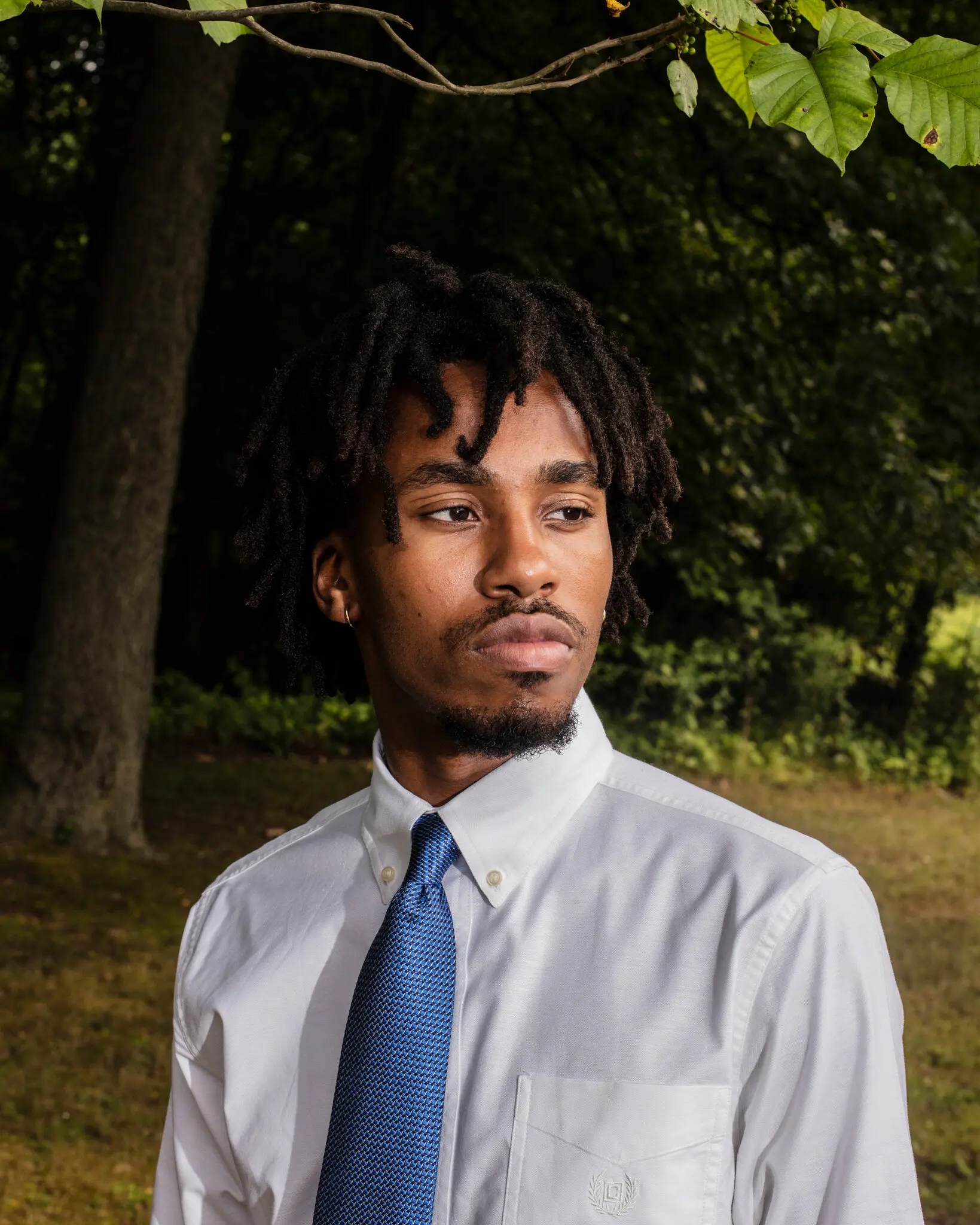
Amir Whitehead felt that ending affirmative action was not wrong. Other family members felt differently. Credit…Bryan Anselm for The New York Times
For the Whiteheads, an African American family living in the city of Baltimore, race is discussed at the dinner table. In the car on the way to work and school and games. In the backyard while the sons practice sports.
So when the Supreme Court struck down race-conscious admissions at colleges and universities, effectively ending the practice known as affirmative action, the family began talking about it earnestly, echoing the range of emotions felt by people across the country who are invested in the ruling.
Though the result was anticipated, Karsonya Wise Whitehead, 54, a college professor, said she was so devastated that she had to sit down to process “the type of history being made at that moment.”
Her husband, Johnnie Whitehead, 59, the principal of a Christian school, said he took no joy in the ruling but was ambivalent about affirmative action. He is hopeful that it is no longer needed, but fears it is.
The eldest son, Kofi, 22, texted his brother Amir to share the news, and thought of the chilling effect it might have on the next generation of Black students. Amir, 20, felt that ending affirmative action was not wrong because admissions should be based upon merits only.
For the Whiteheads, the Supreme Court decision — seismic in its power to reorder the admissions process at elite colleges and universities — was another chapter in a broader discussion they had been having since their children were young.
Their conversation reflects, in some ways, the complex and shifting views among African Americans grappling with the question embedded in the nation’s every contemporary racial conflict, from reparations to the American justice system: How to deal with the legacy of slavery?
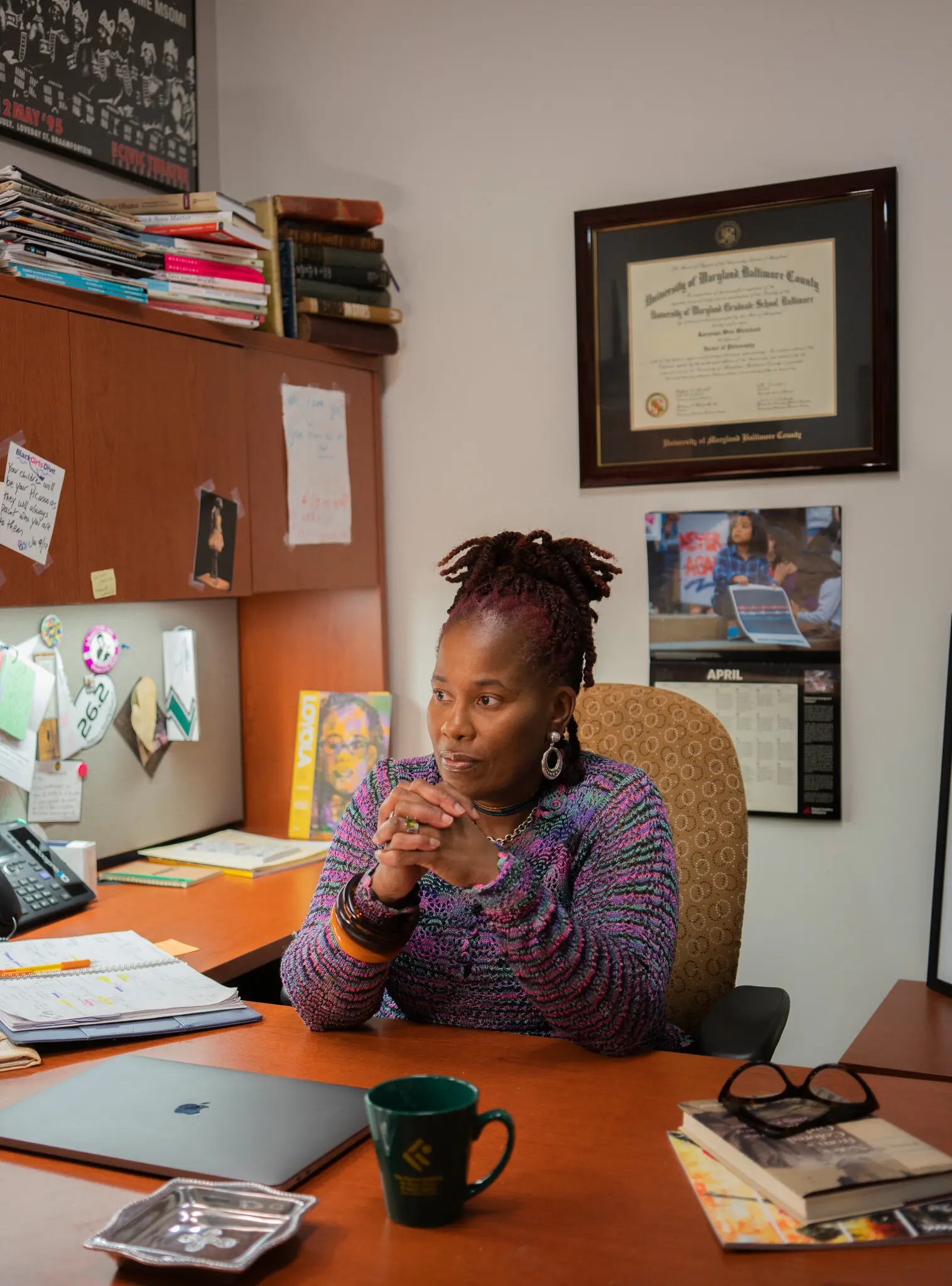
Karsonya Wise Whitehead, a college professor, said she was so devastated when she heard about the Supreme Court ruling, that she had to sit down to process “the type of history being made at that moment.”Credit…Shan Wallace for The New York Times
“This is part of our ongoing conversation about the tensions around racism and around race,” said Dr. Whitehead, who teaches African American studies and communications at Loyola University Maryland and is the executive director of the Karson Institute for Race, Peace and Social Justice at the college. “We’ve seen different iterations of: ‘What does it mean to be Black in America? Where do we fit into America? Whose America is this? And if we want to have equity, what does this equity look like?’”
The family’s early talks centered on making sure their sons were confident in who they were as young Black men. That gave way to other topics.
Kofi favors reparations but doesn’t know what the right amount of money should be for Black families whose ancestors were enslaved. Amir favors reparations in some form, too, saying, “We built this country, we deserve some part of it.” Dr. Whitehead is not only in support, but she believes it is the only way forward to address the historical debt. Mr. Whitehead said Black Americans deserved reparations, particularly since the country had paid others that it harmed, but did not see it as a way to solve racism.
When it comes to affirmative action, African Americans are broadly supportive of the policy.
According to a Pew Research Center report released last month, only 33 percent of American adults approve of race-conscious admissions at selective colleges. Forty-seven percent of African American adults say they approve.
The research also revealed that 28 percent of Black adults said others had assumed that they benefited unfairly from efforts to increase racial and ethnic diversity.
A separate NBC poll in April found about half of Americans agreed that an affirmative action program was still necessary “to counteract the effects of discrimination against minorities, and are a good idea as long as there are no rigid quotas.” Among African Americans, the number in support of that statement increased to about 77 percent.
The starkly different attitudes toward the merits of affirmative action were laid bare most profoundly in the words of the only two Black justices. Their written exchange mirrored how the landmark decision was discussed, debated and deconstructed among friends and families — including the Whiteheads — at dinner tables, in group chats and on social media.
Justices Clarence Thomas, who attended Yale, and Ketanji Brown Jackson, who attended Harvard, challenged each other’s views, agreeing only on the existence of racial disparities but sharply disagreeing on how to address them.
“As she sees things, we are all inexorably trapped in a fundamentally racist society, with the original sin of slavery and the historical subjugation of Black Americans still determining our lives today,” wrote Justice Thomas, the nation’s second Black justice and a longtime critic of affirmative action.
Justice Jackson, in her dissent, said Justice Thomas “is somehow persuaded that these realities have no bearing on a fair assessment of ‘individual achievement,’” she wrote. In her opinion, the court’s conservative majority displayed a “let-them-eat-cake obliviousness” on the issue of race.
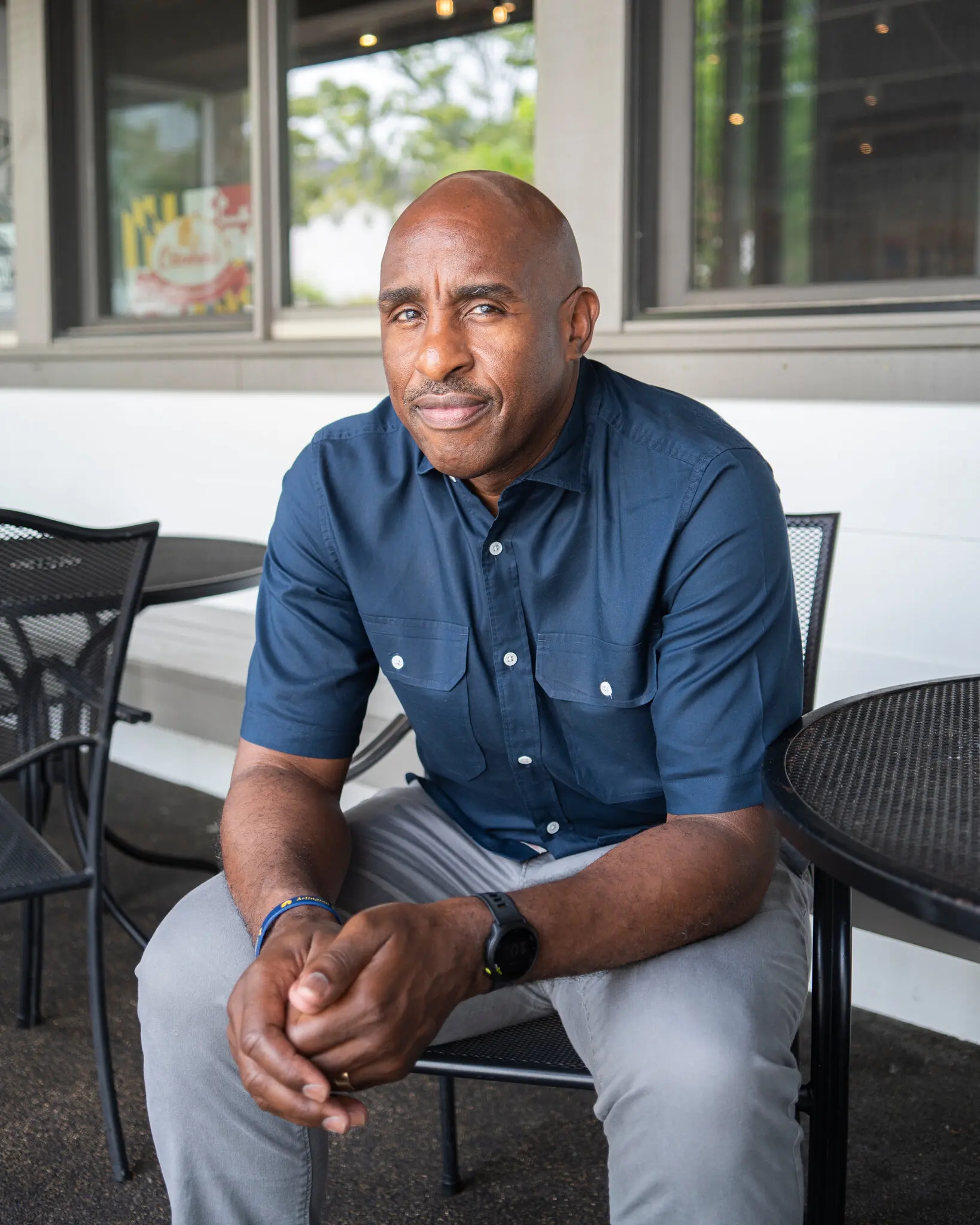
Johnnie Whitehead, the principal of a Christian school, said he took no joy in the ruling but was ambivalent about affirmative action. Credit…Shan Wallace for The New York Times
In some ways, the Whiteheads’ views of affirmative action aligned with both of the justices’ argument outlined on the pages of the ruling.
For Dr. Whitehead, a radio show host, author and the daughter of civil rights activists, the dismantling of affirmative action — rooted in the civil rights movement as part of federal policy to counteract discrimination — was a “gut punch.” She said she personally benefited from affirmative action as the first Black student in the Kroc Institute for International Peace Studies program at the University of Notre Dame. She worries that the decision portends what is to come, shaping other aspects of life, including corporate hiring.
Mr. Whitehead said he understood the practice as a way to counter discrimination and mistreatment of African Americans. And, he said, if affirmative action is going to be abolished, legacy preferences should go, too.
“I’d like to believe that we are a nation that doesn’t have to have affirmative action, but I fear we still need it,” said Mr. Whitehead, who is also a teacher at Baltimore School of the Bible.
Kofi, the eldest son, who graduated from Rhodes College in May with an English degree, has a sensibility closer to his mother’s. He first began following the issue in high school after learning about a white student in Texas who sued the University of Texas at Austin for its use of race in admission decisions.
He sees last week’s ruling as both out of touch with the pervasiveness of modern racism and a blow to future generations of Black students looking to attend elite schools. And he chafes at the argument that college academic standards are lowered to create diverse campuses.
“Affirmative action is about opening the door to diverse backgrounds because that is what education and higher learning is about,” Kofi said. “It’s not about having 5,000 of the same kids in two-parent households and white picket fences who all come in and do the same thing. No. College and higher education is about bringing in different people so you can learn from each other.”
His younger brother Amir, who is a member of Lafayette College’s fencing team, sees it differently. A college sophomore who is studying economics, he began developing his political and socially conservative views as a middle school student during the presidential race between Hillary Clinton and Donald J. Trump.
Kofi Whitehead, seen on the campus of Rhodes College, says he worries about the negative effect the court’s affirmative action decision might have on the next generation of Black students. Credit…Priscilla Foreman
While he and his mother’s views are the farthest apart, she said he was raised “to be an independent thinker.”
He agrees with the other members of his family that race, and the nation’s history of enslavement of Black people, undeniably affects the present day. But, he said he believed that affirmative action undermined the concept of earning admission based on qualifications rather than race.
“Affirmative action being taken away is not so much a bad thing, because I don’t think that anyone who is not qualified for something should get that purely based off their skin color,” said Amir, who noted that he included his race on his college application but did not include the subject in his personal essay.
“I am not saying the bar has been lowered,” he said. “I just feel as though sometimes, cases come down to race. I think that goes back to us, as a country, where everything is focused on race.”
A version of this article appears in print on July 3, 2023, Section A, Page 13 of the New York edition with the headline: A Black Family, Split On What a Key Ruling On Admissions Means. Order Reprints | Today’s Paper | Subscribe
NWSA’s Statement on the 6/29 SCOTUS Decision
Ignoring Race Will Not End Racism
The National Women’s Studies Association, the nation’s largest network of feminist scholars,
educators, and activists, vehemently opposes the Supreme Court’s decision in the Students For
Admission v. Harvard College and the Students For Admission v. University of North
Carolina cases. Justice Ketanji Brown Jackson wrote in her dissent to the Students For
Admission v. Harvard College case that this country has never been colorblind. We would add
that it has also never been race-neutral, nor has it ever been equal. America rests on a foundation
of race and racism. Enslaved people were forced to build this country, and the status quo has
been maintained by the descendants of those who enslaved people. In 2008, with the election of
President Barack Obama, many of us braced ourselves for what we knew was going to come. We
knew then that a gear had shifted somewhere in the white supremacist mechanism and that their
slow walk back to power would result in a universal gutting of equity-based policies, plans, and
initiatives. Some of us tried to sound the alarm, but it was hard for many to believe that the
country was on fire when it felt like we had won. And then Black Lives Matter. And then Donald
Trump. And then Gorsuch, Kavanaugh, and Coney Barrett. And then George Floyd. And then
Ron DeSantis. And then the attacks on critical race theory, Black History, and the LGBTQ
communities. And then the Dobbs decision. And now affirmative action.
Today’s Supreme Court decision to strike down race-conscious admissions as a violation
of the Equal Protection Clause of the 14th Amendment was not unexpected nor was it surprising. We knew that it was coming.[1] In fact, Justice Clarence Thomas had long said that even though he benefitted from affirmative action, he disagreed with it and wanted to strike it down.[2] He just never had the votes, until now. It is important to note that the SCOTUS Supermajority
(Justices Roberts, Thomas, Gorsuch, Kavanaugh, Coney Barrett, and Alito) not only watered
down the historic Brown v. Board decision but they also intentionally narrowed their decision to
only focus on race, allowing preferential treatment based on one’s status as a legacy; an athlete;
or a child of either a donor, faculty member, or staff to remain in place. Thus, affirmative action
for the SCOTUS Supermajority only matters in discussions about race, and for them, the only
way to end race-based policies is to remove race from consideration. Justice Brown Jackson
notes that this type of thinking is in vain because “if the colleges of this country are required to
ignore a thing that matters, it will not just go away. It will take longer for racism to leave us.
And, ultimately, ignoring race just makes it matter more.”[3] Additionally, studies have shown
that the percentage points given to a Black, Brown, or Indigenous applicant are considerably
lower than the percentage points given to legacies (in some selective schools, being a legacy
raises an applicant’s chances of being accepted by almost 20 percentage points).[4]
So, one wonders why race is the determining factor that the SCOTUS Supermajority chose
to focus on. According to Justice Sonia Sotomayor, today’s decision is “not grounded in law or
fact and contravenes the vision of equality embodied in the Fourteenth Amendment.”[5] And yet,six Justices have succeeded in turning back the clock on equity and equality, a decision that will
be felt for years to come. They did it because they are not colorblind. They are not race-neutral.
And they did it simply because they could.
As Shirley Chisholm once said, “You don’t make progress by standing on the sidelines,
whimpering and complaining. You make progress by implementing ideas.” This is why we
organize. We cannot get tired or be weary or give up. We cannot stop pushing.[6] We must
work locally and nationally. We must continue to push President Biden and all of our elected
officials to do everything that they can to right this wrong. We must keep our eyes fixed on
where we want to go and not be stopped by what we see now. The SCOTUS Supermajority
thinks that the battle is over because they have spoken; we know that the battle will not end until
we have the last word. As always, we stand ready to fight with you and, if needed, fight for you.
Bending toward social justice,
Karsonya Wise Whitehead, NWSA President
Ariella Rotramel, NWSA Vice President
Erica Williams, NWSA Secretary
Dominique Hill, NWSA Member-at-Large
Gina Velasco, NWSA Member-at-Large
Yi-Chun Tricia Lin 林怡君, NWSA Past President
Beverly Guy Sheftall, NWSA Past President
ENDNOTES
[1] The Supreme Court cases that challenged affirmative action began in 1978 with the Regents of the University of California v. Bakke and continued with Hopwood v. Texas in 1996, and Grutter v. Bollinger and Gratz v. Bollinger in 2003.
[2] Justice Brown Jackson in responding to Justice Thomas’s concurring opinion in the decision, wrote that he is obsessed with race-consciousness in such a way that it “far outstrips my or UNC’s holistic understanding that race can be a factor that affects applicants’ unique life experiences.” 600 U.S. (2023), Jackson, J., Footnote 102.
[3] 600 U.S. (2023), Jackson, J., dissenting for the case No. 21-707.
[4] Golden, Daniel (2010). An Analytic Survey of Legacy Preferences. In Kahlenberg, Richard D. (ed.). Affirmative-Action for the Rich: Legacy Preferences in College Admissions. New York: The Century Foundation Press.
[5] 600 U.S. (2023), Sotomayor, J., dissenting for cases Nos. 20–1199 and 21-707.
[6] At the same time, we want to remind you again of the need for radical preventative self-care. In other words, take care of yourself now by choice before you have to do it by circumstance.
America is not the greatest country in the world
By Karsonya “Kaye” Wise Whitehead, Ph.D.
We are short-memoried people. We move quickly from one tragedy to the next, and despite our best intentions, it has become much harder to focus on and try to fix one thing because there is just too much happening. There is too much grief. There is too much sorrow. It is exhausting because there have been too many bodies, bullets, marches, vigils, candles, and hashtags to mourn appropriately.
We have learned how to bury our pain and build monuments over our ruins. I do not believe that the human spirit is equipped to handle the amount of collective pain we are dealing with at this moment.
In the last month, we have marked one million people who have died from COVID-19; there has been a marked uptick in violent crime across the country; a white supremacist domestic terrorist targeted and killed 10 Black people at a grocery store; and, now Robb Elementary School, where a mass shooter killed 19 children and two teachers.
“To look around the United States today is enough to make prophets and angels weep,” James Baldwin once wrote. Even with all of this pain, school shootings should hit differently and should lead to change. Children are our future, and they are the most vulnerable part of our society.
In the Maasai culture, their traditional greeting is “Casserian Energi,” which means “How are the children?” They believe that the best determinant for their community’s future health and prosperity is the mental, emotional, and psychological well-being of their children. As I have asked countless times before, I ask, “America, how are our children doing?” I believe that our children are not doing well because we are failing them.
There is a cycle of emotions from fear to sorrow to anger every time there is a school shooting in this country. We demand change, and for a few days, before we look away, we believe that change is coming.
And then nothing happens.
I remember Columbine and the fear and anger that everyone expressed in 1999. This was before social media, when we sent emails and made phone calls or marched to get our elected officials to do something. And nothing happened.
I remember Sandy Hook in 2012 and how I believed that after the senseless murder of 20 children and six teachers, America would do what the United Kingdom did in 1996 after the Dunblane Massacre. On March 13, 1996 a gunman went into Dunblane Primary School and shot and killed 16 children and one teacher. In response to the outrage and petitions from the people, two firearms acts were passed, one which outlawed the private ownership of most handguns within the U.K. The Dunblane Massacre was the deadliest school shooting in the U.K. — and the last.
Here in America, after Sandy Hook, the cycle of emotions started, and when we finally looked away, nothing had changed. I am not convinced that gun laws will change in this country, even less than a month after America had one mass shooting per day for an entire week that ended with a mass shooting in Buffalo.
There comes a moment when you must accept the truth and what it says about you despite what you have been led to believe. We are not the greatest country in the world. This is not what greatness looks like, and it is not how greatness chooses to respond amid a troubling and overwhelming moment. If we were great and if we really loved our children, then attacks against them would not only lead to prayers, thoughts, vigils but change. We would move mountains to ensure that our children were safe.
We live in a country that has more guns than people. There are 258.3 million adults in America, and there are estimated to be over 400 million guns between the police, the military, and civilians, with civilians owning 393 million. According to the Pew Research Center, only 30 percent of Americans own a legally registered gun, so 98 percent of the registered guns in this country are in the hands of approximately 77 million people.
The U.S. has just 4 percent of the world’s population but owns about 40 percent of civilian-owned guns globally. In this country, we are more likely to die from gun violence than from many leading causes of death combined. So far this year, there have been 212 mass shootings and 27 school shootings with injuries or deaths. In comparison, there were 693 in 2021, another 611 in 2020, and 417 in 2019.
In 2019, after someone pointed a rifle at my youngest son and me, I reached out to a therapist friend who told me that when I feel most afraid, I should say to myself things like, “I am safe. My son is safe. We are safe.” I have come back to this moment and said those words countless times, and every time I do, the realist in me whispers, “for now.” I know that things will not change until Congress changes them.
According to the Sandy Hook Promise Foundation, they can start by passing both the Keep Americans Safe Act (H.R.2510 / S.1108), which would prohibit the sale and transfer of high-capacity magazines, and the Assault Weapons Ban of 2021, which would ban the sale, transfer, manufacture, and importation of military-style assault weapons and high-capacity ammunition magazines. We also need to get rid of our obsession with guns because until we do that, we will never be safe. More importantly, our children will never be safe.
Karsonya Wise Whitehead (todaywithdrkaye@gmail.com; Twitter: @kayewhitehead) is the Founding Executive Director of The Karson Institute for Race, Peace, & Social Justice at Loyola University Maryland and the 2021 Edward R. Murrow Regional Award- winning radio host of “Today With Dr. Kaye” on WEAA 88.9 FM. She is the mother of two sons and a bonus daughter.
The opinions on this page are those of the writers and not necessarily those of the AFRO. Send letters to The Afro-American • 145 W. Ostend Street Ste 600, Office #536, Baltimore, MD 21230 or fax to 1-877-570-9297 or e-mail to editor@afro.com
Black History Bulletin CALL FOR PAPERS
Historical Trauma: Past Pains, Future Promise
Co-Guest Editors: Dr. Karsonya Wise Whitehead, Ph.D.; María Colompos-Tohtsonie, MPPA; & Dr. Walter Greason, Ph.D.
Black History Bulletin (BHB), Volume 85, Number 1 (ASALH)
Although slavery has long been a part of human history, American chattel slavery represents a case of human trauma incomparable in scope, duration, and consequence to any other incidence of human enslavement.[1]
In 1937, Dr. Carter G. Woodson, at the urging of Mary McLeod Bethune, founded The Black History Bulletin (née The Negro History Bulletin) aimed at providing teachers, students, and the general reader with a foundation in Black history. Since then, the BHB has become one of the academic lighthouses publishing articles and lesson plans that are designed to provide truth, historical knowledge, and insight into many of the critical issues facing the African American community. As we look to celebrate the 85th anniversary of the critical knowledge project of Dr. Woodson and Dr. Bethune, we selected Historical Trauma: Past Pains, Future Promise as the Sankofa theme. We are looking back from whence we have come while moving forward toward who are ancestors dreamed of us becoming. We are reflecting on the social, political, economic, and cultural realities of historical trauma and collective development in the realm of knowledge building and citizenry constructs. The goal is to understand how the past has influenced the present and how the present can be used to shape our future understanding of our traumatic nexus where race, trauma, violence, and white supremacy intersect.
It is in this spirit of solidarity, of a shared commitment to racial healing, understanding and justice that we invite educators across the spectrum (K-12th grade teachers, college professors, and independent researchers) to join us in our exploration of the ways in which we teach, catalogue, remember, and research African American history.
Organized around three main areas: Historical Trauma: Past Pains, Future Promise, contributors are welcome to take either a broad approach or a narrow one. Some potential ideas of exploration include:
- Historians who want to explore the residual impacts of slavery, potentially addressing how multigenerational oppression of African Americans influenced institutional racism and outlining the possibilities and challenges for fostering civic social justice knowledge, engagement, and action.
- Political Scientists can contextualize the historical challenges and transcendence of trauma facing African Americans by exploring structural inequality within the law-making policy driven apparatus and examining how is it rooted in historical trauma.
- Psychiatrists can broaden the general understanding of the insidious effects of the heritage of slavery on the life of African Americans within contemporary America from the vantage point of psychic stresses engendered by discrimination.
- Critical pedagogical educators can invoke the use of culturally responsive intervention approaches and historical pedagogical methodologies as educational vehicles for social justice and provide avenues for how teachers can integrate social justice tenets as facilitators of change.
The deadline for a snapshot synopsis (between 250-300 words) is by NOVEMBER 15, 2021, to Karsonya Wise Whitehead, kewhitehead@loyola.edu. Please include BHB Submission: Your Last Name in the subject line.
The entire manuscript will be due by JANUARY 15, 2022, with a publication date of Spring 2022. A complete package consists of an article, no more than 7 typed, double-spaced pages, including endnotes. The article should be accompanied with a lesson plan and /or educational pullout/ supplement to enhance the ability of teachers, community organizers, or activists to apply the core ideas of the article in practice. The Chicago Manual of Style MUST be used for citations. Author Guidelines: https://asalh.org/wp-content/uploads/2020/09/BHB_AuthorGuidelines-FINAL-8.12.20.pdf
The editors are very interested in contributors who find ways to work collaboratively using a transdisciplinary approach (which means, finding ways to both connect disciplines and transcend them).
About the BHB
The Black History Bulletin (BHB) is one of the oldest journals of Black History https://asalh.org/document/the-black-history-bulletin/. The BHB is dedicated to enhancing teaching and learning in the areas of history. Its aim is to publish, generate, and disseminate peer-‐reviewed information about African Americans in U.S. history, the African Diaspora generally, and the peoples of Africa. Its purpose is to inform the knowledge base for the professional praxis of educators and scholars through articles that are grounded in theory yet supported by practice.
[1] Joy A. DeGruy, Post Traumatic Slave Syndrome: America’s Legacy of Enduring Injury and Healing, (Joy DeGruy Publicans, 2017).
Dear Racist White People, Your Time is Up
Karsonya Wise Whitehead, May 16, 2019 (originally published in the Afro)
 Karsonya (Kaye) Wise Whitehead #blackmommyactivist