
In pursuit for liberation, Dr. Karsonya Wise Whitehead has executed a variety of interviews with the likeness of politicians, artists both visual and musical, along with intellectuals of vast nuance. Throughout her career, Dr.Kaye has conversed side by side with political figures such as Nancy Pelosi, rapper and author Eve, Questlove, Misty Copeland, Stacey Abrams, Kimberle Crenshaw, and several others.
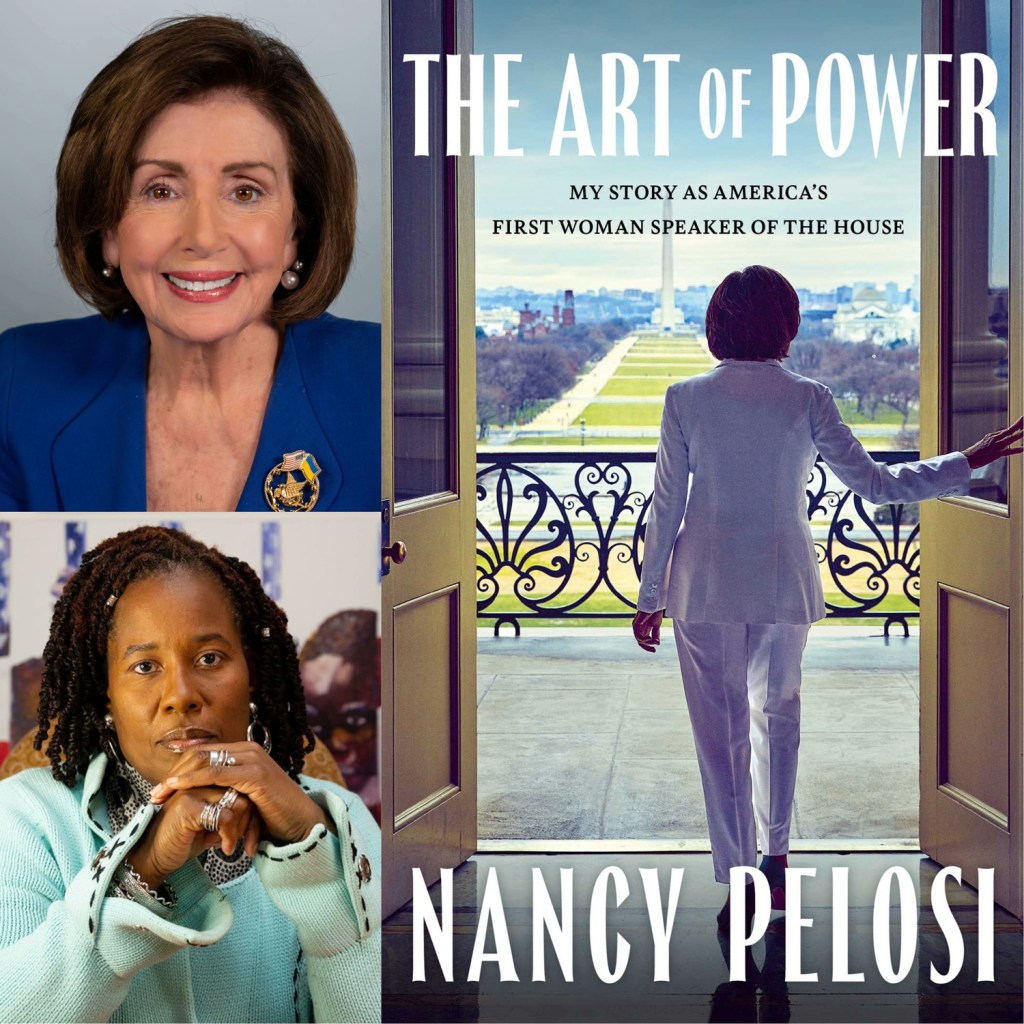
Nancy Pelosi, the most powerful woman in American political history, tells the story of her transformation from housewife to House Speaker—how she became a master legislator, a key partner to presidents, and the most visible leader of the Trump resistance.
In The Art of Power, Pelosi describes for the first time what it takes to make history—not only as the first woman to ascend to the most powerful legislative role in our nation, but to pass laws that would save lives and livelihoods, from the emergency rescue of the economy in 2008 to transforming health care. She describes the perseverance, persuasion, and respect for her members that it took to succeed, but also the joy of seeing America change for the better. Among the best-prepared and hardest working Speakers in history, Pelosi worked to find common ground, or stand her ground, with presidents from Bush to Biden. She also shares moving moments with soldiers sent to the front lines, women who inspired her, and human rights activists who fought by her side.
Pelosi took positions that established her as a prophetic voice on the major moral issues of the day, warning early about the dangers of the Iraq War and of the Chinese government’s long record of misbehavior. This moral courage prepared her for the arrival of Trump, with whom she famously tangled, becoming a red-coated symbol of resistance to his destructive presidency. Here, she reveals how she went toe-to-toe with Trump, leading up to January 6, 2021, when he unleashed his post-election fury on the Congress. Pelosi gives us her personal account of that day: the assault not only on the symbol of our democracy but on the men and women who had come to serve the nation, never expecting to hide under desks or flee for their lives—and her determined efforts to get the National Guard to the Capitol. Nearly two years later, violence and fury would erupt inside Pelosi’s own home when an intruder, demanding to see the Speaker, viciously attacked her beloved husband, Paul. Here, Pelosi shares that horrifying day and the traumatic aftermath for her and her family.
The woman who has been lauded by her opposition as “the most powerful Speaker” ever shows us why she is not afraid of a good fight. The Art of Power is about the fighting spirit that has always animated her, and the historic legacy that spirit has produced.
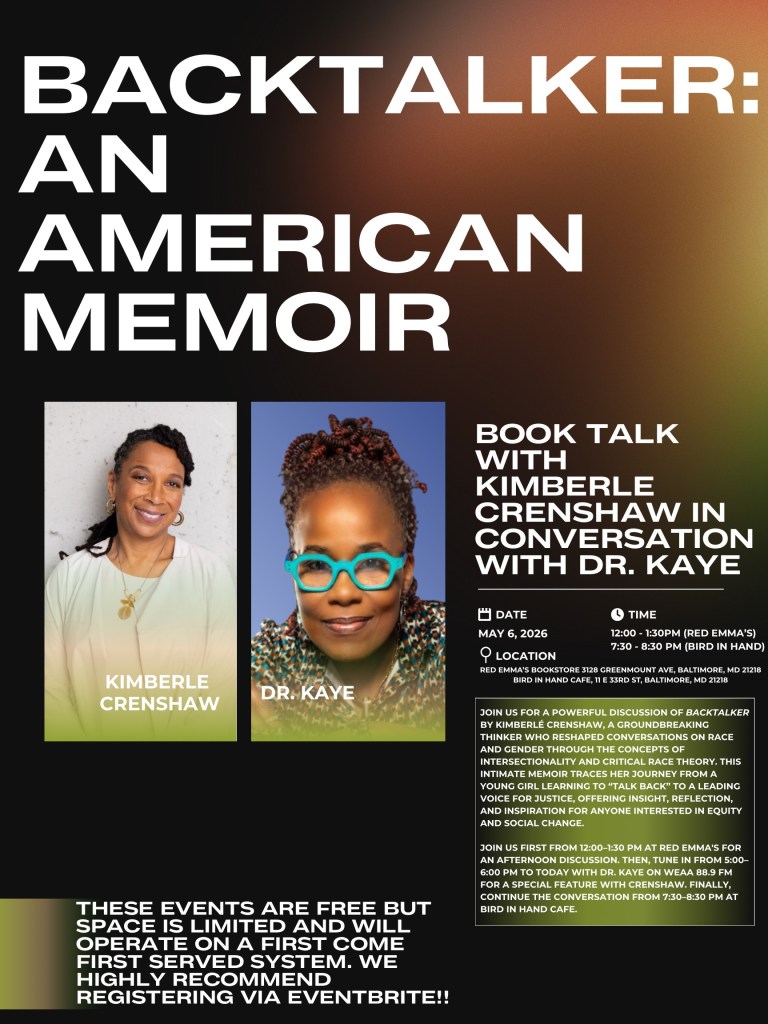
Kimberlé Williams Crenshaw (born May 5, 1959) is an American civil rights advocate and a scholar of critical race theory. She is a professor at the UCLA School of Law and Columbia Law School, where she specializes in race and gender issues.
Crenshaw is known for introducing and developing the concept of intersectionality, also known as intersectional theory, the study of how overlapping or intersecting social identities, particularly minority identities, relate to systems and structures of oppression, domination, or discrimination. Her work further expands to include intersectional feminism, which is a sub-category related to intersectional theory. Intersectional feminism examines the overlapping systems of oppression and discrimination that women face due to their ethnicity, sexuality, and economic background.
Backtalker: An American Memoir (May 2026) is a personal memoir by Kimberlé Crenshaw, the pioneering scholar who coined “intersectionality” and helped develop Critical Race Theory. The book traces her life from childhood in Ohio to her role as a legal scholar, showing how lived experiences—including racism and sexism—shaped her fight for justice.
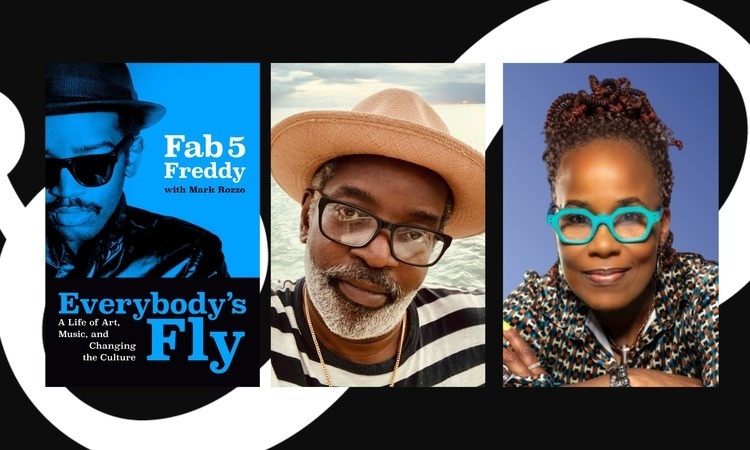
An electrifying memoir from the pioneering cultural icon The New Yorker called “the coolest person in New York,” whose fearless creativity reshaped the worlds of art, music, and style
Fab 5 Freddy doesn’t just have a great story—he is the story. Name a seismic cultural shift, and chances are, he wasn’t just there—he was helping to make it happen. He’s among the first graffiti artists to turn subway tags into fine art, the visionary behind the first hip-hop movie, the bridge between Jean-Michel Basquiat and the downtown new wave scene, the first person to take rap global on MTV, and the opening rhyme of Blondie’s number-one smash hit “Rapture”—“Fab 5 Freddy told me everybody’s fly”—the song that propelled hip-hop from the New York streets to mainstream culture. With a spirit of joyful creativity and a deep capacity for connecting with kindred spirits (Basquiat, Haring, Lee, Flash, Warhol, and the Clash, to name a few), he shattered racial and artistic boundaries, bridging worlds and raising underground movements to pop culture dominance.
Everybody’s Fly is a fast-moving, all-access pass to Fred’s extraordinary life—one that begins in a book- and jazz-filled Brooklyn home and takes us deep into New York’s creative explosions from the 1970s into the 1990s. He didn’t just shape culture, he synthesized it—from highbrow to street, the Bronx to the East Village, punk to rap, Warhol to Wild Style. Whether he’s skipping school to wander New York City’s museums, painting subway cars that became moving masterpieces, or bringing hip-hop to downtown clubs for the first time, Fred’s genius has always been in seeing what others couldn’t—until he made them see it too.
Vibrant, rhapsodic, and compulsively readable, Everybody’s Fly is at once an intimate memoir and panoramic cultural history. It is a love letter to the art of seeing, a fascinating account of an inimitable creative life, and a celebration of what it means to shape culture.

From Emmy Award winner Tamron Hall comes an edge-of-your-seat thriller featuring journalist Jordan Manning as she delves into the case of a mother in danger and uncovers a dangerous web of secrets that could lead right to the missing woman—or put Jordan in the crosshairs of her abductors.
After dropping her child off at preschool, Marla Hancock, a stay-at-home mother, disappears. She had recently left her verbally abusive husband in rural Indiana and moved in with her sister, Shelly, who simply can’t believe that her sister would ever willingly vanish without her children. But with limited support from the town’s police department or media resources, Shelly fears that Marla’s disappearance won’t get the attention it deserves, or worse, will go unsolved. So, several weeks after filing a missing person’s report, she reaches out to TV journalist Jordan Manning for help.
After her investigative and reporting skills helped solve multiple murders, Jordan Manning’s career in the newsroom is on the rise. She has gained a reputation as more than your typical news reporter: a “fixer” with a vigilante edge, dogged and undeterred to seek the truth. But even with this new status, Jordan still feels pressure to prove herself as a young Black professional. When Shelly reaches out, she feels compelled to do all she can to find Marla.
Jordan’s search twists and turns in ways she could never have imagined, illuminating scandals and secrets that place her own life in grave danger.

Ali Velshi is an award-winning journalist, host of Velshi, Chief Correspondent for MSNBC, and a weekly economics contributor to NPR’s Here And Now. He has covered multiple U.S. Midterm and Presidential elections and significant news stories around the globe, including extensive reporting from Ukraine and across Central and Eastern Europe during the Russian invasion, the Syrian refugee crisis from Turkey and Jordan, the Iran Nuclear Deal in Tehran, the Greek debt crisis in Athens, and the funeral of Nelson Mandela in South Africa. He hosts the Velshi Banned Book Club on MSNBC, and the Velshi Banned Book Club podcast. Velshi is known for his immersive on-the-ground reporting and his interactive discussions with small groups, which form part of his ongoing series, Velshi Across America. He is the author of Gimme My Money Back and The Trump Indictments, co-author of How to Speak Money and the upcoming Open Space (2025). Velshi has been nominated for multiple Emmy Awards and is the recipient of two National Headliner Awards and a Society of Professional Journalists Sigma Delta Chi Award.
Small acts of courage matter. Sometimes, they change the world. Our history books are filled with the stories of those who fought for democracy and freedom―for idealism itself―against all odds, from Mahatma Gandhi and Nelson Mandela to Rev. Martin Luther King, Jr. These iconic struggles for social change illustrate the importance of engagement and activism, and offer a template for the battles we are fighting today. But using the right words is often easier than taking action; action can be hard, and costly.
More than a century ago, MSNBC host Ali Velshi’s great-grandfather sent his seven-year-old son to live at Tolstoy Farm, Gandhi’s ashram in South Africa. This difficult decision would change the trajectory of his family history forever. From childhood, Velshi’s grandfather was imbued with an ethos of public service and social justice, and a belief in absolute equality among all people―ideals that his children carried forward as they escaped apartheid, emigrating to Kenya and ultimately Canada and the United States.
In Small Acts of Courage, Velshi taps into 125 years of family history to advocate for social justice as a living, breathing experience―a way of life more than an ideology. With rich detail and vivid prose, he relates the stories of regular people who made a lasting commitment to fight for change, even when success seemed impossible. This heartfelt exploration of how we can breathe new life into the principles of pluralistic democracy is an urgent call to action―for progress to be possible, we must all do whatever we can to make a difference.
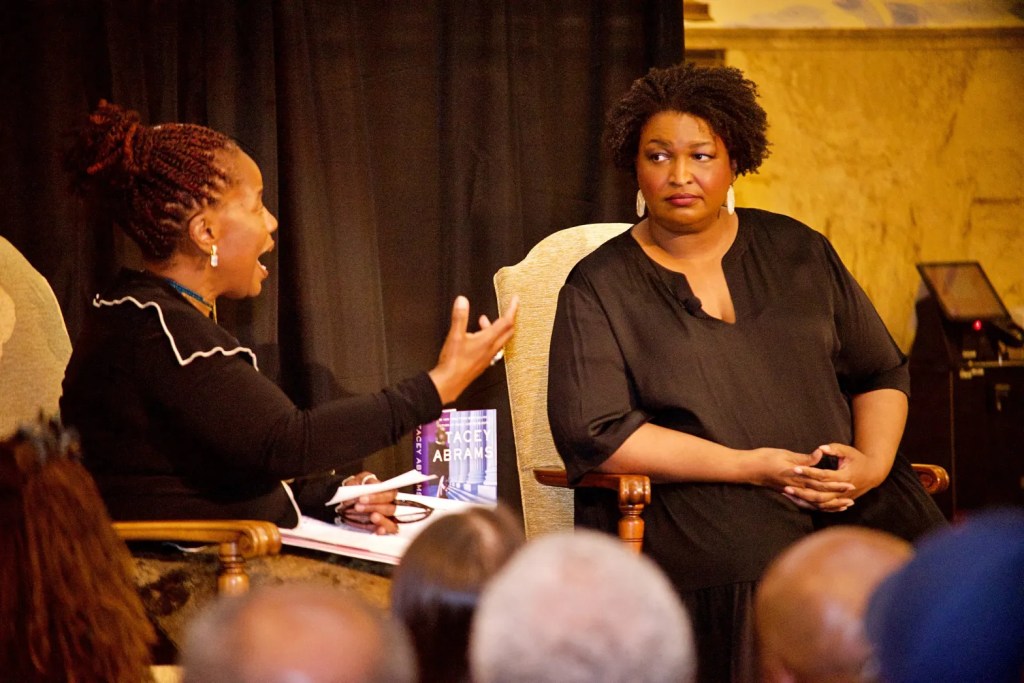
With “Rogue Justice,” Stacey Abrams continues to push boundaries and inspire readers to confront the injustices within our society, making her an author worth watching as she makes her mark on both the literary and political realms.
On a balmy May 24th, the Enoch Pratt Library’s Brown Lecture Series experienced a remarkable convergence of literary brilliance and thought-provoking conversation. Stacey Abrams, acclaimed author and politician, took the stage to share her perspective and history as a writer.
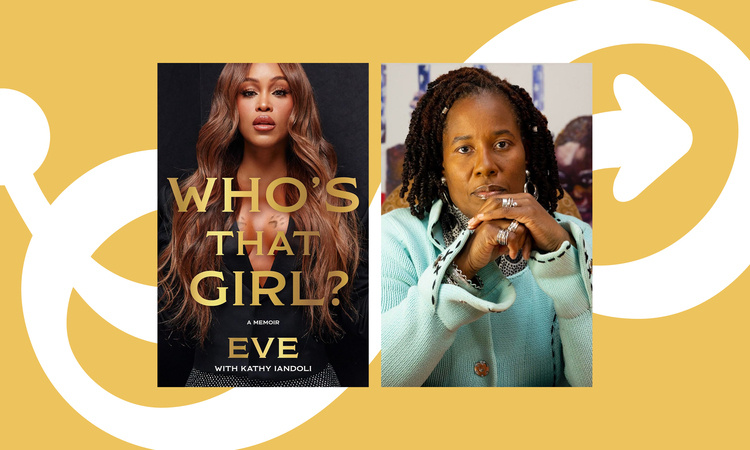
The definitive autobiography from Eve, the multiplatinum, Grammy Award–winning, Emmy-nominated rapper, singer-songwriter, actor, mother, philanthropist, and entrepreneur.
In 1999, Eve Jihan Cooper made history with her solo debut album, Let There Be Eve…Ruff Ryders’ First Lady, reaching number one on the Billboard 200, marking her as the third female rapper to ever obtain that position. She later made history again as the first recipient ever of the Grammy Award for Best Rap/Sung Collaboration for her platinum single “Let Me Blow Ya Mind” with Gwen Stefani. Following up with three chart-topping albums that made unrivaled waves in the world of hip-hop and music, as well as trailblazing moments in TV/film and fashion, Eve now looks back on her groundbreaking career.
West Philadelphia was not for the faint of heart—Eve knows that better than anyone. However, she navigated those Philly streets (and later the rest of the world) seamlessly, though it was not without strength and resilience. She incorporates that unbridled ambition into every bar that she writes and every stage/set that she stands on. With a gritty realness that speaks to her style, she shares her experiences going from the Mill Creek Projects to Hollywood. In this memoir, Eve delves into her entrance as “Eve of Destruction” into a male-dominated hip-hop industry, the deeper story behind Scorpion that was never told until now, and the internal battle with her music, her label, and herself after Lip Lock.
This fearless, empowering, and inspirational memoir from hip-hop sensation Eve explores her rise to stardom as a female MC, her lasting legacy on pop culture and music, and her incredible yet enduring struggle balancing her personal life with her professional one.
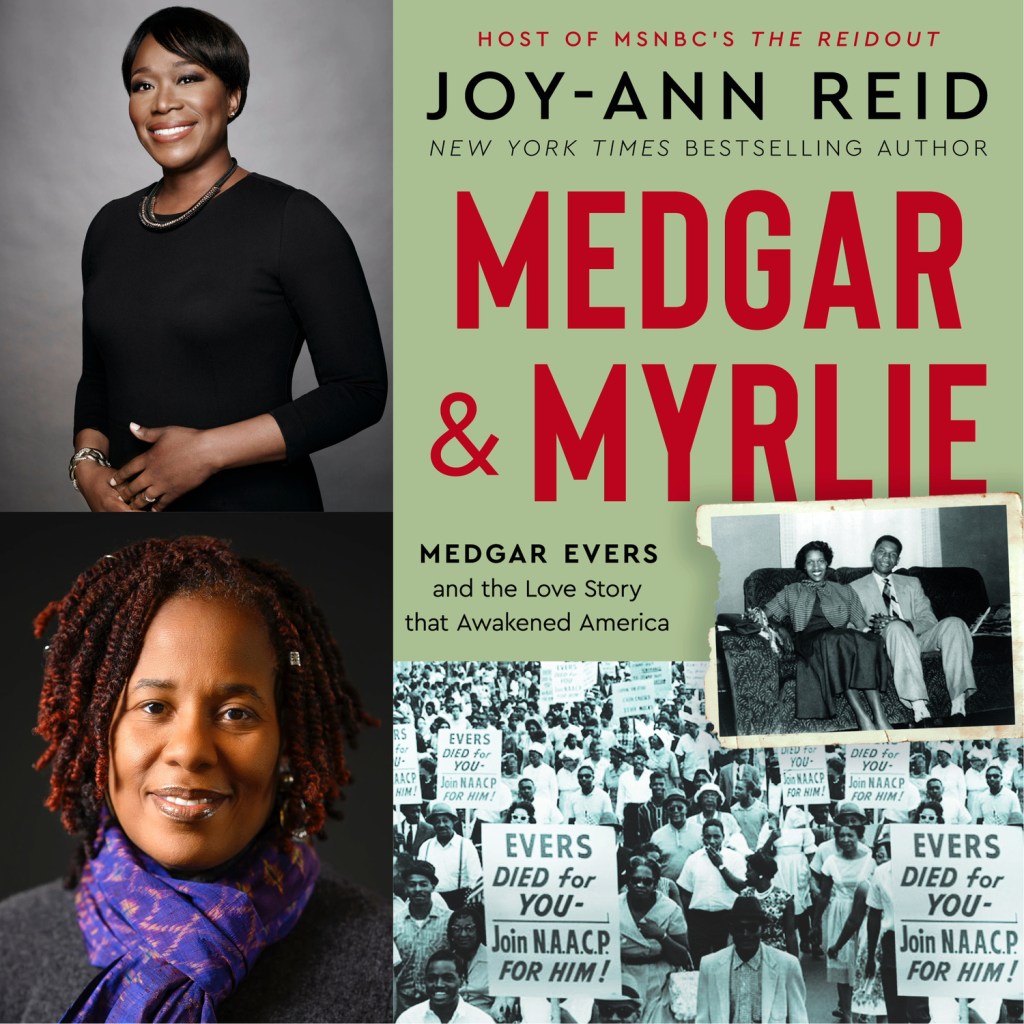
Joy-Ann Reid is an MSNBC political analyst and host of “The ReidOut,” which airs weeknights on MSNBC from 7-8:00 P.M. ET.
She previously hosted the weekend program: “A.M. Joy” (2016-2020) and a daily news show “The Reid Report” (2014-2015).
A 1991 Harvard University graduate with a Bachelor of Arts degree in Visual and Environmental Studies with a concentration in documentary film and a 2003 Knight Center for Advanced Journalism fellow, Reid has a longtime interest in politics and elections.
During a hiatus from the news business, she worked as a press secretary for the national voter registration and mobilization entity, America Coming Together in 2004 and for the Florida branch of Barack Obama’s presidential campaign in 2008.
The host of MSNBC’s The ReidOut and New York Times bestselling author of The Man Who Sold America traces the extraordinary lives and legacy of civil rights icons Medgar and Myrlie Evers, situating Medgar Evers’s assassination as a catalyzing moment in American history.
Myrlie Louise Beasley met Medgar Evers on her first day of college. They fell in love at first sight, married just one year later, and Myrlie left school to focus on their growing family.
Medgar became the field secretary for the Mississippi branch of the NAACP, charged with beating back the most intractable and violent resistance to black voting rights in the country. Myrlie served as Medgar’s secretary and confidant, working hand in hand with him as they struggled against public accommodations and school segregation, lynching, violence, and sheer despair within their state’s “black belt.” They fought to desegregate the intractable University of Mississippi, organized picket lines and boycotts, despite repeated terroristic threats, including the 1962 firebombing of their home, where they lived with their three young children.
On June 12, 1963, Medgar Evers became the highest profile victim of Klan-related assassination of a black civil rights leader at that time; gunned down in the couple’s driveway in Jackson. In the wake of his tragic death, Myrlie carried on their civil rights legacy; writing a book about Medgar’s fight, trying to win a congressional seat, and becoming a leader of the NAACP in her own right.
In this groundbreaking and thrilling account of two heroes of the civil rights movement, Joy-Ann Reid uses Medgar and Myrlie’s relationship as a lens through which to explore the on-the-ground work that went into winning basic rights for Black Americans, and the repercussions that still resonate today.
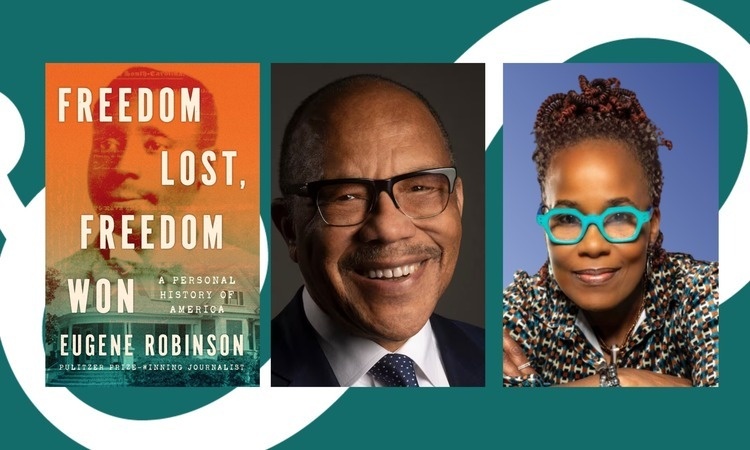
Eugene Robinson is a Pulitzer Prize–winning American journalist, former columnist, and associate editor of The Washington Post, author, and political analyst. His prior positions included foreign editor, London correspondent, and South American correspondent. Born in Orangeburg, South Carolina, he graduated from the University of Michigan and worked at the San Francisco Chronicle before joining The Washington Post.
Pulitzer Prize–winning former Washington Post columnist Eugene Robinson tells our nation’s torturous racial history through his own family’s story, starting with his great-grandfather’s freedom from slavery and threading his way to his own narrative and reaching today’s Black Lives Matter movement, asking whether this time will be different.
On March 27, 1829, a wealthy white planter and entrepreneur named Richard Fordham purchased four enslaved African Americans from a woman named Isabella Perman. One of them was journalist Eugene Robinson’s great-great-grandfather, a boy called Harry.
Starting from this transaction, which took place in Charleston, South Carolina, Freedom Lost, Freedom Won brings to life 200 years of our nation’s history through the eyes of the remarkable family that Harry founded. Assigned a formal name—Henry Fordham—and put to work as a blacksmith, he achieved his own freedom a decade before the Civil War. He was there when victorious Union troops marched into Charleston in 1865, ending slavery and guaranteeing liberty for Black people—only on paper, though, and only for a time.
Robinson traces the arc of his familial lineage through the repeated cycles in which African Americans have fought their way upward toward freedom and opportunity, been forced back down again, and renewed their determined climb.
From his great-great-grandfather’s achievement in becoming a “free person of color” before emancipation to his great-grandfather’s Reconstruction-era success, from his father’s odyssey of the Great Migration to his own coming-of-age during the civil rights movement, Robinson delves into a rich archive of Black narratives, arguing that we still have a long way to go before it is possible to speak of a “post-racial America.”
Setting his extensive research within the larger historical context, Robinson provides both an indictment of structural racism and an illustration of how it has been fought and, at times, courageously overcome. Freedom Lost, Freedom Won tells our country’s tortuous racial history through Robinson’s family’s story of struggle and survival, pushing us to consider how far the nation has come—willingly or not—and how far it still has to go.
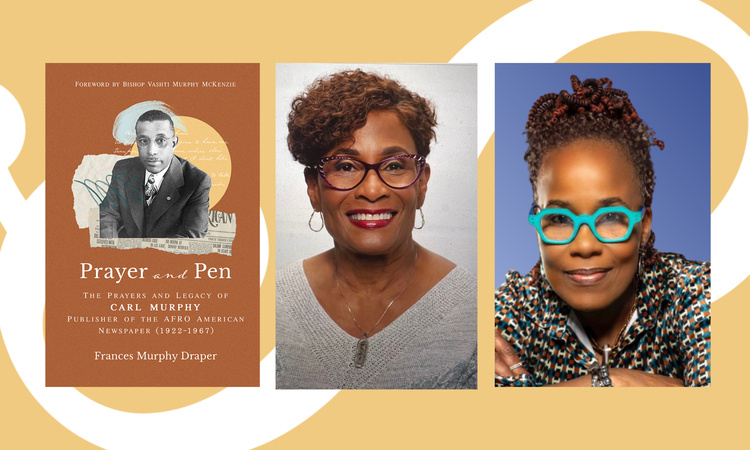
In a world filled with chaos, uncertainty, and great trials, prayer was Carl Murphy’s weapon of choice. And knowing the power behind his pen, the acclaimed publisher of the AFRO-American newspaper used his words to share strength and hope with family, friends, the community, and his newspaper.
In Prayer and Pen, current AFRO publisher Frances Murphy Draper has collected 50 of her beloved grandfather’s original prayers, along with many proverbs and words of wisdom. Each reading showcases Murphy’s authentic conversations with God and the perseverance of a generation called to navigate Jim Crow, two World Wars, the Great Depression, the Civil Rights Movement, and other tumultuous, defining moments in United States history. Reflect on powerful words from a wise businessman, cultural hero, and family patriarch, and learn from his remarkable legacy of finding solace and strength in consistent prayer.
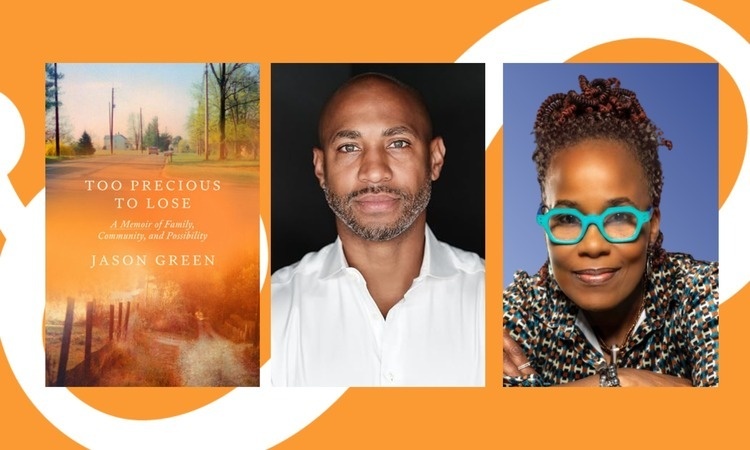
Jason G. Green is a Maryland-born community organizer, attorney, storyteller and entrepreneur. Green served as special assistant to the president, and associate White House Counsel to President Obama, advising on economic and domestic policy matters. Green co-founded SkillSmart, a company that reshapes how communities measure economic impact, and is CEO of EverGreen Labs, where he supports visionary organizations working to expand economic opportunity and strengthen community. Green serves as trustee to the Pleasant View Historic Association and supports its efforts to preserve the historic site. His award-winning documentary, Finding Fellowship, explores the rich history of Quince Orchard and the fight to preserve its legacy. A graduate of Washington University in St. Louis and Yale Law School, Green remains rooted in the work of truth and justice, investing in stories that remind us who we are. He currently spends time between Maryland and Dallas, Texas, with his wife, Ritu, and son, Aidan.
Jason G. Green was raised on fellowship—literally. Fellowship Lane served as a spiritual metaphor throughout his coming of age. A precocious preacher’s kid, Green felt a call to the ministry but ultimately devoted himself to public service. After working on Barack Obama’s presidential campaign, the young attorney spent four and a half years serving in the White House as special assistant to President Obama.
However, Green’s government career was cut short by a devastating call. It seemed his beloved ninety-five-year-old grandmother was on her deathbed. At her side, he listened in disbelief while she detailed her life story dating back to her 1918 birth in Quince Orchard, a town that once stood where they now sat, erased by the vestiges of time. How could he have never known the legacy of this robust community that he’d descended from? How could its entire existence have vanished from history but for the memory of a few elders? Green’s historical research uncovered a surprising trove of tales about his newly freed ancestors who built an African American house of worship, and whose progeny, on the eve of Dr. Martin Luther King, Jr.’s assassination, made the brave decision to create an integrated church. Quince Orchard’s lost story is part of what Green calls the texture in the American fabric: the moral leadership of the Black church, the longstanding resilience of the Black community, and the transformative love of the Black family.
Fueled by a new understanding of his own roots, Green traces his paternal family through a century of life in a single place. Seeking answers to deeply personal, contemporary questions about belonging, he finds that and more truths from the compassionate, communal-led lives of his forebearers.

